
How to Keep Ants Out of Patio, Porch & Yard

Written by Jack Hayes
Last updated on October 17, 2026
If you want to know how to keep ants off your patio, porch, and yard, start by removing the food, moisture, and nesting spots that keep drawing them back. Treating the ants you can see may give short relief, yet the colony can stay active nearby.
Ants may nest beneath pavers, beside foundations, in soil, or in damp wood. The right fix depends on where they are coming from. In this guide, we’ll cover practical ways to reduce ant activity around lawns, patios, porches, furniture, and outdoor eating areas.
Key Takeaways
◉ Remove food and moisture sources around patios, porches, grills, pet bowls, and outdoor furniture to make these areas less attractive to ants.
◉ Follow ant trails to the source instead of treating only the ants you can see. Colonies may be under pavers, concrete, mulch, soil, or near foundations.
◉ Watch cracks, paver joints, and damp wood since these areas can provide nesting sites or travel routes around patios and porches.
◉ Use ant-control products only as the label directs, especially around children, pets, outdoor eating areas, and food-contact surfaces.
◉ Consider professional pest control when ants keep returning, the nest is difficult to reach, or you cannot identify where the activity is coming from.
Why Do Ants Keep Coming Back in the Yard?
Ants keep coming back when a nearby colony still has access to food, water, shelter, or a reliable travel route. Worker ants follow scent trails between their nests and food sources, so killing a few visible ants rarely solves the problem. If you’re wondering whether killing ants attracts more ants, the answer depends on how ants respond and whether the colony remains active nearby.
Outdoor nests may sit under stones, pavers, mulch, lawn edges, wood piles, or concrete slabs. Ants may return to sugary spills, grease, pet food, trash, or damp soil near irrigation. Follow the trail before treating it. Finding the route can show whether the real problem is a lawn nest, pavement crack, porch gap, or nearby structure.
How to Keep Ants Out of the Yard
The best way to keep ants out of the yard is to reduce the conditions that support problem colonies in the places your family uses most. A completely ant-free lawn is not practical, since many outdoor ants stay in soil and cause little trouble.
◉ Fix leaks and areas where water keeps pooling.
◉ Keep trash closed and bring pet food indoors after feeding.
◉ Move firewood, boards, stones, and yard debris away from the foundation.
◉ Trace active trails and identify the nest before choosing a labeled bait or other treatment.
Focus on repeat activity near patios, doors, play areas, or the house. See Agile’s ant prevention guide for home entry points.
How to Keep Ant Hills Out of Your Yard
Ant hills show where soil-nesting ants are pushing excavated dirt to the surface. Flattening the mound may hide it for a short time, yet the colony can remain below. Reduce excess moisture and ground clutter, then watch where workers travel. If a mound keeps rebuilding in a high-use area, use a product labeled for that ant and lawn site.
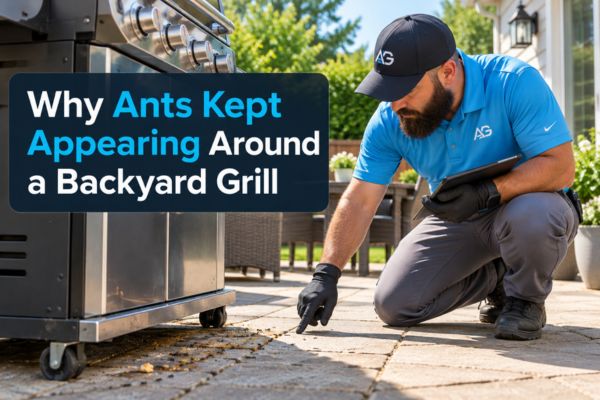
Why Ants Kept Appearing Around a Backyard Grill
A homeowner in Holmdel who loves grilling on weekends. After a family barbecue, they notice ants gathering around the grill and crawling along the nearby patio stones. They scrub the area, remove leftover food, and spray the ants, assuming the problem is solved. But a few days later, the ants return, even though the grill looks clean.
Frustrated by the repeated activity, the homeowner schedules a professional inspection. The technician discovers ants traveling through a narrow crack along the patio edge, with a nearby colony using the area as a regular food source. Small amounts of grease and food residue around the grill have been encouraging the activity.

The technician recommends a targeted treatment based on the ant species and nesting location. The homeowner also begins cleaning beneath the grill and sealing suitable entry points once the activity is controlled. Rather than repeatedly spraying the same spot, they now understand why the ants kept returning and how to reduce the chances of another problem.
How to Keep Ants Off the Patio
To keep ants off the patio, remove what brings foraging workers onto the surface and check the edges where they enter. Sweep food crumbs after outdoor meals, rinse sticky drink spills, empty standing water, and keep trash or recycling containers closed.
Watch where the trail begins. Ants often travel along walls, expansion joints, paver edges, planters, or vegetation touching the patio. A soapy-water wipe can remove workers and scent trails from hard surfaces. If ants return from one crack or edge, a labeled bait near the route may reach more of the colony than repeated contact spraying. Keep every pesticide away from food-contact areas.
How to Keep Ants Off a Concrete Patio
Pavement ants commonly nest under concrete, beside slab edges, and in cracks where they can push small piles of soil to the surface. Clean food residue, keep slab edges dry, and trace the trail to its entry point. Manage the active colony first. After activity drops, repair open cracks or gaps that give future ants an easy route.
How to Keep Ants Out of Patio Pavers or Brick
Ants between pavers often live in the soil below the joints rather than in the brick itself. Sweeping away loose soil will not remove the nest. Track the busiest joint, manage the colony with a labeled method, then replace missing joint material and fix drainage problems. Keep mulch, leaf litter, and damp debris from building up along patio edges.
How to Keep Ants Off the Porch
To keep ants off the porch, check both the walking surface and the structure around it. Clean food spills, pet bowls, and trash residue, then inspect porch steps, posts, railings, planters, door thresholds, and gaps where ants can travel.
Moist wood deserves extra attention. Rutgers Cooperative notes that carpenter ants may nest in hollow porch posts, wood siding, door frames, and porch ceiling voids. Fix leaks, keep wood from staying damp, and trim plants touching the porch. If you see large ants, sawdust-like debris, or steady nighttime trails near wood, use Agile’s carpenter ant guide to compare common signs before treatment.
How to Keep Ants Off Patio Furniture
Keep ants off patio furniture by cleaning the parts people often miss. Wipe chair arms, table edges, cup holders, cushion seams, umbrella bases, and the undersides of seats after outdoor meals. Dry wet cushions and move sweet drinks or pet bowls away from seating areas.
Check whether a plant, railing, wall, or low branch gives ants a direct path onto the furniture. Move the furniture a short distance and watch the route again. For wooden pieces, inspect soft or damp sections for carpenter-ant activity. Apply insecticide to seats, cushions, or eating surfaces only when the product label clearly permits that use.
How to Keep Ants Off a Patio Table
Clean a patio table after meals, including the underside, leg joints, umbrella opening, and sticky drink rings. Cover sweet foods during use and move pet dishes away from the table. If ants climb the same leg each day, follow that trail back to the source. Use pesticide on food-contact surfaces only when the product label permits that use.
How to Keep Fire Ants Out of Your Yard
For Monmouth County homeowners, first confirm that the ants are truly imported fire ants. The U.S. Department of Agriculture Animal and Plant Health Inspection Service listed imported fire ant infestations across Southern states, parts of California, and Puerto Rico in 2026; New Jersey was not on that federal infested-area list.
Imported fire ants can spread in soil, nursery stock, hay, and soil-moving equipment from quarantine areas. Avoid moving regulated soil-bearing material outside quarantine rules. If you find an aggressive mound and ants that sting repeatedly, do not disturb the mound. Get the species confirmed before using a fire-ant treatment program. See the USDA APHIS imported fire ant status.
How to Keep Red Ants Out of Your Yard
Red color alone does not mean fire ants. Rutgers lists reddish carpenter ants in the Northeast, including Camponotus chromaiodes. If red ants are traveling from damp porch wood, trees, siding, or deck areas, check for carpenter-ant signs such as sawdust-like debris and nighttime trails. Correct moisture problems, remove wood-to-soil contact, and get the species identified before treatment.
Natural and Pet-Safe Ways to Keep Ants Out of the Yard
A natural way to keep ants out of the yard starts with nonchemical changes. For a pet-safe approach, remove attractants first and treat pesticides as products that require label-based safety steps.
◉ Clean food and drink spills from patios, tables, and grills.
◉ Bring pet food indoors and rinse bowls after outdoor feeding.
◉ Fix leaks, reduce standing water, and move damp debris from high-use areas.
◉ Wipe hard-surface ant trails with soapy water.
If ants keep returning, use only a pesticide labeled for the pest and outdoor site. The U.S. Environmental Protection Agency says baits should stay out of reach of children and pets. See EPA pesticide safety guidance.
One Homeowner Described Their Ant Control Experience
A homeowner reached out to Agile Pest Control after noticing persistent ant activity around their property. They appreciated how quickly the technician identified the problem and explained what needed to be done. The homeowner described the inspection as thorough and the overall service as professional.

Finding the source of an ant problem is not always straightforward, especially when colonies are hidden beneath patios or around foundations. A careful inspection helps identify the conditions contributing to the activity so the problem can be addressed properly. The homeowner was pleased with the service and recommended Agile Pest Control to others looking for reliable pest control.
When Should You Call for Ant Control Around Your Patio or Yard?
Professional help makes sense when ants keep returning after cleanup and labeled do-it-yourself steps, the nest is under a slab or inside a structure, or the species is hard to identify. Large ants near damp wood, repeated soil piles from one crack, or stinging ants near play areas deserve closer inspection.

Agile Pest Control can inspect ant activity around Monmouth County homes, trace likely nesting areas, and explain treatment choices for the species and site. A professional visit is most useful when the visible trail is only one part of a larger colony or the treatment area is difficult to reach safely.
Frequently Asked Questions
Does vinegar keep ants off a patio?
Vinegar may disrupt ant trails for a short time, but it does not reliably remove a nearby colony. Clean the surface, then address the nest and attractants.
Can ants damage patio pavers?
Ants can move soil from beneath or between pavers and leave loose material at joints. Repeated nesting may worsen existing gaps, so fix the colony and joints.
Why are ants on my patio when there is no food?
Ants may cross a patio to reach water, plants with honeydew-producing insects, shelter, or another food source. Follow the trail to learn where they are headed.
Is ant bait safe to use around pets?
Use bait only where the label allows and where pets cannot reach it. Keep pets away from treated areas for the time stated on the product label.
Should I seal patio cracks as soon as I see ants?
Trace and manage the active ant route first, then seal suitable cracks after activity drops. Sealing one opening too early may shift visible activity to another gap.
Share