
Top 20 Hornets Question Answered by Pest Experts
Hornets are large, social wasps known for their distinctive papery nests and powerful stings. While they help control pest insects, hornets can become aggressive when their nest is disturbed. Identifying and managing hornet activity early helps protect people and property, especially around homes, gardens, and outdoor living spaces.
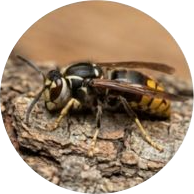
Questions
- 25 to 40 mm
- Six legs
- Straight antennae
- Smooth, striped body
- Powerful fliers
- Build aerial nests
1. Where do hornets live?
Hornets live in large, papery nests made from chewed wood and saliva. These nests are commonly found in trees, shrubs, roof eaves, attics, wall voids, and sheds. Some species nest underground. Hornets prefer wooded, suburban, and park-like areas with shelter and food nearby.
2. What do hornets do?
Hornets hunt other insects to feed their larvae, helping control pest populations. They also build nests, gather nectar, and defend their colonies. While they can be aggressive near nests, hornets play an important role in ecosystems by reducing flies, caterpillars, and other nuisance insects.
3. Are bald-faced hornets aggressive?
Yes, bald-faced hornets are extremely aggressive when defending their nest. They will attack if someone comes too close and can sting repeatedly. Unlike bees, they do not lose their stinger and may also spray venom. Nests near walkways or homes pose a serious safety risk.
4. How to get rid of hornets naturally?
To get rid of hornets naturally, treat nests at night using soapy water sprays to suffocate them. Peppermint oil, vinegar solutions, and decoy nests can help deter new activity. Removing food sources and sealing entry points reduces attraction. Large or hidden nests should be handled professionally.
5. How to keep hornets away?
Keep hornets away by sealing gaps in siding and eaves, securing trash cans, and removing fallen fruit. Hornets dislike strong scents like peppermint, clove, and lemongrass oils. Hanging decoy nests and maintaining a clean yard can prevent them from nesting near homes and patios.
6. How to remove a hornet nest?
Hornet nests should be removed at night when activity is low. Wear protective clothing and use a long-range insecticide spray to fully saturate the nest entrance. Once activity stops, remove and dispose of the nest. Large or hard-to-reach nests should be handled by professionals.
7. Do hornets have photographic memory?
Hornets do not have photographic memory, but they can remember locations, smells, and perceived threats. Research shows they can recognize visual patterns and may remember human faces near their nest. This ability helps them navigate and aggressively defend their colony from repeated disturbances.
8. What do hornets do for the environment?
Hornets benefit the environment by controlling insect populations, including flies, caterpillars, and mosquitoes. They also contribute to pollination while feeding on nectar. As part of the food chain, hornets support birds and other predators, helping maintain ecological balance in natural ecosystems.
9. Where do hornets go in the winter?
In winter, hornet colonies die off, including workers and the old queen. Only newly mated queens survive by hibernating alone in protected areas like tree bark, wall voids, or leaf litter. They emerge in spring to build new nests from scratch.
10. Why are hornets so aggressive?
Hornets are aggressive because they fiercely protect their nests, queens, and food supply. They respond to vibrations, sudden movements, or threats near the nest. When one hornet stings, it releases alarm pheromones that trigger group attacks, making nest encounters especially dangerous.
11. Are European hornets dangerous?
European hornets are not usually aggressive toward people, but they can be dangerous if their nest is disturbed or if someone is allergic to stings. They can sting multiple times, causing significant pain. Most encounters are harmless unless the hornets feel threatened or cornered.
12. Are wasps and hornets the same?
Wasps and hornets are related, but they are not the same. Hornets are a specific type of large, social wasp. All hornets are wasps, but not all wasps are hornets. Hornets are typically larger, rounder, and less aggressive unless their nest is threatened.
13. What are hornets good for?
Hornets are beneficial because they control insect populations by hunting flies, caterpillars, and other pests. They also contribute to pollination while feeding on nectar. By reducing pest insects, hornets help protect gardens, crops, and natural ecosystems despite their intimidating reputation.
14. How do hornets make their nest?
Hornets build nests by chewing dead wood into a pulp and mixing it with saliva to form a paper-like material. A queen starts the nest in spring, and workers expand it throughout summer. The nest contains layered combs and a protective outer shell.
15. How to get rid of bald-faced hornets?
To get rid of bald-faced hornets, treat the nest at night using a long-range wasp spray aimed at the entrance. Wear protective clothing, as they are highly aggressive. Large or hard-to-reach nests should be removed by professionals to avoid repeated stings and injury.
16. How many hornet stings can kill you?
For non-allergic adults, hundreds of hornet stings may be fatal due to venom toxicity. For allergic individuals, even a single sting can trigger deadly anaphylaxis. Children are at greater risk with fewer stings. Any multiple stings or severe reaction requires immediate medical care.
17. Which is worse, a hornet or wasp?
Hornets are generally worse than wasps because they are larger, deliver more venom per sting, and defend nests aggressively. Their stings are more painful, and they can sting repeatedly. While both can be dangerous to allergic individuals, hornets pose a higher overall risk.
18. When do hornets leave their nest?
Hornets leave their nest permanently in late fall. Workers, males, and the old queen die off as temperatures drop. Only newly mated queens survive by hibernating elsewhere. Abandoned nests are never reused and can safely be removed during winter months.
19. How many hornets are in a nest?
A typical hornet nest contains 100 to 700 hornets at its peak in late summer. Larger species, such as European hornets, may reach over 1,000 individuals. These colonies are seasonal and collapse before winter, with only new queens surviving to start future nests.
20. What eats wasps and hornets?
Wasps and hornets are eaten by birds, spiders, praying mantises, dragonflies, and mammals like skunks and raccoons. Many predators target their larvae inside nests. Despite their stings, hornets play a role in the food chain by supporting diverse wildlife populations.
Share