
How to Get Rid of a Rat Infestation

Written by Jack Hayes
Last updated on October 18, 2026
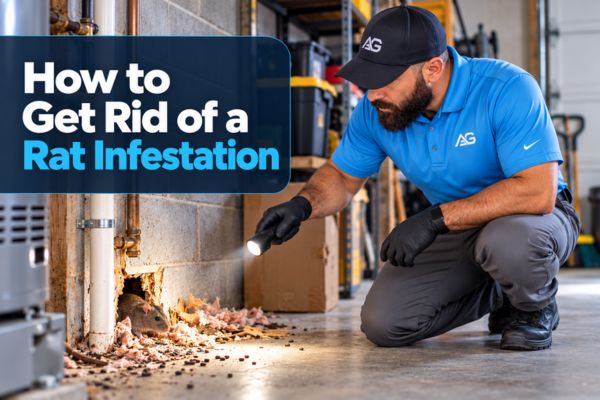
If you need to know how to get rid of a rat infestation, start by removing easy food and water, trapping rats in active areas, sealing entry points, and cleaning contaminated spaces safely. One trap or one sealed hole may leave part of the problem untouched.
Rat activity can spread through kitchens, garages, basements, crawl spaces, attics, and yards. The right plan deals with the rats you have now and the conditions that let them stay. In this guide, we’ll cover what to do first, how to treat indoor and outdoor activity, safe cleanup, and ways to reduce repeat infestations.
Key Takeaways
◉ Act early: Check for fresh droppings, gnaw marks, and scratching sounds to identify where rats are active.
◉ Remove food and water sources: Store food securely, fix leaks, and keep trash containers tightly closed.
◉ Trap rats in active areas: Place rat-sized snap traps along walls and common travel routes.
◉ Seal entry points: Repair gaps around doors, pipes, vents, and foundations to prevent rats from getting back inside.
◉ Clean contaminated areas safely: Never sweep or vacuum dry rat droppings. Use disinfectant and gloves during cleanup.
◉ Get professional help when needed: If rats keep returning or are hiding in hard-to-reach areas, contact a pest-control professional.
What to Do If You Have a Rat Infestation
Start by checking where the rats are active before moving boxes or cleaning droppings. Look for fresh droppings, gnaw marks, damaged food packages, nesting material, grease marks, or repeated scratching sounds. Keep children and pets away from those areas.
Remove exposed food, pet food, open trash, and standing water. Put rat-sized traps along active travel routes rather than in the middle of open rooms. Do not sweep or vacuum dry droppings. Take photos of fresh signs before cleanup so you can compare activity later. If activity is widespread, hidden in walls, or hard to reach safely, contact a rodent-control professional.
How to Get Rid of a Rat Infestation
A rat infestation is best handled as a full control plan, not a single trap or product. The goal is to remove rats already using the property, cut off food and water, close access routes, and watch for fresh signs.
◉ Find active routes. Check along walls, behind appliances, near stored food, around utility lines, and close to droppings or gnawing.
◉ Remove attractants. Store food securely, clean spills, put pet food away at night, fix leaks, and keep trash covered.
◉ Use rat-sized snap traps. Place them where rats travel. Rats can be cautious around new objects, so pre-baiting may help before traps are set.
◉ Close entry points as control is underway. Repair gaps around doors, pipes, vents, foundations, garages, and roof edges with materials rats cannot easily push aside or chew through.
◉ Keep checking for fresh activity. Check traps regularly and look for new droppings, gnaw marks, or other signs of rats. If you go a full week without catching any rats or noticing fresh signs, the infestation may be under control.
How to Get Rid of a Rat Infestation in Your House
Inside a house, start with the rooms showing fresh evidence and work back to the route rats may be using. Kitchens need sealed food and trash. Garages and basements need clutter reduced so travel paths are easier to spot. Attics and crawl spaces may need safer access or professional inspection.
Set traps along walls and behind appliances where signs are fresh. Check pipe openings, door corners, vents, utility lines, and foundation gaps. Agile’s guide to how rats get inside your house can help you check common access points without guessing at random holes.
When Trapping One Rat Doesn't Solve the Problem
A homeowner in Monmouth County starts hearing scratching noises near the kitchen every night. A few days later, they find rat droppings under the sink and notice a chewed food package in the pantry. They set a snap trap near the cabinet and catch a rat the next morning. The noises stop, and everything seems fine. But three nights later, the scratching returns. Fresh droppings appear near the garage. Frustrated, the homeowner called us.
During the inspection, the technician finds a damaged gap beneath the garage door and signs of rats traveling between the garage and kitchen. The trap caught one rat, but the entry point remained open.

The technician recommends placing traps along active routes, removing accessible food, and repairing the damaged door seal once the active rats are addressed. With the recommended treatment and repairs completed, the homeowner stops noticing fresh droppings and nighttime noises.
The lesson is simple: Catching one rat doesn’t always mean the infestation is gone. Finding and closing entry points is just as important as removing the rats already inside.
How to Get Rid of a Rat Infestation Outside
Outdoor rat control starts with food, shelter, and access around the property. Keep garbage lids tight, clean grills, pick up fallen fruit, store bird seed and pet food in sturdy containers, and clear dense debris near the house. Check sheds, decks, fence lines, foundations, and utility areas for burrows or regular travel paths.
Trim heavy cover near walls and move stored materials away from the foundation when practical. If rodenticide is needed, use only a labeled product in the required bait-station setup. The U.S. Environmental Protection Agency (EPA) explains safe rodent bait and trap options, including keeping them away from children and pets.
Who to Call for a Rat Infestation
Call a pest-control company that handles rat and mouse infestations, especially when activity keeps returning after trapping, or the source is hard to reach. A good inspection should look for current activity, travel routes, food and water sources, nesting areas, and entry points.
Ask how the company plans to remove active rats, handle access gaps, protect children and pets, and monitor the property after treatment. In New Jersey, pesticide work should be handled under the state’s pesticide licensing rules. For rats inside heating or cooling ducts, the CDC advises getting professional rodent help rather than trying to clean the system yourself.
A Homeowner Shares Their Experience With a Rat Problem
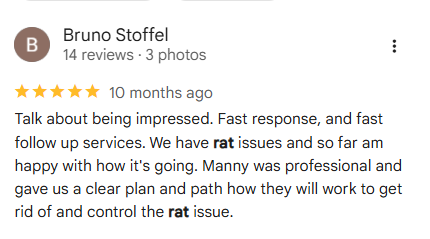
Dealing with rats at home can be frustrating, especially when the problem keeps coming back. One homeowner contacted Agile Pest Control about ongoing rat issues and appreciated the quick response, regular follow-up, and clear plan for getting the infestation under control.
How to Clean Up After a Rat Infestation
Do not sweep or vacuum dry rat droppings, urine, or nesting material. The CDC’s 2024 cleanup guidance says to wear rubber or plastic gloves, wet contaminated material with disinfectant, let it sit for five minutes or the label time, then wipe it up with paper towels.
For homes and outbuildings, the CDC recommends airing the space out for 30 minutes before cleanup. Wash hard surfaces with disinfectant after waste is removed. Heavy infestations need extra protective equipment. Keep children and pets out of the work area.
How to Stop a Rat Infestation From Coming Back
To prevent rats from returning, seal gaps around doors, pipes, vents, and foundations. Repair leaks, keep trash covered, and store food in secure containers. Check garages, basements, and attics regularly for fresh signs of activity. Some homeowners use peppermint oil or other strong scents to keep rats away. Our guide on what smells rats hate explains why these methods have limitations and should not replace proper rat control.
Outside, clear away debris, trim overgrown plants, and remove fallen food. Keep checking previous entry points to catch new activity early. Agile’s guide to foods that attract rats and mice can help you spot easy food sources that get missed. Keep checking former problem areas for new droppings, gnawing, or disturbed traps.
Rat Infestation Getting Worse? Here's How We Can Help
If rats keep showing up after trapping, you cannot find the entry route, or activity is inside walls, crawl spaces, attics, or ductwork, professional help can make the next steps clearer.

Agile Pest Control offers professional service to help homeowners understand where rats are entering and what attracts them. Our team inspects the property, looks for signs of activity, and recommends a treatment plan that addresses the infestation and helps reduce the chances of another one.
Frequently Asked Questions
Can rats come back after I catch one?
Yes. Catching one rat does not close the route it used. Keep checking for fresh signs, continue trapping, and repair entry points linked to activity.
Should I use poison for a rat infestation?
Rodenticide may be an option for persistent infestations, but label directions and bait-station rules matter. Homes with children or pets need extra care around bait.
How can I tell whether rats are still active?
Look for fresh droppings, new gnaw marks, disturbed food, reopened burrows, trap activity, or repeated nighttime sounds in the same parts of the property each day.
Can I clean rat droppings with a vacuum?
No. Dry vacuuming can put contaminated particles into the air. Wet droppings with disinfectant first, wipe them up, then clean the surrounding hard surface thoroughly.
What areas should I check after a rat infestation?
Recheck kitchens, garages, basements, attics, crawl spaces, sheds, trash areas, utility openings, and former entry points near doors and plumbing lines for fresh signs or new damage.
Share