
Do Ants Carry Any Diseases? What Homeowners Should Know

Written by Jack Hayes
Last updated on June 20, 2026
On this page
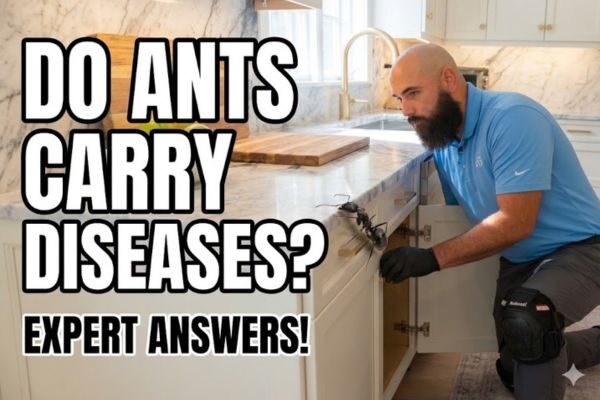
You see ants on your kitchen counter. They’re walking near food, dishes, and the sink.
That’s when the question hits: can ants carry germs that make people sick?
The short answer is: ants don’t carry diseases the way mosquitoes or rodents do-but they can spread bacteria inside your home.
Ants move through drains, trash areas, soil, and wall gaps before showing up in your home. Those germs don’t disappear just because the ant is small.
The good news? This risk is manageable.
In this guide, you’ll learn what ants can spread, where contamination actually happens, and how to reduce health risks, not just kill the ants you see.
Key Takeaways
- ◉ Ants don’t carry diseases like rodents or mosquitoes, but they can spread bacteria onto clean surfaces.
- ◉ The real risk is contamination, especially when ants travel from drains, trash, soil, or pet bowls to kitchen counters.
- ◉ Small black ants and sugar ants can still carry germs, even if they look harmless.
- ◉ Kitchens, bathrooms, pet bowls, and pantry areas are the most common places where ant contamination can happen.
- ◉ Seeing ants doesn’t mean your home is dirty. It usually means they found food, moisture, warmth, or an entry point.
- ◉ Clean surfaces can still be risky if ants are coming from damp cabinets, drains, wall gaps, or trash areas first.
- ◉ Ants usually won’t make healthy adults sick directly, but repeated contamination matters more for kids, older adults, pets, or immune-compromised people.
- ◉ Pet bowls are a common ant target because they offer food residue, water, and quiet access.
- ◉ Killing visible ants is not enough if scent trails, food sources, moisture, or entry gaps are still there.
◉ The main rule is simple: remove trails, clean food areas, seal entry points, and fix the source so ants stop returning.
Do Ants Carry Diseases or Harmful Bacteria?
Ants don’t carry diseases in the same way mosquitoes or rodents do. They don’t inject pathogens or transmit illness directly. But that doesn’t mean they’re harmless.
Ants act as mechanical carriers. That means they can pick up bacteria from one location and physically move it to another. A simple way to think about it is this: it’s like wearing dirty shoes into your kitchen and walking across the counter.
As ants travel, they pass through drains, trash areas, soil, pet bowls, and wall voids. When they later crawl across food prep surfaces, those bacteria can transfer. That’s why ants in kitchens and bathrooms matter more than ants outside.
Not every ant is dangerous. One ant near a window is usually low risk. A steady trail across counters or pantry shelves is different.
This puts the focus on contamination risk, not panic. The goal isn’t panic, it’s knowing when ants are just annoying and when they deserve attention.
What Germs and Bacteria Can Ants Carry?
Ants can pick up and spread common household bacteria, especially in areas where moisture and food are present. Studies have found ants carrying bacteria like Salmonella, E. coli, and Staphylococcus-not because ants produce these germs, but because they walk through contaminated spaces.
Here’s a simple example: ants crawl through a trash can overnight, then show up on your counter the next morning. The germs don’t stay in the trash, they travel with the ant.
This matters most in kitchens, pantries, and anywhere food is handled. While the risk is usually low for healthy adults, it increases for children, elderly family members, or anyone with a weakened immune system.
The point isn’t to obsess over ants; it’s to limit where they can travel. Stopping ants early reduces the chance of bacteria being moved around your home.
Do Small Black Ants or Sugar Ants Carry Disease?
Yes, even small black ants or so-called sugar ants can carry germs.
These ants often travel between:
◉ Trash areas
◉ Sink drains
◉ Cracks in walls
◉ Pet food areas
◉ Kitchen counters
As they move, they can pick up bacteria and leave it behind on surfaces.
Why this matters: Because they are tiny, homeowners often treat them as harmless. But frequent ant traffic around food areas still creates contamination risk.
Simple takeaway: Small ants may be small in size, but they can still move germs where food is prepared.
Surfaces can still be risky if ants are coming from damp cabinets, drains, wall gaps, or trash areas first.
Ants usually won’t make healthy adults sick directly, but repeated contamination matters more for kids, older adults, pets, or immune-compromised people.
Why Ants on Clean Surfaces Still Matter
This is a situation we hear from homeowners all the time.
A homeowner cleans the kitchen every night. Counters are wiped down. Dishes are put away. Food is sealed. Everything looks exactly how it should. Still, every morning, a few ants show up near the sink and along the counter edge.
At first, they try to handle it themselves. They clean again. They spray the ants. They make sure there’s nothing left out. The ants disappear for a while.
Then they come back.
That’s when they call us, frustrated, because nothing makes sense anymore.
When we inspect homes like this, the kitchen itself usually isn’t the problem. In one case, we traced the ants’ path back from the counter to a small gap near the sink drain. From there, the ants were moving through a damp cabinet base, past the trash area, and then straight onto the counter surface.
The homeowner hadn’t done anything wrong. The kitchen was clean. But the ants were traveling through dirty, damp spaces first, then ending up where food was prepared.
Once we sealed the gap, addressed the moisture under the sink, and broke the scent trails they were using, the ants stopped showing up on the counters.
This is why ants on clean surfaces still matter. The risk isn’t about how clean your kitchen looks. It’s about where ants are coming from and the path they take to get there. Until that path is cut off, ants can keep moving bacteria from hidden areas onto surfaces you use every day.

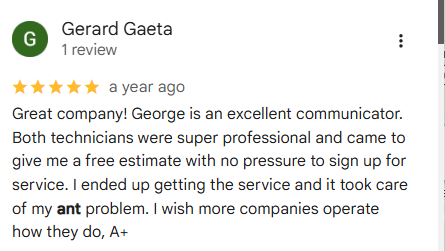
A Real Customer’s Experience With an Ant Problem
A homeowner experienced ongoing ant activity despite repeated cleaning attempts in their Manalapan home. After our inspection, they shared their thoughts about working with Agile Pest.

Can Ants Actually Make People Sick?
In most cases, ants won’t directly make you sick.
They’re not like mosquitoes or ticks that spread disease through a bite. The real concern is where ants walk before they reach your kitchen.
Ants may travel through:
◉ Trash areas
◉ Drains
◉ Soil
◉ Damp cabinets
◉ Pet bowls
◉ Wall gaps
Then they crawl across counters, cutting boards, dishes, or uncovered food.
That’s where the risk comes in.
If ants move from dirty areas to food surfaces, they can carry germs with them. For most healthy adults, the risk is usually low. But for young children, older adults, or anyone with a weaker immune system, repeated contamination matters more.
Why this matters: ants in the house aren’t usually an emergency, but ants around food should not be ignored.
How Are Ants Harmful to Humans?
Ants are harmful to humans in a few different ways, but the biggest issue is contamination.
They can:
◉ Spread bacteria onto food prep areas
◉ Crawl across uncovered food
◉ Get into pantry items
◉ Contaminate pet bowls
◉ Bite or sting, depending on the species
◉ Keep returning if the main trail or nest is not handled
So the problem is not just “seeing ants.”
The problem is repeated, and traffic through areas you use every day.
A few ants near a window may not mean much. But a steady trail across your kitchen counter, sink, pantry, or pet feeding area deserves attention.
Bottom line: ants are not usually as dangerous as people fear, but they can create a real hygiene issue when they keep moving between dirty spaces and clean surfaces.
Can Ants Carry Diseases to Dogs?
Ants do not usually infect dogs directly like fleas or ticks, but they can still create problems.
Possible issues include:
◉ Contaminating pet food or water
◉ Biting sensitive areas
◉ Triggering reactions if many ants swarm food bowls
◉ Carrying bacteria onto feeding surfaces
Why this matters: Dogs explore with their nose and mouth, so they may contact contaminated spots before you notice ants.
What you can do:
◉ Keep feeding zones clean
◉ Store pet food sealed
◉ Clean ant trails quickly
◉ Prevent access around bowls and storage areas
Simple takeaway: Ants are usually a contamination issue for dogs, not a direct disease pest.
Are Ants a Sign of a Dirty Home?
No. Ants are not a judgment on cleanliness.
Even very clean homes get ants. Ants are looking for food, water, or access, not judging cleanliness. A tiny crumb, a drop of moisture, or a small gap near a window can be enough.
That said, clutter, spills, and accessible food do make it easier for ants to stay. From the colony’s point of view, your home is simply a stable environment with predictable resources.
Seeing ants doesn’t mean you’re doing something wrong. It just means there’s something useful to them-food, water, warmth, or an entry point.
Understanding this helps homeowners focus on the real fix: removing attractants and blocking access, not blaming themselves.
Can Ants Spread Germs Through Pet Bowls?
Yes, pet bowls are one of the easier places for ants to contaminate.
Why ants target them:
◉ Food residue around the bowl
◉ Moisture from water bowls
◉ Quiet areas with repeated access
◉ Crumbs nearby
As ants crawl through the bowl area, they may transfer bacteria from other places they visited first.
Why this matters: Pets eat directly from these surfaces, so regular cleaning matters.
What you can do:
◉ Wash bowls daily
◉ Wipe the feeding area
◉ Avoid leaving food out overnight
◉ Fix nearby ant trails quickly
Simple takeaway: Pet bowls are common ant targets and should be kept clean and monitored.
Where Ant Contamination Is Most Likely to Happen
Ant contamination happens where food, moisture, and movement overlap. Kitchens are the top risk area. Ants often travel across sinks, counters, cutting boards, pet bowls, and pantry shelves, sometimes minutes after coming from trash areas or drains.
Bathrooms come next. Moisture around sinks and tubs attracts ants moving through wall gaps. Laundry rooms, basements, and under-cabinet spaces can also act as pathways between dirty and clean areas.
Even window sills and door frames matter if ants are entering from soil or mulch outside.
The key point is simple: contamination risk isn’t about where ants start. It’s about where they end up. Any surface that touches food, hands, or dishes deserves extra attention when ants are present.
Are Ants Clean or Dirty Creatures?
Ant contamination happens where food, moisture, and movement overlap. Kitchens are the top risk area. Ants often travel across sinks, counters, cutting boards, pet bowls, and pantry shelves, sometimes minutes after coming from trash areas or drains.
Bathrooms come next. Moisture around sinks and tubs attracts ants moving through wall gaps. Laundry rooms, basements, and under-cabinet spaces can also act as pathways between dirty and clean areas.
Even window sills and door frames matter if ants are entering from soil or mulch outside.
The key point is simple: contamination risk isn’t about where ants start. It’s about where they end up. Any surface that touches food, hands, or dishes deserves extra attention when ants are present.
What Happens When the Source Is Properly Treated
A homeowner dealing with ongoing ant activity first tried over-the-counter traps without success. After reaching out for professional help, the issue was addressed quickly, and the ants did not return. They later shared that the fast response and clear resolution made the difference.
How to Reduce Health Risks From Ants in Your Home
The best way to lower risk is to stop ants from moving around your home in the first place.
First, wipe down surfaces ants travel on using soapy water or vinegar. This removes scent trails that guide other ants back. Without those signals, traffic slows.
Next, remove attractants. Store food in sealed containers. Wipe spills quickly. Don’t leave pet food out overnight. Even small crumbs can keep ants coming back.
Then focus on access points. Seal cracks near baseboards, sinks, windows, and doors. Ants only need tiny gaps to get inside.
Finally, watch for repeat patterns. If ants keep returning to the same spot, something is still drawing them in. Addressing trails, food, and entry points together is what actually lowers risk.
When Ants Become a Bigger Health Concern

Ants become a bigger concern when activity is constant, widespread, or centered around food areas. One ant near a window is usually harmless. A steady trail across counters or pantries is different.
Risk increases in homes with young children, elderly residents, or immune-compromised individuals. In those cases, repeated surface contamination matters more.
Moisture problems also raise concern. Ants drawn to leaks or damp cabinets may be moving between unsanitary spaces and clean ones repeatedly.
When ants return despite cleaning and sealing, it often points to a hidden nest or ongoing access issue. That’s when an AgilePests Ant Inspection helps determine whether the activity poses an ongoing exposure risk that shouldn’t be ignored.
FAQs About Ants, Germs, and Health Risk
Do ants carry rabies?
No. Ants do not carry rabies. Rabies is linked to infected mammals, not insects. The real concern with ants is bacteria transfer, food contamination, and bites or stings from certain species.
Do ants carry parasites?
Ants are not a common household parasite risk. The bigger issue is that they can crawl through dirty areas and carry bacteria onto food, counters, sinks, or pet bowls.
Do sugar ants carry disease?
Sugar ants can carry germs if they move through trash, drains, soil, or damp areas before reaching food surfaces. They are not major disease spreaders, but kitchen activity should still be cleaned and controlled.
Can ants contaminate food inside your home?
Yes, ants can contaminate food if they crawl across it after traveling through unsanitary areas. Ants often move through trash bins, drains, soil, and damp spaces before reaching kitchen counters or pantry shelves. If they touch uncovered food, bacteria from those areas can transfer to the food surface.
Are ants in the kitchen a health concern?
Ants in the kitchen can be a hygiene concern because they move between dirty and clean areas. When ants travel across sinks, trash areas, or drains and then walk across counters or utensils, they can transfer bacteria onto food preparation surfaces.
Do ants carry germs on their bodies?
Yes, ants can carry germs on their legs and bodies as they move through different environments. They pick up bacteria from contaminated areas and physically transport those microbes to other surfaces. This is known as mechanical transmission rather than direct disease spread.
Is it safe to eat food if ants have touched it?
It is best not to eat food that ants have crawled on, especially if the food was left uncovered. Ants may have picked up bacteria from trash, soil, or drains before reaching the food. Discarding the food helps reduce the risk of contamination.
Why do ants often appear near sinks and drains?
Ants are attracted to moisture, which is why sinks, drains, and damp cabinets often draw them in. These areas also provide easy access to water and food residue. When ants travel from these locations to kitchen counters, they can carry bacteria along the route.
Share
0/5
(0 Reviews)