
Do Ant Bait Traps Work? Agile Pest Expert Explains

Written by Jack Hayes
Last updated on October 11, 2026
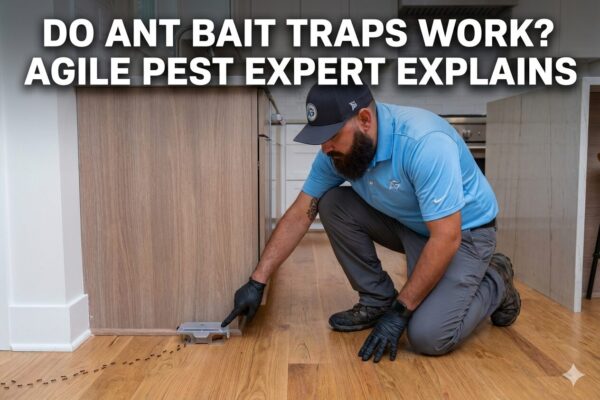
You’ve placed ant bait traps, and now the big question hits: are they actually working, or are the ants still hiding somewhere deeper? Here, “ant traps” mainly means bait stations that ants feed from—not sticky traps that simply catch individual ants.
That uncertainty frustrates a lot of homeowners. If traps work, you should see activity change over time. If not, the colony may still be active behind walls or under floors. The problem is, ant activity can look similar at first, which makes it hard to tell what’s really happening.
In this guide, we’ll break down how ant bait traps actually work, how long results take, and the signs that show whether the bait is reaching the colony or just affecting a few ants.
Key Takeaways
◉ Ant bait traps can work, but they need time. The goal is colony control, not instant results on the surface.
◉ Placement, bait preference, and freshness matter. Ants need to find and willingly feed on the bait before it can move through the colony.
◉ Seeing more ants near the bait at first can happen. Bait attracts foraging workers, which may temporarily increase visible activity around the station.
◉ Spraying near active bait can interfere with baiting. Killing foragers too quickly can stop them from carrying or sharing bait with nestmates.
◉ Judge success by the trend over time. Continued feeding followed by fewer ants is more meaningful than what happens during the first few hours.
Do Ant Traps Work, or Do They Only Catch a Few Ants?
Yes. Ant bait traps can work when ants accept a slow-acting bait and carry or share it through the colony. They usually work more slowly than contact sprays because the goal is colony-level control rather than simply killing the ants you see.
They’re not designed to kill every ant immediately.
Here’s the basic process:
◉ Worker ants find and feed on the bait.
◉ The bait acts slowly enough for workers to return toward the nest.
◉ Bait can then reach other colony members through normal food-sharing behavior.
So if it looks like only a few ants are visiting a bait station at first, that isn’t necessarily the full picture.
If results do not improve over time, one of two things is often happening:
◉ The ants are not feeding consistently enough for the bait to spread.
◉ The bait type, freshness, or placement is not right for the situation.
Bottom line: ant bait stations are designed to work through the colony rather than provide an instant surface kill.
How Do Ant Bait Traps Work Inside the Colony?
Ant bait works by combining an attractive food source with a slow-acting insecticide. Foraging workers feed on the bait and can carry or share it with other ants after returning toward the nest.

That delayed action is important. If the active ingredient killed every forager immediately, those workers would have less opportunity to distribute the bait to other colony members. That colony-level transfer is why bait can look quiet at first but still be doing useful work behind the visible trail.
How to Tell If Ant Bait Is Actually Working
The best signs are not dramatic. Look for a pattern.
Ants are actively feeding on the bait
Workers repeatedly visiting the station is usually more useful than seeing dead ants beside it. The bait has to be accepted before it can affect the colony.
You may see more ants around the bait at first
Once workers discover a food source, other foragers may begin visiting it. A short-term increase around the station does not automatically mean the infestation has grown.
Activity gradually decreases
The most important sign is that the number of ants and the frequency of trails begin trending downward over time. Individual ants may sometimes move differently after feeding, but sluggish behavior by itself is not a reliable way to judge whether a baiting program is succeeding.
What you should not expect:
◉ Instant results
◉ Every ant to disappear overnight
◉ A pile of dead ants around the bait station
Removing bait too early because activity has not disappeared immediately can interrupt the process.
How Long Do Ant Traps Take to Work?
Ants may begin feeding on bait quickly, but visible control takes longer.
The UC Statewide Integrated Pest Management Program notes that it can take about 5 to 10 days to see fewer ants when bait is being used effectively. Complete control may take longer depending on the ant species, colony structure, bait type, placement, and competing food sources.
The better question is not, “Did all the ants disappear today?” but, “Is activity steadily decreasing?”
If ants continue feeding but you see no downward trend, check whether the bait has dried out, whether other food is competing with it, and whether another bait formulation may be more attractive.
What We Often See After Homeowners Start Using Ant Bait
This situation shows up a lot.
A homeowner places bait traps along the kitchen wall and notices more ants within a day or two. It feels like the traps made things worse, so they remove them or start spraying the area. For a short time, activity slows down, but a week later the ants return along the same trail.
When we look at cases like this, the bait was actually starting to work. Worker ants were collecting it and carrying it back to the nest. Spraying too soon broke that process and cut off the path to the colony, leaving the main nest untouched. The surface activity changed, but the real source stayed active behind walls or under the floor.

Do Ant Traps Attract More Ants? Why Activity Can Increase at First
Yes, an ant bait can temporarily attract more foraging ants to the bait station. That does not mean the bait created a larger colony or made the infestation itself grow.
The bait is a food source, so workers that find it may recruit other foragers.
That means you may notice:
◉ More ants clustered around the bait
◉ More traffic along the route leading to it
◉ Continued feeding before activity begins to decline
Where people often go wrong is interrupting that feeding too quickly.
They remove the bait because they see more ants, or they spray the ants around the station. Spraying can kill foragers before they have time to return toward the colony with the bait.
Bait-driven recruitment is also different from the question of what happens after killing visible ants. Agile covers that separately in its guide to why killing ants can attract more activity.
Why Ant Traps Sometimes Fail (And What to Fix First)
Many bait problems come down to a few practical issues:
◉ The ants are not interested in that bait formulation.
◉ Other food sources are competing with the bait.
◉ The station is too far from active trails.
◉ The bait has dried out, been consumed, or become contaminated.
◉ The product is not suitable for the ant species or location where it is being used.
Simple fixes include:
◉ Remove accessible crumbs, spills, and other competing foods.
◉ Place bait near active trails or entry points, following the product label.
◉ Replace bait that is empty or dried out.
◉ If ants consistently ignore one labeled bait, consider a different bait formulation.
Ignoring one bait does not necessarily mean baiting cannot work. It may mean the ants are not interested in that particular food source.
Sweet vs. Protein/Grease Baits
Ant bait attractants commonly include carbohydrate or sugar-based foods as well as protein- or grease-based foods. Preferences vary by species and can also change with colony needs and available food. An ant that ignores a sweet bait may respond differently to another labeled formulation, and vice versa.
That is why bait choice should be based on what the ants are actually willing to feed on rather than assuming one bait works for every infestation.
Do Ant Traps Work on Carpenter Ants?
Baits can help with carpenter-ant activity, but they may not solve every carpenter-ant problem by themselves.
Repeated sightings of large ants around damp wood, window frames, decks, or other moisture-damaged areas can point to a nesting issue that deserves closer inspection. Agile’s carpenter ant control in Monmouth County page explains what to look for when carpenter-ant activity goes beyond a simple foraging trail.
Where to Place Ant Traps So Ants Actually Use Them
Placement decides whether a bait station gets found or sits untouched.
Ants tend to follow established foraging routes, so place bait where you are already seeing activity.
Good placement spots can include:
◉ Along baseboards where ants are traveling
◉ Near entry points such as doors, windows, or cracks
◉ Behind appliances or under sinks
◉ Near outdoor trails around the foundation when the product label allows outdoor use
Avoid putting bait randomly in open spaces far from ant activity.
For safety, always follow the product label and keep pesticide baits where children and pets cannot access them. The U.S. EPA’s pesticide guidance for protecting pets recommends reading the label before use and making sure animals cannot reach bait products while they are in place.
Ant Traps vs Sprays and DIY Methods
Sprays and bait solve different problems.
Sprays can kill visible ants quickly. Bait works more slowly because foraging ants need time to feed and return toward the colony.
Key differences:
◉ Sprays: fast control of exposed ants.
◉ Bait: designed to move beyond individual foragers and affect the colony.
◉ Using sprays around active bait: can interrupt bait transfer by killing or repelling the ants you need to continue feeding.
If you are using a pesticide product, follow its label rather than combining treatments in ways the label does not recommend.
When DIY Ant Traps Aren’t Enough
DIY baiting becomes less practical when the problem keeps returning despite fresh, correctly placed bait.
Signs it may be time to reassess include:
◉ Multiple active trails in different rooms
◉ Ants continuing to return after consistent baiting
◉ Bait repeatedly being ignored despite trying an appropriate formulation
◉ Ant activity coming from walls, slabs, or other inaccessible areas
◉ Large ants appearing around damp or damaged wood
At that point, identifying the species and locating the nesting area can matter more than simply adding more bait stations. Agile’s ant identification and behavior guide can help you determine what type of problem you may be dealing with.
If the activity continues, a professional inspection can help determine whether the issue involves a hidden nest, multiple colonies, structural entry points, or another condition that DIY baiting has not addressed.
Real Homeowner Result: A No-Pressure Ant Fix With Clear Communication
One homeowner in Holmdel said our team explained everything clearly, showed up professionally, and offered a free estimate with zero pressure. They booked the service, the ant problem was handled, and they rated the experience A+

For homeowners dealing with similar recurring activity, Agile also provides information about professional ant control in Holmdel.
Still Seeing Ants After Using Traps? Get a Colony-Level Fix
If ants keep showing up, the colony may sit in a hidden area bait never reaches. We often find the real source is tied to unnoticed entry points, nesting conditions, and steady food access inside the home.
Reducing moisture, sealing gaps, and targeting the main nest breaks the cycle instead of chasing individual trails. With AgilePests, the focus shifts from short-term fixes to long-term relief that keeps ants from returning.

FAQs About Ant Bait Traps
Do ant traps really work for indoor ants?
Yes, ant traps can work when ants take the bait back to the nest and share it with the colony. They usually take time because the poison spreads slowly instead of killing ants instantly.
How long does it take ant traps to work?
Most homeowners see changes within a few days, but full colony control can take one to three weeks, depending on the ant species, trap placement, and colony size.
Do ant traps expire or stop working over time?
Yes, ant traps can lose effectiveness if the bait dries out or passes the expiration date. Old traps may stop attracting ants, so replacing them regularly helps maintain results.
How long do ant traps last once opened?
Most ant traps stay effective for several weeks after opening, but heat, dust, or drying bait can reduce performance. If ants stop visiting or the bait looks dry, replace the trap with a fresh one.
Do Raid Ant Traps Work, and How Long Do They Take?
Yes. Raid ant traps can work if ants accept the bait. Results vary by species, placement, and product, so follow the label’s timing guidance.
Share
0/5
(0 Reviews)