
Why Tinton Falls Basements Can Attract Rodents and Insects

Written by Jack Hayes
Last updated on September 19, 2026
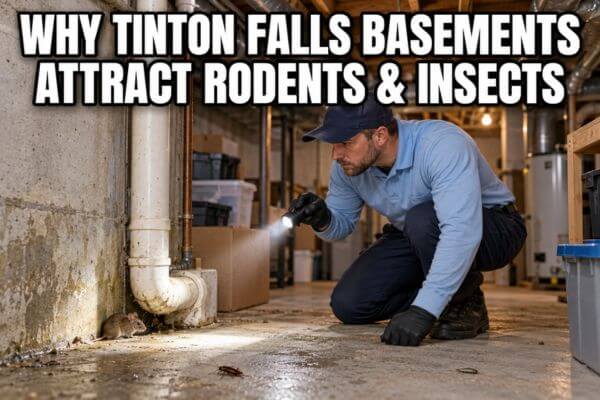
Basements can attract rodents and insects when they provide moisture, sheltered hiding places, food or nesting material, and openings from outdoors. That can happen in any home, so the useful question for a Tinton Falls homeowner is not whether the town itself makes a basement “pest-prone,” but which conditions are present in the house. This guide explains what different basement pests can indicate, what to inspect, and which prevention steps address the cause rather than only the sighting.
Key Takeaways
◉ Moisture, low-disturbance hiding places, stored materials, and entry gaps are the main conditions that make basements useful to pests.
◉ Rodents and moisture-dependent insects do not use basements in exactly the same way, so identifying the type of activity matters before choosing a response.
◉ EPA guidance says indoor relative humidity should stay below 60%, ideally between 30% and 50%.
◉ Sealing entry points, fixing water problems, and improving storage usually matter more for prevention than reacting to individual pests.
◉ Rodent droppings require careful cleanup; CDC guidance says not to dry sweep or vacuum contaminated material before it has been disinfected.
Why Basements Attract Pests
Moisture is usually the first condition to check. Basement walls, pipes, sump areas, window wells, and floor-level spaces can collect water or condensation. The U.S. Environmental Protection Agency recommends keeping indoor relative humidity below 60%, ideally between 30% and 50%. Controlling excess moisture can also make conditions less favorable for pests.
Basements also have utility penetrations, foundation joints, exterior doors, vents, and window openings close to ground level. Small gaps can become access routes. Once inside, pests may find quiet storage zones, cardboard, fabric, pet food, or other materials that provide shelter or resources.
If activity is already established in several parts of the property, Agile Pest Control’s local pest-control options for Tinton Falls provide the appropriate commercial service path. This guide stays focused on basement causes and prevention.
What Different Basement Pests Can Tell You
Different pests point to different conditions. A sighting does not automatically prove an infestation, but patterns can help narrow the cause.
| Pest or pest group | What may be supporting it | Clues worth checking |
| House mice and other rodents | Entry gaps, shelter, food, water, nesting material | Droppings, gnawing, scratching, shredded material |
| Oriental cockroaches | Damp, cool hiding areas and lower-level access | Repeated nighttime sightings near damp or protected areas |
| Silverfish | Persistent humidity plus paper, glue, or starchy materials | Activity around boxes, papers, shelving, or damp storage |
| Centipedes and millipedes | Moisture; centipedes may also follow insect prey | Sightings near damp walls, floor edges, or utility areas |
| Spiders | Low disturbance and available insect prey | Webs or repeated sightings where other insects are active |
Rutgers NJAES identifies Oriental cockroaches among pest cockroach species found in New Jersey and notes their association with damp places. That supports a New Jersey-level connection, but it does not mean they are unusually common in Tinton Falls specifically.
Why Rodents Need a Different Response
Rodents are not simply “moisture pests.” Mice and rats can use basements for shelter, travel routes, nesting material, food, and water. They may enter around pipes, cables, doors, vents, or other openings, then move through wall voids or utility chases.
Common signs include:
◉ Droppings along walls, behind stored items, or near utility areas.
◉ Gnaw marks on boxes, wood, plastic, or wiring.
◉ Scratching or movement sounds, especially when the house is quiet.
◉ Shredded paper, fabric, or insulation that may be used as nesting material.
For a whole-home entry-point review, see Agile Pest Control’s guide to how rats get inside houses and where hidden gaps are found.
If you find rodent droppings, do not dry sweep or vacuum them. CDC cleanup guidance recommends wetting contaminated material with an appropriate disinfectant and following its cleanup steps to reduce the chance of contaminated particles becoming airborne.
A Practical Basement Inspection Checklist
A useful inspection follows the perimeter and looks for causes, not just pests.
◉ Check where plumbing, electrical, cable, HVAC, or other utilities pass through walls or the rim area.
◉ Inspect basement doors, window frames, window wells, vents, and floor-level openings for damaged seals or screens.
◉ Look for active leaks, condensation, damp wall areas, standing water, or a dehumidifier that is not keeping up.
◉ Move storage far enough from walls to inspect the perimeter and see droppings, shed skins, webs, or damaged materials.
◉ Check pet food, bird seed, dry goods, and similar stored products for secure containers and signs of chewing.
◉ Treat one clue as a clue, not a confirmed species diagnosis. Different pests can leave similar signs, and correct identification can affect the control plan.

How to Make a Basement Less Attractive to Pests
Control Moisture First
◉ Repair plumbing leaks and address water around sump areas, window wells, or foundation edges.
◉ Use a humidity gauge instead of guessing. Run a dehumidifier when needed to keep humidity in a reasonable indoor range.
◉ Make sure gutters, downspouts, and exterior drainage move water away from the foundation.
Reduce Shelter, Food, and Access
◉ Replace long-term cardboard storage with sealed plastic bins where practical, and leave space to inspect behind stored items.
◉ Keep pet food, seed, dry goods, and other edible materials in sturdy closed containers.
◉ Repair worn door sweeps and damaged screens, and seal utility or foundation gaps with materials appropriate for the opening. Large, structural, or hard-to-reach gaps may need professional repair.
◉ Avoid relying on a pesticide spray as the only fix. If moisture, food, shelter, or entry points remain, the condition supporting the pest remains too.
When a Professional Inspection Makes Sense
DIY prevention is reasonable when the main issue is humidity, clutter, or a visible minor gap. Professional identification or pest-control help becomes more useful when:
◉ Fresh droppings, gnawing, or scratching continue after basic prevention.
◉ Activity appears inside walls, ceilings, insulation, or other inaccessible spaces.
◉ Cockroaches or other insects keep appearing after moisture and sanitation issues are corrected.
◉ You cannot tell which pest is present, or the treatment choice depends on accurate identification.
◉ The suspected entry point involves a structural defect, inaccessible opening, or repeated re-entry.
A professional inspection should identify the pest, locate access or harborage, and match the response to the actual problem rather than treating every basement sighting the same way.
Frequently Asked Questions
Can basement pests spread to the rest of the house?
Yes. Rodents and insects can move through wall voids, plumbing chases, stairways, doorways, and other connected spaces. A basement sighting does not mean the problem is confined downstairs, especially when entry routes or food sources remain open.
Will a dehumidifier alone get rid of basement pests?
Usually not. Lower humidity can make the space less favorable for moisture-dependent pests, but it does not seal entry points, remove food or nesting material, or resolve an established rodent or insect infestation.
What should I do if I find rodent droppings in the basement?
Avoid dry sweeping or vacuuming them. Follow CDC wet-cleanup guidance using an appropriate disinfectant and protective gloves. If contamination is heavy, widespread, or inside ventilation or inaccessible areas, professional cleanup or pest-control help may be appropriate.
Share