
Why Middletown Yards Can Become Hotspots for Stinging Pests

Written by Jack Hayes
Last updated on September 14, 2026
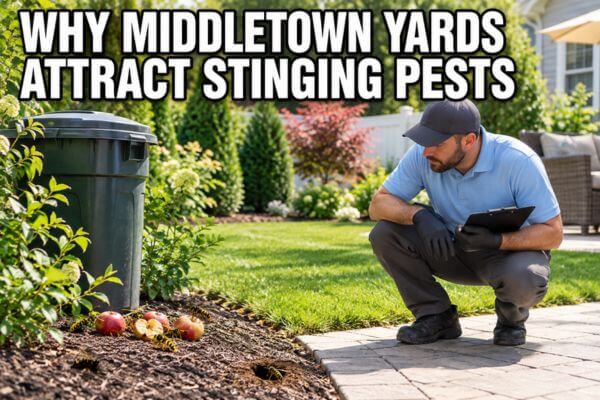
A Middletown yard can attract yellowjackets, paper wasps, hornets, and other stinging insects when food, water, and a protected nest site occur close together. A few insects visiting flowers may only be foraging. Steady traffic to one hole, shrub, eave, or wall gap can point to a nearby colony. Knowing the difference helps you reduce attractants and avoid disturbing a hidden nest.
Key Takeaways
- ◉ Open trash, sweet drinks, fallen fruit, pet food, and cookout scraps can draw wasps into busy areas.
- ◉ Leaks, puddles, birdbaths, and other accessible water can keep stinging insects returning.
- ◉ Yellowjackets may nest in cavities, paper wasps make exposed combs, and bald-faced hornets build enclosed aerial nests.
- ◉ Repeated, directional flight to one opening is a stronger nest clue than scattered flower visits.
- ◉ Stop mowing near suspected nest traffic and keep people and pets away until the insects are identified.
Foraging Visitors or a Nest in the Yard?
Wasps do not need to nest on a property to visit it. Adults may travel into a yard for nectar, ripe fruit, water, patio food, or insects they feed to developing larvae.
Flight pattern is often more informative than the number you see. Insects moving among flowers suggest foraging. Workers repeatedly using one ground opening, shrub, roof edge, shed, or siding gap can indicate a nest. Observe from a safe distance without blocking the flight path.
If activity is beside a doorway, play area, patio, or path, Agile Pest Control’s Middletown stinging insect control page explains the inspection and service option.

Food Sources Near Patios, Trash, and Gardens
The most manageable food sources are sticky recycling, open garbage, pet food, meat scraps, spilled soda, and overripe fruit. Covering food during a meal helps, but cleanup afterward matters too.
Flowers are different. Wasps visit blooms for nectar and hunt insects among plants, providing some pest control and pollination. Removing every flower is unnecessary. Instead, keep fallen fruit and heavily visited blooms away from narrow paths or seating areas when repeated activity creates close contact.
Water and Protected Nest Sites
A dripping spigot, puddle, plant saucer, birdbath, pool edge, or clogged gutter can provide water. Empty accidental standing water and repair leaks, but maintain intentional water features for their intended use.
Nest sites vary. Some yellowjackets use ground cavities, abandoned animal burrows, wall voids, or hollow landscape timbers. Paper wasps attach an exposed comb beneath eaves, railings, or furniture. Bald-faced hornets build covered paper nests in trees, shrubs, or on structures. The University of Minnesota Extension’s wasp and bee guide provides photographs and nest descriptions.
What the Nest Pattern Can Tell You
Identification affects the response, and color alone is not enough. Yellowjackets are compact social wasps that may send many workers through one concealed entrance. Paper wasps are slender, often fly with long legs hanging down, and build an open comb. Despite the common name, bald-faced hornets are aerial-nesting yellowjackets.
Multiple small soil mounds may instead belong to solitary ground-nesting bees or wasps, with each female using her own opening. Do not assume any hole confirms yellowjackets. A clear photo taken from a safe distance can help with identification.
Why Activity Becomes Easier to Notice Later in the Season
Many social wasp colonies begin with a queen in spring and add workers through summer. By late summer, more workers may be searching for food, making some yellowjackets conspicuous around fruit, trash, meals, and sweet drinks. Timing still varies with species, weather, and food availability.
Most of these social-wasp nests are annual. The old colony does not continue into the next year, although a new queen can choose another suitable site on the property. Reducing attractants and sealing inactive structural gaps can help prevent repeat problems.
Yard Activities That Raise Sting Risk
The highest risk often comes from approaching a hidden nest. Before mowing, trimming, moving stored items, or reaching into shrubs, pause if you notice concentrated flight traffic.
- ◉ Do not mow, edge, or use a string trimmer beside an active ground opening; vibration can trigger nest defense.
- ◉ Keep children and pets away from the flight path and mark the area from a distance.
- ◉ Do not hit, plug, flood, burn, or dismantle an active nest.
- ◉ Avoid swatting, and check open cans or cups before drinking outdoors.
- ◉ Wear closed-toe shoes and gloves for yard work, especially when visibility is limited.
When traffic is concentrated on the building rather than the open yard, see why wasp nests keep appearing around Middletown homes for a closer look at structural nesting opportunities.
How to Make the Yard Less Inviting
Prevention cannot guarantee a wasp-free yard, but it can reduce resources in high-use areas.
- ◉ Use tight-fitting lids on outdoor trash and rinse sticky food residue from recycling.
- ◉ Cover food and drinks during outdoor meals, clean spills promptly, and bring pet bowls inside.
- ◉ Pick up fallen fruit and place compost in a properly managed container.
- ◉ Repair leaks, clear drainage problems, and empty water trapped in unused containers.
- ◉ Inspect eaves, railings, sheds, furniture, and play equipment before use.
- ◉ Trim vegetation enough to see around paths and seating areas, but check for activity before cutting.
- ◉ Seal appropriate exterior gaps when they are inactive; do not seal an opening while insects are entering and leaving.
When Professional Identification or Removal Makes Sense
An out-of-the-way nest is not the same problem as one beside a door or play area. Professional help is reasonable when a nest is underground, high overhead, inside a wall, difficult to identify, heavily active, or close to foot traffic. It is also the better option when someone nearby has a known sting allergy.
Treatment depends on the insect, nest location, and product label. Random spraying may miss a concealed colony and increase exposure near the entrance. Keep your distance and let an inspection determine the response.
What to Do After a Serious Sting Reaction
Most sting reactions involve pain, redness, and swelling near the site. Trouble breathing, throat or tongue swelling, widespread hives, dizziness, or fainting need immediate medical attention. Follow a prescribed emergency plan, use epinephrine if directed, and call 911. The American College of Allergy, Asthma & Immunology advises prompt medical attention after epinephrine is used.
This article provides general pest and safety information, not medical diagnosis or treatment.
Frequently Asked Questions
Does seeing several wasps mean there is a nest in my yard?
Not necessarily. Wasps may be visiting flowers, water, fruit, or food from a nest elsewhere. Repeated flights to one opening are more suggestive of a nearby nest than scattered activity across the yard.
Do wasps reuse the same nest every year?
Most yellowjacket and paper wasp colonies are annual, and the old nest is usually not reused. A new queen may still choose the same yard if suitable shelter, food, and water remain available.
Is every cluster of holes in a lawn a yellowjacket nest?
No. Solitary ground-nesting bees and wasps can create many separate holes in one area. Yellowjackets usually share one colony entrance with repeated worker traffic. Avoid disturbing the site until the insects are identified.
Share