
Why Wasp Nests Keep Appearing Around Middletown Homes

Written by Alex Carry
Last updated on August 30, 2026
On this page
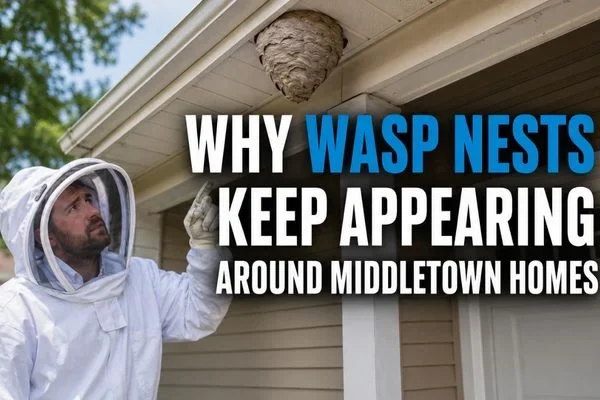
If wasp nests seem to show up around your Middletown home every warm season, the old nest is usually not returning. Social wasps typically abandon their nests in fall, but a new queen can choose the same area when it still offers shelter, access, food, or water. Eaves, deck ceilings, sheds, wall gaps, landscaped edges, and other protected areas can all provide suitable nesting conditions. The key is to look at why the location keeps working rather than assuming the same colony has returned.
This guide explains why repeat nesting happens, where wasps commonly build, what you can safely do to make those areas less attractive, and when an active nest should be left alone.
Key Takeaways
◉ Repeat nests usually mean the location is still attractive. A new queen may choose the same sheltered area even though the previous colony is gone.
◉ Different wasps use different nesting sites. Paper wasps, yellowjackets, and bald-faced hornets do not all build in the same places, so nest location and structure matter.
◉ Early inspection can help prevent a small nest from becoming established. Checking eaves, sheds, decks, and exterior gaps in spring and early summer can make repeat activity easier to spot.
◉ Food, water, shelter, and access all influence nesting. Trash, spills, standing water, vegetation, and open building gaps can all make an area more useful to wasps.
◉ Some nests are not safe DIY situations. Concealed nests, ground nests, elevated nests, heavy activity, and nests near frequently used areas deserve extra caution.
Why Wasp Nests Keep Returning to the Same Areas
The short answer is that the spot still works. A queen emerging after winter needs a protected place to start a new colony. Social wasps can use existing sheltered sites such as eaves, wall voids, tree branches, shrubs, sheds, and old animal burrows. When those features remain available from one year to the next, the same general area can keep attracting new queens. That does not mean every wasp you see is nesting on your property. Adults may simply be foraging. A more useful clue is repeated flight to and from the same crack, overhang, shrub, or ground opening. If activity is concentrated near the house, Middletown pest control can provide local service context for active wasp and hornet concerns.
Common Nesting Spots Around a Home
A visual check from a safe distance can help you decide whether you are seeing a nest or only occasional wasp activity. Avoid standing directly under an active flight path.
Common areas include:
◉ Under eaves, porch ceilings, deck structures, and sheds where open paper-wasp nests may be attached.
◉ Inside wall voids, attics, and other cavities where some social wasps, including yellowjackets and European hornets, may nest out of sight.
◉ Ground openings, leaf piles, compost, and old rodent burrows where yellowjackets may establish nests.
◉ Trees, dense shrubs, and outdoor structures where enclosed gray paper nests, including bald-faced hornet nests, may appear.
Do not identify the species from color alone. Nest shape, location, and flight behavior can provide useful clues, but exact identification is less important than choosing a safe response.
What the Nest May Tell You About the Wasp
Paper Wasps
Paper wasps build open, umbrella-like combs with visible cells. These nests are often attached beneath protected horizontal surfaces such as eaves, porch ceilings, or deck structures. They may be less defensive than some other social wasps, but any active nest can trigger defensive behavior when disturbed.
Yellowjackets
Yellowjackets may nest underground, inside a wall void, or in another concealed location. Their paper nest may not be visible at all. Instead, look for steady traffic around one ground opening or exterior gap. Mowing, trimming, or other vibration near a ground nest can trigger defensive activity.
Bald-Faced Hornets
Bald-faced hornets are actually a type of aerial yellowjacket. Their large, enclosed gray nests may be attached to tree branches, shrubs, or structures. Because activity can be concentrated around the nest, give the area plenty of space. Avoid knocking the nest down or spraying it from close range.
When Wasp Activity Usually Builds
New queens begin nests in spring. As worker numbers increase through summer, a nest that was easy to miss early in the season can become much more noticeable. Late summer into autumn can also bring more defensive behavior around a disturbed nest as the colony changes. The exact timing varies with weather, species, and nest location, so use the activity you actually see rather than relying only on the calendar.
How to Make Repeat Nesting Less Likely
Prevention works best before a queen fully settles into a site. Focus on practical conditions you can safely change rather than relying on scent-based products or decoy nests as a dependable solution.
◉ Check eaves, porch ceilings, sheds, deck undersides, and outdoor storage areas regularly in spring and early summer.
◉ Seal unused gaps around siding, soffits, and utility penetrations only after confirming insects are not actively using them.
◉ Keep trash lids closed, rinse sticky containers, and clean spills around patios, grills, and outdoor eating areas.
◉ Repair leaks and remove standing water where practical.
◉ Keep gutters clear so water drains properly.
◉ Trim vegetation that presses against the home when it can be done without disturbing visible insect activity.
◉ Avoid swatting wasps, shaking nests, or using pesticides in ways the product label does not allow.
If activity is concentrated around a swimming area, see how to keep bees and wasps away from a pool for additional prevention ideas around food, drinks, water, and poolside activity.

When an Active Nest Needs Professional Attention
Leave removal to a trained professional when the nest is:
◉ Hidden inside a wall or roof area
◉ Underground
◉ High above the ground
◉ Near a doorway, deck, play space, or frequently used path
◉ Surrounded by heavy wasp activity
◉ Difficult to identify from a safe distance
◉ Near someone with a known insect-sting allergy
A professional can identify the nesting area and choose an approach that fits the site and pest involved. One customer shared that Agile responded quickly, communicated clearly, and provided polite, professional service throughout the process.

They also appreciated that the technician was personable, knowledgeable, and took time to explain the treatment plan in detail. That kind of communication can be especially valuable when dealing with an active wasp or bee problem near areas your family uses regularly.
Are Wasp Stings Dangerous?
Many wasp stings cause local pain, redness, swelling, or itching. A severe allergic reaction is different. Warning signs can include:
◉ Hives away from the sting site
◉ Swelling of the face or throat
◉ Trouble breathing
◉ Dizziness or fainting
◉ Vomiting
◉ Widespread symptoms
Seek emergency medical care immediately for signs of anaphylaxis. Anyone with a history of serious insect-sting reactions should follow the emergency plan provided by their healthcare professional.
The Bottom Line
Wasp nests that appear in the same general area year after year usually do not mean the same nest has returned. More often, the location still offers the shelter, access, food, or water that a new queen needs. Inspect likely nesting areas early in the season, reduce attractants where practical, and seal unused gaps only when you are sure they are not active entrances. If a nest is concealed, underground, elevated, heavily active, or close to people and pets, avoid disturbing it and have the area assessed instead.
Share