
Where Spiders Commonly Hide Inside Little Silver Houses?

Written by Jack Hayes
Last updated on August 27, 2026
On this page
Spiders usually settle where they have cover, a quiet place to rest or build a web, and access to small insects. That makes storage areas, corners, gaps, and seldom-disturbed spaces worth checking first. For Little Silver homeowners, this guide focuses on the building conditions that can make spiders easier to notice indoors and on practical ways to reduce those conditions without assuming that every sighting means a serious problem.
Key Takeaways
◉ Quiet, protected spaces are common spider hiding places. Basements, crawl spaces, garages, closets, attics, and areas behind furniture are good places to check first.
◉ Repeated spider activity can point to more than one condition. Look for hiding places, entry gaps, and nearby insects rather than focusing only on the spider itself.
◉ Webs and egg sacs need context. One web or egg sac does not automatically mean a widespread infestation, but recurring activity deserves a closer inspection.
◉ Reducing prey insects can make indoor areas less attractive to spiders. Screens, exterior lighting, moisture, food storage, drains, and entry gaps can all affect insect activity.
◉ Cleanup and exclusion are useful first steps. Removing webs, reducing clutter, repairing screens, sealing gaps, and addressing moisture can help reduce places where spiders settle.
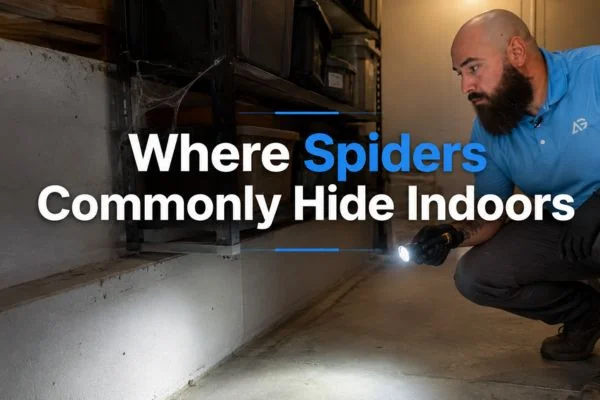
Where Spiders Commonly Hide Indoors
Different spiders use a home differently. Some build webs in a protected corner, while others roam along floors or hide in narrow cracks. Extension guidance consistently points to quiet, protected areas as common indoor hiding places. Start with the rooms and edges of the home that have the least foot traffic.
Basements, Crawl Spaces, and Storage Areas
Basements, cellars, crawl spaces, closets, and garages can give spiders long stretches without disturbance. Check behind stored belongings, along floor joists, at the edges of shelving, and in corners near the foundation. Cardboard boxes and stacked items can make it harder to see webs or egg sacs, so move stored items carefully and wear gloves when sorting a space that has been untouched for a while.
Behind Furniture and Along Edges
The space behind a couch, dresser, appliance, or radiator can offer a protected route along a wall. Look along baseboards, under beds, behind curtains, and around the back of furniture. A wandering spider may be seen in these locations without there being a web nearby, so one sighting alone does not tell you the size of the problem.
Bathrooms, Kitchens, and Utility Areas
Under-sink cabinets, laundry rooms, utility closets, and areas around pipes combine cracks, sheltered edges, and sometimes moisture. Spiders do not feed on moisture, but damp conditions and plumbing gaps can support or admit the small insects they prey on. Repairing persistent leaks and sealing gaps around pipes can therefore address more than one condition at once.
Garages, Attics, Windows, and Doors
Attics and garages can collect stored items and have less regular activity. Around the rest of the home, inspect window frames, door thresholds, screens, vents, and utility penetrations. These spots can provide web anchors, sheltered resting places, or an opening from outside. Webs near exterior lights can also be a clue that flying insects are being drawn to that area.
What Brings Spiders Inside
Spiders are predators, so food and shelter matter more than a single room or season. An indoor spider may have entered through a gap, been carried in with an item, or already been using a protected space in the structure. Repeated webs or sightings in one area are a useful prompt to look for three things: a quiet hiding place, an entry route, and other insects nearby.
That pattern is useful, but it is not a diagnosis. One web can come from a single spider. A web that quickly returns near a light, door, or storage area may point to conditions that deserve attention. The most durable approach is to reduce hiding places and prey insects while tightening likely entry points. If repeat activity is making you consider professional help, Agile’s spider removal service in Monmouth County explains how an inspection can focus on active areas, entry points, webs, and conditions attracting spiders.
How to Read Common Spider Clues
Webs
A web usually means a web-building spider used that spot, but the shape and placement vary by species. A web in a high corner may be old and inactive. Fresh or repeatedly rebuilt webs in the same area are more useful evidence that the location still offers a workable hiding place and access to prey.
Egg Sacs
An egg sac indicates that a spider used the area for reproduction. A single sac is not proof of a house-wide infestation. Several sacs, recurring webs in multiple rooms, or an increasing number of indoor sightings are better reasons to inspect the conditions around storage, exterior gaps, and insect activity.
Other Insects
Spiders can be more noticeable where small insects are active. Check screens, exterior lighting, food-storage areas, trash handling, drains, and gaps around doors or windows. Addressing the insect issue may make a location less attractive to spiders, but it is important to identify the insect rather than assuming every spider sighting has the same cause.
When Identification and Safety Matter
Most spiders found in and around homes are not medically important, and trying to handle an unknown spider can create an unnecessary bite risk. If you need to move one, avoid direct contact. A container and stiff card can work for a spider in an accessible spot. Otherwise, keep people and pets away from the area and seek help if you are concerned.
Rutgers New Jersey Agricultural Experiment Station notes that black widows may use dark, protected locations, including garages, basements, and crawl spaces. Their bites can cause significant symptoms. Do not rely on a photo, a color pattern, or a skin reaction alone to identify a spider or diagnose a bite. If a suspected spider bite causes severe pain, muscle cramps, trouble breathing, or other concerning symptoms, seek urgent medical guidance.
Practical Steps to Reduce Spider Hiding Places
A consistent maintenance routine is more reliable than a one-time spray or home remedy. Focus on exclusion, cleanup, and conditions that support prey insects:
◉ Vacuum webs, egg sacs, and dust from corners, baseboards, window frames, and behind furniture. Empty the vacuum outdoors promptly if you collect live spiders.
◉ Reduce clutter in garages, basements, closets, attics, and crawl spaces. Store belongings so edges and corners remain visible during inspections.
◉ Repair torn screens, worn door sweeps, loose weatherstripping, and gaps around windows, doors, pipes, vents, and utility lines.
◉ Fix plumbing leaks and keep utility areas as dry and accessible as practical. Moisture management can reduce conditions that favor other household pests.
◉ Move wood, debris, and dense vegetation away from the exterior where practical, and avoid letting plants press directly against the structure.
◉ Review exterior lighting near doors and windows. Limiting unnecessary night lighting or changing the placement can help reduce the insects that gather there.
Use any pesticide product only according to its label. Do not mix products or apply them in occupied spaces, around children or pets, or in electrical areas unless the label specifically allows it. Mechanical cleanup and exclusion are often the right first steps for a small number of spiders.
Rutgers New Jersey Agricultural Experiment Station notes that black widows may use dark, protected locations, including garages, basements, and crawl spaces. Their bites can cause significant symptoms. Do not rely on a photo, a color pattern, or a skin reaction alone to identify a spider or diagnose a bite. If a suspected spider bite causes severe pain, muscle cramps, trouble breathing, or other concerning symptoms, seek urgent medical guidance.

Customer Experience
For this spider-focused article, a different customer review is a better fit than the professionalism-focused review used in earlier articles. One customer specifically mentioned scheduling, communication, the technician, and the service itself as “top notch.” The same review also listed spider extermination among the services received.
That feedback fits naturally here because recurring spider activity may require both a careful inspection and dependable follow-through. Clear scheduling and communication can make it easier for a homeowner to understand what areas are being checked and what practical steps should happen next.

When to Call a Professional
Professional help can make sense when webs return quickly after cleanup, spiders are appearing in several rooms, you cannot safely reach the activity, or a suspected black widow is present.
An inspection can separate spider activity from the insect, moisture, clutter, or exclusion issue that may be supporting it. For Little Silver homes, that keeps the solution tied to observable conditions rather than unsupported assumptions about a neighborhood or property. For homeowners who want broader local pest information beyond spiders, the Little Silver pest control page covers pest services available in the area.
Share