
What Causes a Rat Infestation

Written by Jack Hayes
Last updated on October 21, 2026
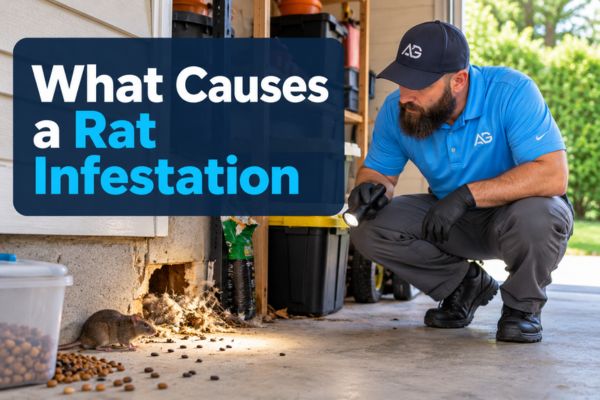
If you are wondering what causes a rat infestation, the answer usually starts with easy access to food, water, shelter, and an opening into the home. A single rat may pass through a yard, but a lasting problem starts when the property keeps giving rats a reason to stay. For Monmouth County homeowners, common trouble spots include garages, crawl spaces, kitchens, sheds, trash areas, and gaps around utility lines.
Finding the cause matters as much as removing the rats. In this guide, we’ll explain how infestations start, why rats stay, the health risks, and what to do next.
Key Takeaways
◉ Food, water, shelter, and easy entry points are the main conditions that can start and support a rat infestation.
◉ A clean home can still get rats if gaps, leaks, birdseed, trash, or other resources give them a reason to enter and stay.
◉ Catching one rat may not solve the problem if food, water, shelter, or the original entry point remains available.
◉ Rat infestations can create health and property risks through contaminated food or surfaces, droppings, urine, saliva, and gnawing damage.
◉ Fresh droppings, repeated scratching, gnaw marks, or new sightings can point to ongoing activity and may signal that a closer inspection is needed.
What Causes a Rat Infestation?
A rat infestation usually starts when rats find a reliable source of food or water, then locate a protected place to hide or nest. Openings around doors, foundations, pipes, vents, garages, and rooflines can turn an outdoor rat problem into an indoor one. Food, water, shelter, and easy access can give rats a reason to stay and keep returning.
◉ Food: trash, pet food, birdseed, spilled pantry goods, fallen fruit, and open compost can keep rats returning.
◉ Water: leaking pipes, pet bowls, standing water, and damp utility areas can support rat activity.
◉ Shelter: clutter, wall voids, crawl spaces, dense vegetation, sheds, and stored materials give rats protected places to hide or nest.
An infestation can begin with one entry route. Once rats can move between shelter and food without much disturbance, activity can continue, and new rats may use the same route. Our guide to how rats get inside your house explains common entry points in more detail.
Why Do Rats Infest Homes?
Rats infest homes when a house offers resources they can use and a path they can reach. A clean home can still have rats. A tidy kitchen does not fix a pipe gap, a loose garage seal, birdseed near the house, a dripping faucet, or outdoor trash left accessible.
Rats often travel along protected edges and return to places where they found food or shelter. If trapping removes one rat but the entry point stays open, new activity can appear. Homeowners dealing with noises in walls or ceilings can read our guide on how to get rid of rats in attics, walls, and houses for practical next steps.
How a Small Garage Rat Problem Can Turn Into an Infestation
A homeowner in Middletown who notices a few rat droppings near a bag of birdseed in the garage. They clean up the mess and assume a rat wandered in looking for food. A few nights later, they hear scratching behind the garage wall. When they check the birdseed bag, they find a hole chewed through the bottom.
They set a trap and catch a rat the next morning. Problem solved, right? Not quite. Within a week, fresh droppings appear in the same spot, and the scratching starts again.

A closer inspection reveals a small opening around a utility pipe where rats can enter. There’s also a leaking sink nearby, giving them easy access to water. The homeowner now realizes that catching one rat didn’t solve the underlying problem. The garage still offers food, water, and a way inside.
The takeaway: A single rat may be the first sign of a bigger problem. Unless homeowners remove what attracts rats and address their entry points, the activity can continue.
Is a Rat Infestation Dangerous?
Yes, a rat infestation can create health and property risks. Rats may contaminate food and surfaces with urine, droppings, or saliva, and they can damage stored goods, insulation, and building materials through gnawing. The CDC states that rodents can spread disease through contact with waste, bites, contaminated food, and parasites such as fleas or mites.
The risk level depends on the type of exposure and the conditions in the home. Do not dry sweep or vacuum rodent waste. CDC cleanup guidance calls for wetting droppings with disinfectant before wiping them up. You can read more about the types of damage rodents cause inside homes.
Can a Rat Infestation Make You Sick?
Yes, contact with rats or rat-contaminated materials can make people sick. CDC guidance lists illnesses linked with rodents, including leptospirosis, salmonellosis, and rat-bite fever. Exposure can happen through bites, urine, droppings, saliva, contaminated food, or contaminated materials. If illness follows known rat exposure, contact a healthcare professional and explain the exposure.
What Happens If You Eat Rat-Infested Food?
Eating food contaminated by rats can expose you to harmful germs. The U.S. Food and Drug Administration (FDA) says food exposed to rats, mice, or other rodent filth can make people sick. Its guidance for food exposed to rodent filth says exposed food in paper or plastic packaging should be thrown away. Damaged cans or jars should be discarded too.
Do not taste food to decide whether it is safe. Clean and disinfect the storage area after discarding contaminated items. If you already ate suspected rat-contaminated food and feel sick, contact a healthcare professional and describe the possible exposure.
What a Homeowner Shared About a Rodent Inspection
Rodent problems can be difficult to pin down when the activity is hidden in an attic, wall, or another part of the home. One homeowner shared that the property was checked thoroughly, including a walk around the exterior and an attic inspection, to help identify the source of the rodent issue.

They appreciated having the process explained clearly before service began. For homeowners dealing with rats or mice, a careful inspection can help locate signs of activity, possible entry points, and areas that may need attention.
Seeing Rat Droppings Again? Here's What You Might Be Missing
If you’re finding fresh rat droppings, hearing scratching behind walls, or noticing rats in different parts of your home, it may be time to call a professional. Catching one rat might provide temporary relief, but the problem can continue if rats still have access to food, water, shelter, and hidden entry points.

Agile Pest Control provides rodent control for homeowners in Monmouth County and can inspect the property for signs of activity, attractants, and likely entry areas. A professional inspection can help you decide which openings need attention, where control measures belong, and how to lower the chance of repeat activity.
Frequently Asked Questions
Can rats infest a clean house?
Yes. Rats can enter a clean home through structural gaps and stay if they find water, shelter, pet food, birdseed, or another reliable food source nearby.
Does seeing one rat mean I have an infestation?
Not always. One sighting can be a single animal, but fresh droppings, repeated noises, gnaw marks, or new sightings suggest ongoing activity worth investigating indoors.
What attracts rats to a yard?
Open trash, birdseed, pet food, fallen fruit, compost, standing water, dense ground cover, woodpiles, and clutter can give rats food, water, or protected shelter nearby.
Will rats leave if I remove their food?
Removing food makes a property less attractive, but rats may stay if water, shelter, or entry routes remain. Effective prevention addresses all of those conditions.
What should I do if I find rat droppings?
Avoid dry sweeping or vacuuming fresh droppings. Ventilate the area, use safe wet-cleaning guidance, wash your hands, and check nearby spaces for more rodent activity.
Share