
Why Moisture Around Holmdel Homes Can Lead to Pest Problems

Written by Jack Hayes
Last updated on September 16, 2026
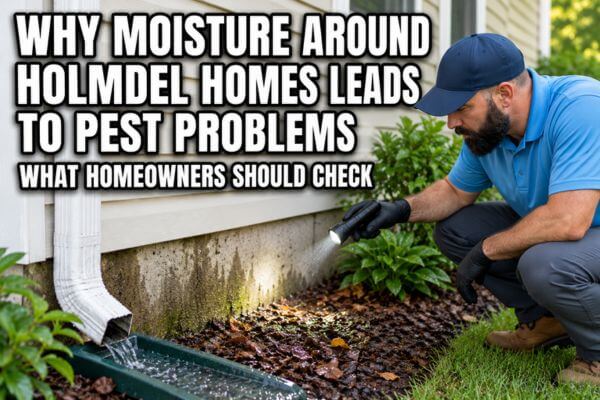
Moisture does not automatically mean a home has pests, but it can make a property much more attractive to them. Leaking pipes, damp wood, condensation, clogged gutters, and standing water provide drinking water, shelter, or breeding habitat for different pest groups. Around a Holmdel home, controlling those moisture sources can reduce pest pressure while also helping you spot hidden leaks or drainage problems earlier.
Key Takeaways
◉ Moisture is a pest attractant, but dampness alone does not prove an infestation.
◉ Termites and carpenter ants are important to watch around moist or water-damaged wood, although they affect wood in different ways.
◉ Cockroaches and other humidity-loving pests often gather near plumbing, bathrooms, basements, and other areas where water is available.
◉ Mosquito prevention starts with removing or managing standing water around the yard.
◉ Long-term prevention works best when you fix the moisture source and address any pest activity that is already established.
Why Moisture Changes Pest Risk
Many household pests need access to water as well as food and shelter. U.S. Environmental Protection Agency guidance recommends removing food, water, and shelter as part of an integrated pest management approach.
Moisture can help pests in several ways. A dripping supply line can give cockroaches or ants a reliable water source. Condensation can keep a wall void or cabinet area humid. Poor drainage may leave soil and wood around the foundation damp. Standing water can give mosquitoes a place to develop.
The important point is that moisture is a condition to investigate, not a diagnosis. Finding a damp crawl space does not confirm termites. Seeing ants near a sink does not tell you where their nest is. The moisture clue tells you where to look more closely.
If recurring activity is already developing around the property, Agile Pest Control’s Holmdel pest-control service area is the main local service page for professional inspection and treatment options.
Pests Commonly Associated With Damp Areas
Termites and Carpenter Ants
Subterranean termites live in the soil and can reach structural wood through hidden routes or mud tubes. Rutgers NJAES notes that moist wood and wood-to-soil contact can make conditions more favorable, which is why its termite prevention guidance emphasizes moisture reduction, leak repair, and properly maintained gutters and downspouts.
Carpenter ants are different. They do not eat wood. They excavate galleries for nesting, and Rutgers reports that common indoor nest sites include wood that has become moist because of faulty plumbing. Repeated sightings of large ants near damp trim, window frames, or plumbing areas deserve a closer look, but identification should be confirmed before assuming the problem is carpenter ants.
For more on moisture-driven ant activity in plumbing areas, see Agile Pest Control’s guide to ants in bathrooms.
Cockroaches, Silverfish, and Other Humidity-Loving Pests
Cockroaches often use areas where food, water, warmth, and hiding places overlap. In New Jersey, Rutgers notes that German cockroaches are commonly found in kitchens and bathrooms, while Oriental cockroaches prefer damp places and may occur around basements, plumbing, or other moist areas.
Silverfish and similar occasional invaders also tend to do better in humid spaces. Seeing them repeatedly in a basement, bathroom, laundry area, or closet can be a reason to check for condensation, leaks, poor ventilation, or damp stored materials.
Mosquitoes
Mosquitoes are different from most indoor moisture pests because their immature stages develop in water. Containers, clogged gutters, birdbaths, toys, plant saucers, tarps, and other items that hold rainwater can become breeding habitat.
New Jersey guidance recommends removing standing water and keeping gutters and drainage systems clear. If mosquitoes are the main concern, Agile Pest Control’s article on reducing backyard mosquitoes goes deeper into outdoor prevention.
Where to Check for Hidden Moisture
A useful moisture inspection is less about searching every surface and more about checking places where water can collect without being obvious.
◉ Look under sinks and around toilets, dishwashers, washing machines, water heaters, and supply lines for drips, staining, or swollen materials.
◉ Check basement and crawl-space corners for condensation, damp wood, musty odors, or water after rain.
◉ Inspect gutters and downspouts for clogs, overflow, or discharge that leaves water close to the foundation.
◉ Check bathroom and kitchen exhaust fans to make sure moisture is being vented outside rather than into an attic or enclosed space.
◉ Look around air-conditioning equipment for blocked condensate drains or persistent moisture.
◉ Walk the yard after rain and note containers, tarps, toys, planters, or low spots that continue holding water.
This checklist gives homeowners a practical way to connect pest sightings with the condition that may be helping them persist.

How to Reduce Moisture Without Overcomplicating It
Start with the water source. Repair plumbing and roof leaks, keep gutters working, and direct drainage away from the foundation. Indoors, use bathroom and kitchen exhaust fans and address condensation around cold pipes or windows.
The EPA’s mold and moisture guidance recommends keeping indoor relative humidity below 60 percent, ideally around 30 to 50 percent when practical. A basic hygrometer can help identify rooms that stay unusually humid. Dehumidifiers can be useful in persistently damp basements or similar spaces, but they should not be treated as a substitute for repairing an active leak or drainage problem.
Outdoors, empty or manage standing water on a regular schedule. Keep rainwater from collecting in containers and maintain gutters so water can flow away instead of sitting in debris.
Reducing moisture can make the property less favorable to pests, but it may not remove an established colony or infestation. If termites, carpenter ants, cockroaches, or another pest are already active, both the pest problem and the moisture source may need attention.
When a Pest Inspection Makes Sense
Consider a professional inspection when pest activity keeps returning after leaks or humidity problems are corrected, or when you find signs that are difficult to interpret.
◉ Mud tubes, discarded wings, or suspicious wood damage
◉ Large ants repeatedly appearing indoors near damp wood
◉ Cockroaches showing up around plumbing after sanitation and moisture fixes
◉ Pest activity in wall voids, crawl spaces, or other areas that are hard to inspect safely
◉ Moisture damage where the pest species or extent of activity is uncertain
A pest professional can identify the pest and evaluate accessible areas for activity. Plumbing, roofing, drainage, mold, or structural repairs may still require the appropriate trade professional.
Frequently Asked Questions
Can moisture alone cause a pest infestation?
No. Moisture can make a home more suitable for certain pests, but pests still need a way to reach the property and establish themselves. Treat dampness as a risk factor and inspection clue rather than proof of infestation.
What are the first signs of a hidden moisture problem?
Common clues include water stains, condensation, peeling paint, swollen wood or cabinet materials, persistent musty odors, and dampness around pipes or foundation areas. Pest activity repeatedly appearing in the same damp location can be another reason to investigate.
Will fixing a leak make existing pests disappear?
Sometimes activity decreases after a water source is removed, but an established termite, carpenter ant, or cockroach infestation may remain. Fix the moisture problem first, then confirm whether pest activity continues and whether identification or treatment is needed.
Share