
How to Wash Bed Bugs From Clothes and Keep Them Away

Written by Jack Hayes
Last updated on October 15, 2026

Finding bed bugs is stressful. Your first instinct is to throw everything in the wash and hope it solves the problem. Sometimes that helps. Sometimes it doesn’t.
Washing can remove or kill some bed bugs, but washing alone is not a reliable way to eliminate every bug or egg. High-temperature drying is an important step because sustained heat can kill both bed bugs and their eggs.
In this guide, we’ll walk through what laundry can actually do, the settings that matter, and how to handle clothes and fabrics without spreading bed bugs around your home.
Key Takeaways
◉ Washing alone may not reliably kill every bed bug or egg. High dryer heat is the most important laundry treatment step for items that can safely tolerate it.
◉ Keep suspect clothing and bedding sealed while moving them to the laundry area so bed bugs are not carried through other parts of the home.
◉ Use the hottest washer and dryer settings the fabric can safely tolerate, and run dryer-safe items on high heat for at least 30 minutes.
◉ Put treated clothes directly into a new, clean sealed bag or container if the infestation has not yet been resolved.
◉ Laundry treats clothing and bedding. It does not eliminate bed bugs hiding in mattresses, furniture, bed frames, baseboards, or other parts of the room.
Does Washing Really Kill Bed Bugs and Their Eggs?
Yes, laundry can kill bed bugs on clothing and bedding, but washing alone should not be relied on to kill every life stage. Water temperature varies between washing machines, and cooler cycles may allow bed bugs to survive. High dryer heat provides a more dependable treatment for dryer-safe fabrics.
That is why washing should be viewed as the cleaning step and high-heat drying as the main heat-treatment step.
What Temperature Kills Bed Bugs in the Washer and Dryer?
Use the hottest settings the fabric can safely tolerate rather than relying on one exact washing-machine temperature. The University of Minnesota Extension’s bed bug guidance recommends using the hottest washer and dryer settings the fabric can withstand and notes that medium-high dryer heat for about 30 minutes can treat a full load.
What works?
◉ Washer: Use the hottest fabric-safe setting when washing is appropriate.
◉ Dryer: Use high heat for at least 30 minutes for items that can safely tolerate that temperature and tumbling.
◉ Dryer-safe items that do not need washing: These can often go directly into the dryer if their care instructions allow it.
What should you avoid relying on?
◉ Cold or warm washing by itself
◉ Air drying
◉ Short or low-heat dryer cycles
◉ Guessing with heat-sensitive fabrics
Always check the care label before exposing clothing or other belongings to high heat.
Why Washing Feels Like It Works (Then Bed Bugs Come Back)
This is how it usually starts. A homeowner finds bed bugs and goes straight into cleanup mode. Sheets, clothes, blankets – everything goes into the washer. They run multiple loads. They dry items. They bag clean laundry. By the end of the day, it feels like progress. That night, there are no bites. No bugs in sight. Relief sets in.
A few days later, the bites are back. That’s when they call us, confused and frustrated, because they did exactly what they were supposed to do. They washed everything.
When we inspect situations like this, the problem isn’t effort. It’s that washing alone doesn’t reach the whole infestation. Some eggs survive if items don’t stay in high dryer heat long enough. Other bugs never go near the laundry at all. They stay hidden in mattress seams, bed frames, couches, or nearby furniture.
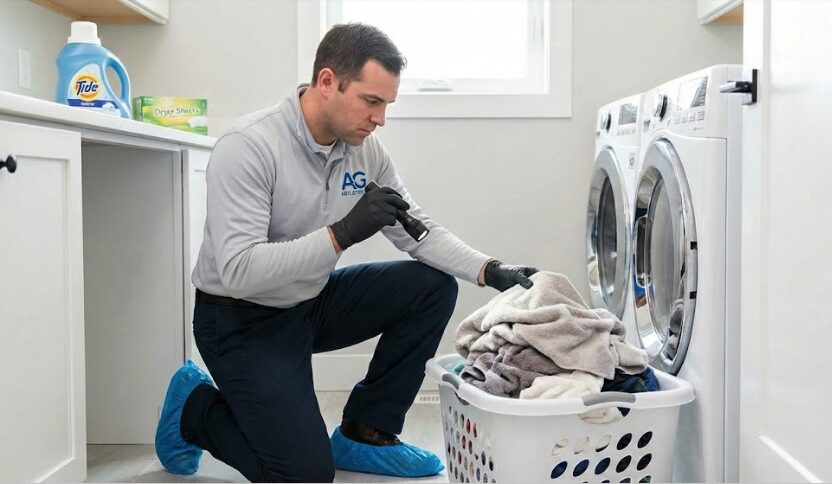
Once the clean clothes come back into the room, the remaining bugs crawl right back into them. That’s why washing often creates false confidence. It reduces the number of bugs you see, but it doesn’t remove the source. Bed bugs don’t live only in clothes and bedding. They live where washing can’t reach. Laundry works best as one part of the process. When it’s done correctly and combined with treating the hiding places, that’s when the problem actually starts to go away.
Step-by-Step: How to Wash Bed Bug–Infested Items Safely
Doing laundry the wrong way can move bed bugs through the home. Order matters.
Bagging Items Before Washing
Before moving suspect laundry:
◉ Place clothing, bedding, and other washable items into sealed plastic bags.
◉ Carry the sealed bags directly to the laundry area.
◉ Avoid shaking clothing or bedding while moving it.
◉ Empty the bag directly into the washer or dryer.
◉ Dispose of a used disposable bag after unloading it rather than using it to carry clean clothing.
This keeps untreated items contained until they reach the machine.
Washing Settings That Actually Work
Wash items according to their care labels using the hottest temperature the fabric can safely handle. Use regular laundry detergent. Special “bed bug” laundry additives are not necessary for the heat-treatment process.
Avoid overloading the machine. Clothes and bedding still need enough room to wash and dry properly.
Drying Time That Kills Bed Bugs
Drying is the most important part of the laundry process for heat-tolerant fabrics.
◉ Use high heat.
◉ Run dryer-safe items for at least 30 minutes.
◉ Do not overcrowd the dryer.
◉ If clothing enters the dryer wet, use a complete drying cycle so the entire load becomes fully dry and thoroughly heated.
Do not rely on touching the outside of an item to determine whether the treatment worked. Dryer temperature, cycle length, load size, and fabric type all affect how quickly heat moves through the load.
Store Clean Items So They Stay Bed Bug-Free
Once items are treated, move them directly into new, clean bags or sealed containers if bed bug activity is still present elsewhere in the home. Do not put treated clothes back onto an infested bed or into a dresser that has not been inspected or treated.
How to Prevent Spreading Bed Bugs During Laundry
Laundry can reduce bed bugs on fabrics, but poor handling can move them somewhere else.
Avoid these common mistakes:
◉ Carrying loose bedding or clothing through the house
◉ Shaking or sorting suspect laundry in clean rooms
◉ Mixing untreated belongings with items that have already been treated
◉ Returning clean clothing to an infested bed, dresser, or closet
◉ Taking loose laundry into a shared laundry room
If you use a laundromat or shared laundry facility, transport suspect items in sealed bags. Once drying is complete, place the treated laundry directly into a different clean bag or container before carrying it home.
What Items Can Be Washed or Heat-Treated for Bed Bugs?
Different items require different handling. Do not automatically put every belonging through the same hot wash.
Washable and Dryer-Safe Items
Items that commonly tolerate normal laundering may include:
◉ Sheets and pillowcases
◉ Washable clothing
◉ Towels
◉ Blankets
◉ Other washable linens
Follow the care label and use high dryer heat when the material can safely tolerate it. Some dry items such as certain stuffed toys, fabric bags, shoes, or similar belongings may also tolerate dryer treatment, but check their care instructions first.
Delicates, Shoes, Bags, and Dry-Clean-Only Items
Do not put a heat-sensitive item into a hot washer or dryer simply because bed bugs are a concern. Dry-clean-only garments may need professional cleaning or another appropriate treatment. If you are dealing with delicate clothing, see our guide to dry cleaning and bed bugs.
Sealed bags and cont ainers are also useful for containing suspect belongings, but simply leaving an item in a bag for a few weeks should not be treated as a reliable shortcut for killing bed bugs. For items that cannot safely be washed or tumble dried, use a treatment method appropriate for that material or ask a pest-control professional how the item should be handled.
Can Bed Bugs Survive in the Washing Machine?
Yes. Bed bugs can survive a washing cycle when the conditions are not hot enough to kill them. Washing still helps clean fabrics and may remove some insects, but it should not create false confidence.
A load that has only been washed has not necessarily been fully treated for bed bugs. For dryer-safe items, proper high-heat drying is the important next step.
Why Washing Alone Won’t Eliminate a Bed Bug Infestation
Laundry treats the things that go into the washer or dryer. Bed bugs do not live only in clothing and bedding.
They can also hide around:
◉ Mattress and box-spring seams
◉ Bed frames and headboards
◉ Upholstered furniture
◉ Nearby cracks and crevices
◉ Baseboards and other protected hiding areas
That means freshly treated clothing can be exposed again if it is returned to an untreated area. If activity appears to be moving beyond the bed or into other rooms, our guide explaining how bed bugs spread from room to room explains why containment becomes increasingly important.
Bottom line: laundry is a useful part of bed bug control, but it is not a whole-home cure.
When Professional Bed Bug Treatment Is Necessary
If bed bugs continue appearing after laundry is being handled correctly, the source may be elsewhere in the room or home.

Professional inspection becomes especially practical when:
◉ Live bed bugs or other signs appear beyond clothing and bedding.
◉ Bed bug activity continues after properly treating laundry.
◉ More than one room appears to be involved.
◉ You cannot identify where the bugs are hiding.
◉ Clean belongings repeatedly become exposed again.
At Agile Pest Control, we understand that washing clothes and bedding is only one part of dealing with a bed bug infestation. Even after proper laundering, bed bugs may remain hidden in mattress seams, furniture joints, and cracks in walls.
If these hiding spots are not addressed, the infestation can continue, and clean clothes may become exposed again. That’s why laundry should be combined with a more complete bed bug treatment plan that targets the infestation at its source.
Real Experiences After Bed Bug Treatment and Follow-Up
When laundry alone doesn’t solve the issue, professional support often becomes the turning point. Real feedback from Asbury Park’s homeowners helps others understand what to expect and shows how treatment plans work beyond DIY steps.

Questions About Cleaning Bed Bugs From Clothes
Can bed bugs stay in clean clothes after washing?
Yes. Bed bugs may survive incomplete washing or return if clean clothes contact infested areas. Proper heat treatment and sealed storage help prevent reinfestation.
Do I need to wash every piece of clothing if I have bed bugs?
No. Prioritize clothing, bedding, and fabrics from affected areas. Follow professional treatment instructions and avoid moving potentially infested items unnecessarily between rooms.
Should bed bug-infested clothes be washed separately?
Yes. Keep infested clothing separate from clean laundry. Transport suspect items in sealed bags, wash and dry them properly, and store treated clothes in clean containers.
Share
0/5
(0 Reviews)