
How to Keep Squirrels Off Your Roof and Stop Return

Written by David Mick
Last updated on June 20, 2026
On this page
If you’re hearing scratching above your ceiling or spotting squirrels running along your roofline, you’re right to be concerned. Roofs give squirrels warmth, height, and easy access to attics, and once they find a good entry point, they tend to come back.
The problem is, squirrels don’t just pass through. They test weak spots, chew where they can, and remember successful routes.
In this guide, we’ll break down why squirrels target roofs, how they’re getting up there, and the practical steps that actually keep them off for good, not just a few quiet days.
Key Takeaways
- ◉ Squirrels get on roofs for access, safety, and shelter, not just curiosity
- ◉ Once squirrels find a working roof route, they remember it and reuse it
- ◉ Early signs like scratching, droppings, chewed edges, and damaged insulation should not be ignored
- ◉ The real fix is simple: cut access → seal weak spots → remove attractants → recheck regularly
- ◉ Overhanging branches, fences, power lines, gutters, and siding can all become squirrel access routes
- ◉ Deterrents like peppermint sprays, lights, and decoys may help short-term, but they fade fast
- ◉ Physical barriers work better than smells, especially metal mesh, vent covers, chimney caps, and roofline guards
- ◉ Never seal an entry point too early, because you may trap squirrels or babies inside
- ◉ Food sources like bird feeders, fallen fruit, trash, and pet food can keep squirrels returning to the roof
- ◉ Recheck your roof after storms and seasonal changes, because new gaps and branches can create fresh access
- ◉ If squirrels keep coming back, it usually means one entry point or climbing route was missed
- ◉ The main rule: block the route, remove the reason, and secure every weak spot so squirrels stop returning long-term
Why Squirrels Keep Getting on Your Roof (What They’re Looking For)
Squirrels aren’t on your roof by accident. They’re up there because it gives them three things they want: access, safety, and shelter.
Roofs offer:
- ◉ Easy entry to warm attic space
- ◉ Fewer predators than the ground
- ◉ Solid edges and gaps that they can chew into
Why this matters: once a squirrel finds a roof that works, it remembers the route. That’s why quick fixes often fail, and the activity keeps coming back.
What We Often Find When Squirrel Activity Doesn’t Stop
This situation comes up a lot during squirrel inspections. A homeowner trims branches, seals one gap near the roofline, and things seem quiet for a few days. Then the scratching comes back, sometimes louder, sometimes in a different spot.
When we inspect the attic and exterior, there’s usually more going on than expected. One entry point was blocked, but another opening was missed, often higher up, tucked behind flashing, or near a roof edge that’s hard to see from the ground. In some cases, squirrels have already damaged insulation or wiring, which keeps them returning even after access changes.
In similar situations, the issue isn’t effort; it’s coverage. Squirrels are persistent, and once they learn a roofline or attic is accessible, they keep testing it. Blocking one spot slows them down, but it doesn’t stop the behavior.

Based on what we typically see, the cycle only breaks when every access point is identified and secured at the same time, especially in areas that are unsafe or difficult to reach. That’s what turns repeated attic activity into a one-time fix instead of an ongoing problem.
What Local Homeowners Experienced After Squirrel Activity Started
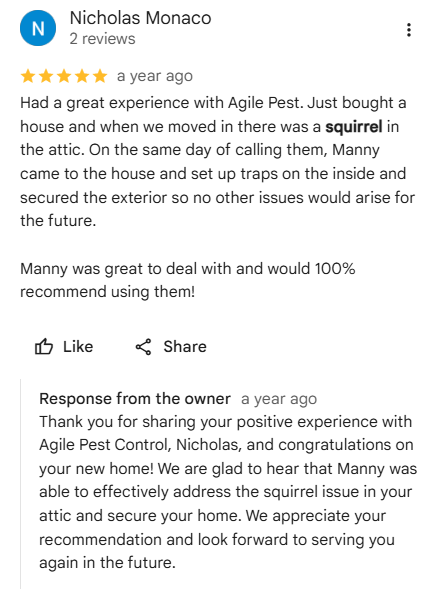
Some homeowners notice scratching or attic movement and aren’t sure what to expect next. Real feedback shows how quickly AgilePests’ inspection and exclusion services can solve the problem when entry points are found early in a Middletown home.
How to Tell If Squirrels Are on Your Roof or in the Attic
Yes. Many homeowners hear squirrels before they ever see them.
Noises, Droppings, Chewed Spots, Insulation Damage
Watch for:
- ◉ Scratching or running sounds, especially early morning
- ◉ Small dark droppings inside the attic or near attic access points
- ◉ Chewed fascia, vents, or shingles
- ◉ Torn or compacted insulation in the attic
Why this matters: early detection means simpler fixes. Waiting often leads to chewed wiring, structural damage, and bigger repair costs.
What to notice:
- Does it happen at the same time daily?
- Is it above one room repeatedly?
- Does it move from the roof edge to the attic area?
Simple takeaway: Repeated roof noise during daylight hours often points to squirrels, not mice or rats.
The Main Ways Squirrels Reach Your Roof (So You Can Block Each One)
Squirrels don’t climb straight up walls. They use shortcuts.
Overhanging Branches and Roofline “Jump Points”
Branches close to the roof act like launch pads.
- ◉ Squirrels can jump 6–8 feet easily
- ◉ One branch is enough for repeat access
Why this matters: trimming branches is one of the fastest ways to cut off roof access.
Power Lines, Fences, and Nearby Structures
Squirrels follow connected paths.
- ◉ Power lines leading to the roof
- ◉ Fences, pergolas, or sheds near the house
Why this matters: blocking the roof won’t help if they still have a clear runway to get there.
Gutters, Downspouts, and Siding They Use as Climbing Routes
Squirrels are excellent climbers. Even if no tree touches the roof, they may still climb man-made surfaces.
Common routes include:
- ◉ Downspouts like ladders
- ◉ Gutters along corners
- ◉ Rough siding surfaces
- ◉ Decorative trim or posts
- ◉ Fence lines leading upward
Why this matters: Many people trim trees but forget these easy access routes.
Vents, Soffits, Fascia Gaps, and Roof Edges
Once on the roof, squirrels look for weak spots.
- ◉ Loose soffits
- ◉ Gaps in fascia boards
- ◉ Unprotected vents or roof edges
Why this matters: these areas aren’t just entry points, they become chew targets. If they’re not reinforced, squirrels will make their own opening.
Action step: Check corners of the home for droppings, claw marks, or repeated movement paths.
Simple takeaway: If it connects ground to roof, a squirrel may use it.
How to Keep Squirrels Off the Roof and Out of Soffits
Once squirrels start using your roof, they often test weak spots like soffits, vents, fascia boards, and roof edges.
The goal is not just scaring them away. It’s removing access.
What helps most:
- ◉ Trim tree branches away from the roofline
- ◉ Repair loose soffits or rotted wood
- ◉ Cover vents with strong metal screening
- ◉ Remove food sources nearby
- ◉ Block repeat climbing routes
Why this matters: If squirrels keep reaching the roof, they eventually find a way inside.
What you can do now: Walk around the outside of the home and look for any openings, gaps, or soft wood near the roof edges.
Simple takeaway: Keep them off the roof first, and attic problems become far less likely.
Step-by-Step: How to Keep Squirrels Off Your Roof
This works best when you cut access first, then harden weak spots.
Trim branches back from the roofline
Cut branches so they’re at least 8–10 feet away from the roof.
- ◉ Remove launch points
- ◉ Prune annually
Why this matters: no jump = no roof access.
Add barriers on access routes (PVC rollers, guards)
Use PVC pipe rollers on lines, rails, or fence tops that squirrels use as runways.
◉ They spin, squirrels slip
◉ No harm, just frustration
Why this matters: blocking routes is more effective than chasing squirrels off.
Protect roof weak spots (drip edge, flashing, vent/chimney caps)
Reinforce areas squirrels test first:
◉ Metal vent and chimney caps
◉ Secured flashing and drip edge
◉ Tight soffit panels
Why this matters: squirrels chew where materials are thin or loose.
Seal entry points with chew-proof materials
Use metal flashing, hardware cloth, or steel mesh.
- ◉ Avoid foam alone
- ◉ Secure edges tightly
Why this matters: squirrels can chew wood and plastic but not metal.
Install Squirrel Guards for Rooflines, Trees, and Wires
Physical barriers can work well when squirrels keep returning.
Useful guard options:
- ◉ Tree collars on trunks
- ◉ Wire guards on utility lines (where appropriate)
- ◉ Metal barriers on vulnerable roof edges
- ◉ Vent covers and chimney caps
Why this matters: Deterrents alone often fail. Guards physically remove the route.
Action step: Use guards after trimming branches and sealing entry points. Barriers work best as part of a full plan.
Simple takeaway: Make climbing harder, and squirrels usually move on.
What to Put on Your Roof to Deter Squirrels (What Works and What Fades Fast)
Deterrents can help, but only as support.
Peppermint/capsaicin sprays and predator scent products
These can work short-term.
- ◉ Best for discouraging repeat visits
- ◉ Reapply often
Why this matters: scents fade. If access stays open, squirrels ignore them.
Decoys, lights, and sound deterrents (and why they stop working)
Owls, flashing lights, and noise devices lose effect fast.
- ◉ Squirrels adapt
- ◉ Familiar threats get ignored
Why this matters: deterrents don’t replace physical barriers.
Reduce Backyard Food That Keeps Squirrels Coming Back to the Roof
The same food sources that attract squirrels often bring in other nighttime visitors as well. If you’re also noticing activity around trash, fruit trees, or garden areas, it may help to learn how to keep opossums out of your yard so multiple animals don’t keep returning.
Bird feeders, fallen fruit, trash, and pet food
Focus on:
- ◉ Move feeders away from the house
- ◉ Pick up fallen fruit
- ◉ Secure trash lids
- ◉ Never leave pet food outside
Why this matters: less food = fewer reasons to return and test the roof again.
How to Get Squirrels Out of the Roof Without Killing Them
Removal must be timed and controlled.
One-way doors and exclusion timing (don’t trap babies inside)
Install one-way doors only when:
◉ No babies are present
◉ Activity confirms adults are leaving nightly
Why this matters: trapping young inside causes noise, odor, and damage.
Humane trapping basics (and why poison backfires)
Trapping may be needed in some cases.
◉ Follow local wildlife laws
◉ Never use poison
Why this matters: poison leads to dead squirrels in walls and attracts other pests.
How to Prevent Squirrels From Returning After Removal
Getting squirrels off the roof is only half the job. Keeping them from coming back is what actually solves the problem.
Recheck the roof every season + after storms
Roofs change over time.
- ◉ Wind loosens flashing
- ◉ Storms shift vents and soffits
- ◉ Tree growth creates new jump points
Why this matters: squirrels remember past access points. Even a small gap reopening can restart the problem.
Action step: do a quick roofline check each season and after major storms. Look for loose edges, new gaps, or overhanging branches.
Signs You Need a Professional Pest Expert
Some squirrel problems go beyond DIY fixes.
- ◉ Squirrels return despite trimming and sealing
- ◉ You hear activity inside the attic walls
- ◉ Entry points are high, steep, or unsafe to reach
- ◉ Electrical wiring or insulation is damaged
- ◉ Multiple access points are involved

Why this matters: squirrels can cause serious damage fast. Missed entry points or unsafe repairs often lead to repeat infestations.
What we see often at AgilePests: Homeowners block one spot, but squirrels find another within days. A full inspection and proper exclusion usually stop the cycle for good.
Bottom line: if squirrels keep testing your roof, it’s time to stop patching and address every access point safely and completely.
Why Many Homeowners Call After Attic Noise or Roof Activity
When squirrels keep returning, or attic noise causes stress, many homeowners decide to bring in professional help. Reviews like this highlight how calm inspections and clear solutions make a big difference during urgent situations.

Common Questions About Keeping Squirrels Off Your Roof
Are squirrels more active on roofs during certain seasons?
Yes. Roof activity often increases during spring and fall. In spring, squirrels search for nesting areas to raise young, and attics provide warmth and protection. In fall, they look for sheltered spaces to prepare for colder weather, which makes rooflines and attic openings attractive.
Can squirrels damage roof materials over time?
Yes. Squirrels frequently chew on wood, plastic, and thin roofing materials. This behavior can damage fascia boards, soffits, and vent covers. Over time, these small chew spots may grow into entry points that allow squirrels to reach attic spaces.
How can homeowners safely check for squirrel activity on a roof?
Homeowners can start with a visual inspection from the ground. Look for chewed roof edges, loose vent covers, or squirrels frequently running along the roofline. Listening for scratching sounds in the early morning or evening can also help confirm activity above the ceiling.
Do squirrels remember roofs where they previously found entry points?
Yes. Squirrels have strong spatial memory and tend to return to locations where they previously found shelter or food. Even after temporary deterrents are used, they may continue testing the same roof areas until the entry points are fully secured.
Can bird feeders attract squirrels to roofs and attics?
Yes. Bird feeders placed close to the house can draw squirrels into the yard. Once squirrels visit regularly for food, they often explore nearby structures such as fences, trees, and roofs. Moving feeders farther from the home can reduce this activity.
Share
0/5
(0 Reviews)