
How Does Rat Bait Work? Most People Never Realize

Written by Jack Hayes
Last updated on October 11, 2026
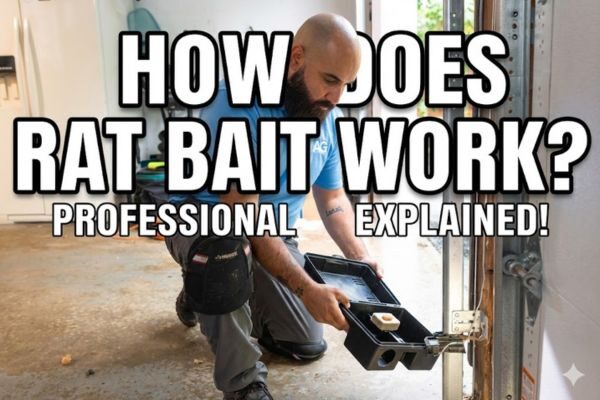
You find rat droppings or hear scratching at night, and the first solution that comes to mind is rat bait. It sounds simple. Put the bait down. Rats eat it. Problem solved. But that’s where most homeowners miss an important detail.
Rat bait combines an edible bait with a toxic active ingredient. Depending on the product, that ingredient may interfere with blood clotting, the nervous system, calcium balance, or another vital function, so the effects are not always immediate.
Understanding that difference explains why bait sometimes works, sometimes appears to fail, and sometimes creates problems you didn’t expect. Here’s what actually happens after a rodent eats bait, and why it matters.
Key Takeaways
◉ Many rat baits have delayed effects. The timing depends on the active ingredient.
◉ Rodents may stay active after eating bait, so continued movement does not automatically mean the bait failed.
◉ Different baits work in different ways. Placement and following the product label matter more than choosing the fastest-sounding option.
◉ Rats may die in hidden areas, which can cause odor or exposure issues.
◉ Effective rodent control also addresses food sources, entry points, and ongoing activity.
What Is Rat Bait? Rat Bait Meaning Explained
Rat bait is a product made to attract rats so they eat a toxic ingredient. In this article, rat bait means rodenticide bait. The word “bait” can also describe non-toxic food placed on a trap, but rodenticide bait contains an active ingredient intended to kill the target rodent. In pest-control use, rat baiting means using rodenticide bait according to its label to control rats, often through a secured bait station.
It is different from a trap because it does not catch the rat right away. After eating the bait, the rat may leave the feeding area before the active ingredient takes effect. Rat bait requires careful handling because it can harm pets, children, and wildlife if it is misused.
Simple takeaway: Rat bait is poisoned food used for rodent control. It is not the same thing as a trap.
Does Rat Bait Attract Rats?
Yes. The food portion of rat bait is designed to be appealing enough for rats to eat. That does not mean bait should be placed randomly. It works best when positioned where rats are already traveling or feeding. Removing competing food sources that attract rats can also make it easier to understand whether rats are actually using the bait. The bait is a control tool for existing activity; it does not correct the food, shelter, or entry points that allowed rats to become established.
What Are Rodent Bait Stations?
Rodent bait stations, sometimes called rat bait boxes, are enclosed containers that hold rat or mouse bait in a controlled location. Rodents enter the station, feed on the secured bait, and leave. The station does not normally trap the rat. Its job is to protect and contain the bait while limiting access by children, pets, wildlife, and weather.

For U.S. household use, EPA says consumer rodenticide products are sold as ready-to-use bait stations containing block or paste bait. Always use the product according to its label.
Tamper-Proof vs. Regular Bait Stations
A lot of people say “tamper-proof,” but tamper-resistant is the better term. No station should be assumed impossible to open, damage, or move. Tamper-resistant stations are designed to limit access to the bait and may use locking lids, stronger materials, and internal systems that secure the bait.
They are especially important anywhere children, pets, wildlife, or other non-target animals could reach a treatment area. Station protections differ by product, so the safest approach is to follow the specific rodenticide label and use the station required for that application.
Simple takeaway: A bait station reduces access to rodenticide; it does not make the poison harmless.
How Does Rodent Bait Kill Rodents?
Different rodenticides kill rats in different ways. Anticoagulant rodenticides interfere with normal blood clotting. Other active ingredients affect the nervous system, calcium balance, or other essential body processes.
Because the mechanism varies, you should not expect every rat bait to produce the same symptoms or work on the same timeline. This is also why “rat poison” should not be treated as one single type of product.
Why Rat Bait Often Feels Like It’s Not Working at First
This is a situation we see all the time. a homeowner finding rat droppings along the garage wall and hearing scratching at night. They place rat bait nearby, expecting the noise to stop within a day or two. But the scratching continues, and they assume the bait isn’t working.
What many homeowners don’t realize is that rat bait doesn’t always work immediately. Depending on the active ingredient, rats can stay active for several days after eating it.
A few days later, the scratching stops, but an unpleasant smell develops inside a wall. The rat may have died in a hidden space, creating another problem.

That’s why Agile Pest Control emphasizes more than bait placement. Identifying entry points, monitoring rodent activity, and planning for possible hidden carcasses are important parts of effective rodent control.
The takeaway: Rat bait takes time, and successful control involves more than simply waiting for rats to eat it.
What Types of Rat Bait Are Commonly Used?
Not all rodent bait works the same way. The most important differences are the active ingredient, how much feeding is needed to deliver a toxic dose, the physical bait format, and what the product label allows.
Anticoagulant Rat Bait
Anticoagulant bait works by interfering with the rodent’s ability to clot blood. After a sufficient dose is consumed, the effects develop over time rather than immediately. That delay is one reason rats may continue moving and feeding after they have already eaten bait.
Non-Anticoagulant Rat Baits
Not all rat poison works through blood clotting. Non-anticoagulant rodenticides include active ingredients such as bromethalin, cholecalciferol, and zinc phosphide. They affect rats through different biological processes, which means their feeding requirements and timing can differ from anticoagulant products.
Single-Feed vs Multi-Feed Bait
This distinction is commonly misunderstood.
- ◉ Single-feed or single-dose means one feeding may provide enough active ingredient to deliver a toxic dose.
- ◉ Multi-feed or multiple-dose bait requires repeated feeding before enough active ingredient is consumed.
That does not mean every single-feed bait kills faster. Feeding requirement and time to death are separate issues.
The National Pesticide Information Center rodenticide fact sheet explains this distinction among common rodenticide active ingredients.
Rat Baits vs Mouse Baits: Are They the Same?
Rat baits and mouse baits may look similar, but they should not automatically be treated as interchangeable. Some bait-station products are labeled only for house mice, while others are labeled for both rats and mice.
What matters is the actual product label.
◉ The target pest listed on the label must match the rodent being treated.
◉ The station must be suitable for that target rodent.
◉ Placement and use directions may differ between products.
◉ A similar-looking active ingredient does not make two products interchangeable.
Bottom line: Use only products labeled for the rodent you are trying to control and follow the label exactly.
How Long Does It Take for Rodent Bait to Work?
There is no single timeline for all rat bait. Many anticoagulant rodenticides take several days after a toxic dose is consumed, while non-anticoagulant products work through different mechanisms and may have different timelines. During that period, rats may still move, feed, leave droppings, or make scratching sounds.
That continued activity is one reason homeowners sometimes assume a bait has failed too early. Do not keep adding bait simply because you still see activity. Follow the product’s feeding and monitoring instructions instead.
What Happens After a Rodent Eats the Bait?
There is no reliable way to predict exactly where a rat will go or where it will die after eating bait. A rat may continue traveling through its normal routes for a period of time and may eventually die in a nest, wall void, attic, crawl space, another sheltered area, or outdoors.
That unpredictability is one disadvantage of using poison indoors. A dead rat in an inaccessible area can create odor and cleanup problems, while poisoned rodents can also present an exposure risk to pets or wildlife. This is why what happens after the rat feeds matters almost as much as whether the bait was eaten.
Is Rat Bait Dangerous to Pets, Children, or Wildlife?
Yes. Rat bait can be dangerous if people, pets, or non-target wildlife gain access to it. Exposure can occur when an animal or person reaches the bait itself. Certain rodenticides can also create secondary exposure risks when wildlife or pets consume poisoned rodents. Keep bait where children and pets cannot reach it, use the station required by the label, and never improvise how a rodenticide is placed.
EPA also recommends promptly removing dead rodents to reduce the chance that pets or wildlife consume them. If accidental exposure is suspected, use the product label to identify the active ingredient and seek appropriate medical or veterinary advice immediately.
Why Rat Bait Sometimes Doesn't Solve the Problem
Rat bait can kill individual rats, but it does not fix the conditions that allowed them to enter and remain on the property. If gaps, shelter, food, or water are still available, new rats can continue appearing even after some animals have been removed.
That is why effective rodent control also looks at:
◉ Entry points
◉ Food and water sources
◉ Nesting and shelter areas
◉ Current travel routes
◉ Ongoing signs such as fresh droppings or gnawing
Learning how rats get inside your house is therefore just as important as choosing a control method. Traps can sometimes provide clearer confirmation that a rodent has been removed, while bait can result in rodents dying somewhere inaccessible. Neither option prevents reinfestation if the openings remain. For a broader look at trapping, exclusion, and other rodent removal options, those topics are covered in Agile Pest Control’s dedicated removal guide.
When Professional Rat Control Is the Safer Option
When rats are active indoors, keep returning, or create safety concerns, DIY baiting may no longer be the most practical option. This is especially true when activity is inside inaccessible walls or attics, when the entry points are difficult to locate, or when children and pets make bait placement more complicated.

Agile Pest Control’s professional rodent control process includes inspecting the property, identifying problem areas and rodent attractants, and choosing treatment based on what is actually happening at the property. The goal is not simply to remove individual rats. It is to understand why the activity is happening and reduce the conditions that allow it to continue.
Real Homeowner Review After Rats Kept Showing Up
One homeowner from Long Branch had rat issues and expected fast results, but needed a clear plan and follow-up instead. After Manny visited, they chose Agile Pests. Later, they shared their feedback.

FAQs About Rat Bait, Bait Stations, and Rodent Control
Do rats get more active after eating poison?
Not necessarily. Rat poison does not reliably cause a sudden burst of activity. Rats may simply continue moving through their normal routes while the active ingredient is taking effect, which can make it seem as though nothing has changed yet.
Do rats know when bait is poison?
Rats do not understand “poison” the way people do. However, rats can be cautious around unfamiliar food or objects, and they may avoid a bait if other food is easier to reach or if the bait is poorly placed.
Can rats become resistant to rat bait?
Resistance to some rodenticides can occur in certain rat populations. However, continued rat activity should not automatically be blamed on resistance. Poor placement, competing food, insufficient feeding, new rats entering the structure, or using an inappropriate product can also produce poor results.
Do rats take bait back to their nest?
Rats may carry some foods to a hiding place, but they do not always bring bait back to the nest. When bait blocks are properly secured inside a bait station, the station is specifically designed to reduce the chance that the bait itself is removed. Rat control therefore should not depend on the idea that one rat will carry poison back and feed an entire nest.
How long does rat bait stay active?
There is no universal lifespan for every rat bait. Moisture, contamination, age, temperature, and the product formulation can affect bait condition and palatability. Follow the product label for inspection, replacement, storage, and disposal instructions.
Share
0/5
(0 Reviews)