
How To Get Rid Of Skunk Smell?

Written by Jack Hayes
Last updated on October 11, 2026
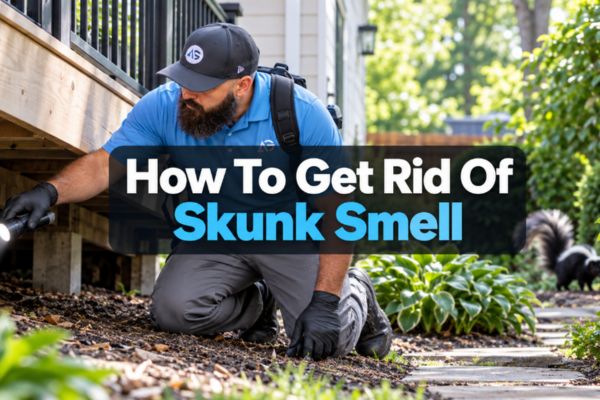
How to get rid of skunk smell starts with removing the oily spray from whatever it touched, then airing out the space. A fresh hydrogen peroxide, baking soda, and dish soap mix can neutralize odor on skin or other suitable washable surfaces. Skunk odor can drift indoors from a porch, crawlspace, pet, clothing, or nearby yard and stay long after the animal is gone.
Finding the source matters more than covering the smell. In this guide, we’ll cover why it happens, how long it lasts, and what gets the smell out.
Key Takeaways
◉ Find the source first. Skunk smell can enter through windows or vents or cling to clothing, pets, and outdoor surfaces.
◉ Remove the odor at its source. Cleaning contaminated areas and improving airflow help get skunk smell out of your house.
◉ Use the right cleaning solution. A fresh mixture of hydrogen peroxide, baking soda, and dish soap can help neutralize skunk odor when used safely.
◉ Skunk smell can last for days or weeks. The duration depends on how much spray is present, where it landed, and how quickly it is cleaned.
◉ Get professional help for recurring odors. If skunk smell keeps returning near a crawlspace, deck, or attic, a wildlife inspection can help identify the source.
Why Does My House Smell Like Skunk?
A house can smell like skunk after a nearby spray event without a skunk entering the building. The odor may drift through open windows, doors, vents, or outdoor air intakes. A dog, shoe, doormat, porch surface, siding, crawlspace, or garage floor can carry the oily residue indoors.
Check where the smell is strongest. If it is strongest near a gas appliance, gas meter, or utility line and you cannot trace it to wildlife, treat it as a possible gas leak. PSE&G tells New Jersey customers to leave the building and report the odor from a safe location.
Why Does My House Smell Like Skunk at Night?
Skunks are mostly active after dark, so fresh odor often shows up at night. A skunk may be moving through the yard, feeding near trash, or sheltering under a deck or porch. Night air can carry the smell toward open windows or vents, making the odor seem stronger indoors even when the animal stays outside.
Is Skunk Smell Harmful to Humans?
Skunk odor in a house is usually more irritating than dangerous, yet direct spray can cause short-term symptoms. Poison Control says spray in the eyes can cause burning, redness, and tearing. Breathing a strong concentration can irritate the lungs, and the smell can trigger nausea.
Move to fresh air and rinse exposed skin or eyes with water. Seek medical care for severe or lasting eye pain, breathing trouble, or other strong symptoms. Skunk spray itself does not spread rabies. A bite, scratch, or saliva exposure is a separate concern and needs urgent medical advice.
How Long Does Skunk Smell Last?
Skunk smell does go away on its own, but the timing depends on where the spray landed. Odor floating in open air fades faster than oily residue on fabric, wood, siding, carpet, or other porous material. A direct spray can stay noticeable for days or weeks if the source is not cleaned.
Indoor odor may seem to return after rain or high humidity. The oily sulfur compounds in skunk spray can cling to materials after the first strong smell fades. Cleaning the source and increasing fresh-air flow usually shortens the problem far more than waiting for it to disappear.
How Long Does Skunk Smell Last Outside?
Outside, a light odor from a distant spray may fade fairly quickly as wind disperses it. Direct spray on a porch, deck, foundation, soil, or outdoor furniture can last much longer. Sun, moving air, rain, surface type, and the amount of spray all affect how fast the smell drops. Clean contaminated surfaces instead of relying only on weather.
How Long Does Skunk Smell Last on Humans?
There is no fixed timeline for skunk odor on skin or hair. A light exposure may fade after thorough washing, yet a direct oily spray can remain noticeable for days. Hair, clothing, and shoes may hold odor longer than bare skin. Fast cleaning helps keep the smell from spreading to furniture, bedding, vehicles, and other rooms.
How to Get Rid of Skunk Smell
The best way to get rid of skunk smell is to neutralize the oily residue at its source, then ventilate. Start where the odor is strongest.
- 1. Move sprayed clothing, shoes, pet bedding, and washable items away from clean rooms.
- 2. Open windows when safe and use fans to push indoor air outside.
- 3. Wash fabrics separately. For hard surfaces, use a commercial skunk smell remover that is safe for the material and follow its label.
- 4. Check porch mats, thresholds, garages, crawlspace openings, and heating or cooling filters if the smell keeps returning.
- 5. The National Park Service’s 2025 skunk guidance gives a fresh mix of 1 quart 3% hydrogen peroxide, 1/4 cup baking soda, and 1 teaspoon dish soap. Poison Control says the same recipe can be used on skin or fur. Use it right after mixing and keep it away from eyes and mouth.
If you are getting skunk smell out of your house after an animal problem, the same source-first approach used for hidden rodent odors can help. Agile’s guide to removing rat or mouse urine smell explains why odor cleanup works best after the source is handled.
How to Get Skunk Smell Off Your Skin
Wash exposed skin soon after the spray. Start with regular soap to remove surface oil. If the odor stays, use the fresh peroxide, baking soda, and dish soap mixture listed above on intact skin, then rinse well. Keep the mixture away from your eyes, lips, and any irritated or broken skin.
If spray reached your eyes, rinse with plenty of clean water. Change contaminated clothing before sitting on furniture or getting into a vehicle. Do not keep scrubbing if your skin becomes painful or very irritated. Get medical advice if symptoms continue.
Does Tomato Juice Get Rid of Skunk Smell?
Tomato juice does not reliably remove skunk smell. It may make the odor seem weaker for a short time, yet the skunk oil is still present. Poison Control explains that your nose can adapt to a strong smell, a process called olfactory fatigue. That can make tomato juice seem more useful than it is.
The National Park Service’s 2025 skunk guidance recommends an oxidizing peroxide mixture instead. That type of treatment changes the odor-causing sulfur compounds rather than covering them. Tomato juice can stain fabrics and creates extra cleanup, so it is a poor first choice for skin, clothing, pets, or household surfaces. Poison Control
Why the Smell Can Keep Coming Back After You Air Out the House
A homeowner wakes up to a strong skunk smell coming from the kitchen. They check the trash, look around the backyard, and open a few windows. By afternoon, the smell is almost gone. But that evening, it comes back.
The homeowner starts wondering if a skunk is living under the deck or somewhere beneath the house. They check outside but see nothing. They try air freshener and leave a fan running overnight. The next morning, the kitchen still smells like skunk. At this point, they decide to get the area inspected.
During the inspection, the strongest odor is traced to a doormat beside the back door. A skunk had apparently sprayed nearby, leaving residue on the mat and surrounding concrete. The mat sits close to a crawlspace vent, allowing the odor to reach the space beneath the house.

Once the contaminated mat is removed, the concrete is cleaned, and the vent area is checked, the indoor smell gradually fades. This is why skunk odor sometimes returns after airing out a house. Fresh air can clear the smell temporarily, but contaminated materials can keep releasing it. Finding and cleaning the source is what makes the lasting difference.
A Homeowner’s Experience With a Thorough Wildlife Inspection
A skunk-like smell around the house can leave homeowners wondering if an animal is sheltering nearby. A careful inspection can help identify signs of wildlife activity and determine what needs attention.
A customer shared his experience with Agile Pest Control after contacting us about wildlife noise in her attic. He appreciated the free estimate and described the service as a “Thorough investigation with options to remedy my wildlife noise.”

Still Smelling Skunk? Don’t Ignore These Warning Signs
Professional help makes sense when the smell keeps returning, you cannot find the source, or you see signs of wildlife using a crawlspace, deck, garage, or foundation area. Do not approach or corner a skunk.
For Monmouth County homeowners, Agile Pest Control can inspect the property for pest or wildlife access points and explain practical next steps. If the source is hidden animal activity, an inspection can help narrow down where the odor is entering and what needs to be cleaned or closed.

If you suspect a gas leak instead of wildlife, leave the area and contact your gas utility or 911 from a safe location.
Frequently Asked Questions
How Far Away Can You Smell a Skunk?
You can smell a skunk from up to a mile away under favorable conditions. Wind direction, weather, and the amount of spray affect how far the odor travels.
Why Do I Smell Skunk When There Is No Skunk?
A skunk may have left, spray may be on a pet or surface, or odor may have drifted indoors. A sulfur smell near gas equipment needs urgent utility attention.
How to Get Skunk Smell Out of Clothes?
Wash affected clothes separately with heavy-duty laundry detergent or borax, then air-dry them. If odor remains, wash again before returning the clothes to closets or drawers.
Share