
Common Pest Entry Points Around Older Eatontown Homes

Written by Jack Hayes
Last updated on September 23, 2026
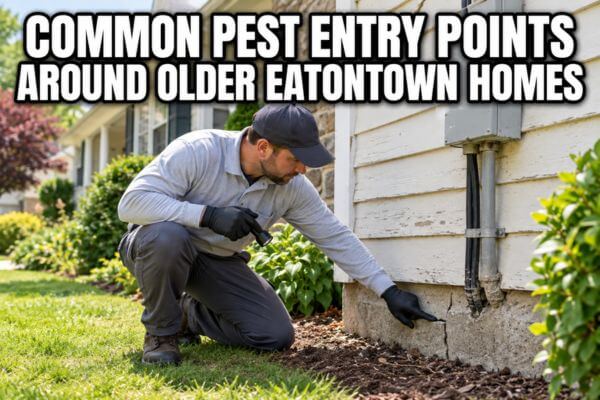
Older Eatontown homes can develop small exterior gaps as materials age, repairs accumulate, and seals wear down. The main places to check are the foundation, doors and windows, utility penetrations, vents, soffits, and roofline openings. Age alone does not mean a home has pests, but it can mean there are more junctions worth inspecting. Finding and closing usable entry points can reduce opportunities for rodents and insects before a small opening becomes a repeat problem.
Key Takeaways
◉ Check foundations, doors, windows, utility openings, vents, soffits, and roof edges for gaps or damaged materials.
◉ An older home is not automatically pest-prone; maintenance, moisture, food, shelter, and usable access matter more than age alone.
◉ Mice can fit through openings about 1/4 inch wide, so small gaps around pipes, doors, and foundations deserve attention.
◉ Rodent-proof repairs often require metal or other durable materials rather than soft sealant alone.
◉ Termite concerns should be evaluated separately because subterranean termites can travel from soil into wood through concealed areas.
Why Older Homes Can Have More Entry Points
A home changes over time. Weatherstripping compresses, caulk separates, screens tear, masonry develops cracks, and repairs may create new transitions between materials. Plumbing, electrical, cable, or HVAC work can also leave openings where lines pass through walls or foundations.
The practical question is not whether an Eatontown home is “old enough” to have pests. It is whether the building has openings that connect outdoors to wall voids, basements, crawl spaces, garages, attics, or living areas.
Homeowners who find repeated activity and want local inspection or treatment information can review Agile Pest Control’s Eatontown pest control services. This guide stays focused on inspection and exclusion.
Foundation Cracks and Ground-Level Gaps
Start at the foundation and walk the exterior slowly. Look where concrete meets siding, brick, trim, porch structures, utility lines, or other materials. Small cracks may admit insects, while larger openings can give rodents access to protected spaces.
The CDC’s rodent-exclusion guidance says mice can fit through a hole about 1/4 inch, or roughly the width of a pencil. That makes small foundation openings more important than they may look.
Pay attention to gaps hidden behind steps, stored items, landscaping, or utility equipment. If a crack appears structural, keeps widening, or involves damaged masonry, repair may require a qualified building professional rather than pest sealing alone.
Doors, Windows, Screens, and Garage Edges
Doors and windows are easy to inspect because many problems are visible from inside. Look for daylight around a closed exterior door, flattened or missing weatherstripping, damaged sweeps, torn screens, and gaps where frames meet siding or trim.
Garage doors deserve the same check. Uneven seals at lower corners can leave usable openings even when the center looks tight.
A practical inspection includes:
◉ Exterior door sweeps that no longer contact the threshold evenly
◉ Cracked, loose, or missing weatherstripping
◉ Torn window or door screens
◉ Gaps around window and door frames
◉ Garage door corners that do not close flush
Replace worn components rather than relying on a temporary patch when the seal itself has failed.
Utility Penetrations and Pipe Openings
Every pipe, cable, conduit, vent, or refrigerant line passing through the exterior creates a junction to check. Older sealant can crack or pull away, and later utility work may leave a hole wider than the line itself.
Inspect plumbing, electrical service, cable lines, outdoor faucets, dryer vents, and HVAC penetrations. Indoors, check the corresponding areas under sinks, behind appliances, in utility rooms, and along basement or crawl-space walls.
These openings matter because they can lead into wall voids. Close gaps without blocking drainage, ventilation, or required equipment clearances.

Roofline, Soffits, Eaves, and Attic Vents
Do not stop at ground level. The CDC also recommends checking roof areas, eaves, soffits, attic vents, and other upper openings during a rodent inspection.
From the ground, look for loose soffit panels, damaged vent screens, separated fascia or trim, and obvious roofline openings. Avoid climbing onto a roof if the area cannot be inspected safely.
If activity seems concentrated in an attic, the entry point may be elsewhere because rodents can move through wall and ceiling voids. Agile Pest Control’s guide to hidden rat entry points covers these routes in more detail.
Termite Access Is a Different Kind of Entry Problem
Termites should not be treated like ordinary gap-seeking pests. Rutgers NJAES explains that naturally occurring termites in the northeastern United States are subterranean termites, which live in soil and can travel into wood through concealed routes or mud tubes.
Rutgers recommends reducing moisture, repairing leaks, maintaining gutters and downspouts, and avoiding wood-to-soil contact. It also notes that mud tubes may be absent and that distinguishing old damage from current activity can be difficult. See the Rutgers NJAES termite prevention and control fact sheet for the full guidance.
For an older home, check porches, steps, crawl spaces, basement framing, and other places where wood is close to soil or moisture. Suspicious wood, shed wings, or mud tubes justify inspection, but one sign alone should not be used to estimate the extent of an infestation.
How to Seal Entry Points Without Creating New Problems
Match the repair to the opening. For rodent exclusion, the CDC recommends steel wool held in place with caulk for small holes and stronger materials such as hardware cloth, metal sheeting, cement, or lath screen for larger openings.
A simple exclusion checklist is:
◉ Seal small rodent openings with durable materials that resist chewing.
◉ Repair door sweeps, weatherstripping, and damaged screens.
◉ Close gaps around utility lines without interfering with equipment or drainage.
◉ Repair damaged soffits and vent screens while preserving required airflow.
◉ Correct leaks or persistent moisture around structural areas.
Do not automatically seal an opening when an animal may already be inside. Closing a route can trap an animal or redirect activity elsewhere. Confirm what is using the opening first when there are fresh droppings, scratching, nesting material, or repeated movement.
When a Professional Inspection Makes Sense
DIY inspection is useful when an opening is visible, accessible, and clearly a maintenance issue. Professional help becomes more useful when signs appear in several areas, the route is hidden, roof access is required, rodents may already be inside, or termite activity is possible.
Repeated droppings, gnawing, scratching, mud tubes, shed termite wings, or activity that returns after sealing one gap can indicate the visible opening is only part of the problem. An inspection can help separate routine maintenance from an active pest issue and identify which repairs should come first.
Frequently Asked Questions
How can I tell whether a gap is actually being used by pests?
Look for supporting evidence near the opening, such as droppings, gnaw marks, rub marks, nesting material, shed wings, or repeated insect traffic. A gap alone shows potential access, not confirmed activity.
Is spray foam or caulk alone enough to keep mice out?
Not always. The CDC recommends steel wool secured with caulk for small rodent holes and stronger materials such as metal, cement, hardware cloth, or lath screen for larger openings.
Should I seal every opening as soon as I find it?
Seal routine maintenance gaps when you are confident nothing is trapped inside. If you hear scratching, see fresh droppings, or suspect wildlife or rodents are using the opening, identify the activity before closing it.
Share