
Common Pest Entry Points Around Manalapan Township Homes

Written by Jack Hayes
Last updated on September 28, 2026
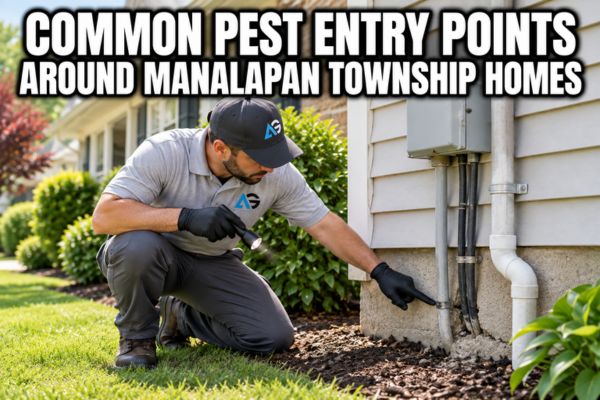
Pests usually get into a house through small, ordinary openings rather than one obvious hole. Around a Manalapan Township home, check foundation gaps, utility penetrations, door and garage seals, vents, screens, and roofline openings first. The goal is not to seal every crack blindly. Find usable access points, preserve drainage and ventilation, and match the repair to the pest and structure.
Key Takeaways
◉ Mice can fit through an opening about 1/4 inch wide, so gaps that look minor can still matter.
◉ Start with foundations, utility lines, garage doors, exterior doors, vents, screens, soffits, and roof edges.
◉ Do not block intentional drainage or ventilation openings; use screening or inserts that preserve their function.
◉ Exclusion works best when you also address food, water, moisture, and shelter that keep pests close to the house.
◉ Sealing prevents new entry, but it does not automatically remove pests already indoors.
Why Small Gaps Deserve Attention
A house mouse can fit through a hole about 1/4 inch wide, roughly the width of a pencil, according to the CDC’s rodent-exclusion guidance. That makes openings around pipes, door corners, vents, and foundations more important than they may appear.
Insects need even less room. Ants, spiders, stink bugs, and other occasional invaders can use narrow cracks around siding, trim, windows, and utility lines. For local service information, Agile Pest Control’s Manalapan pest control page is the appropriate next step; this guide stays focused on prevention and inspection.
Common Entry Points to Check First
Foundation Cracks and Wall Joints
Walk the exterior where the foundation meets siding, brick, stucco, steps, patios, or additions. A visible crack is not automatically a pest route, but openings that connect to a basement, crawl space, wall void, or sill area deserve attention.
Also check for moisture around the foundation. For subterranean termites, wood-to-soil contact, damp wood, leaks, and moisture near structural wood matter more than simply finding an open crack. Rutgers NJAES specifically emphasizes moisture reduction and avoiding wood-to-soil contact as termite-prevention measures.
Utility Pipes, Cables, and AC Lines
Any pipe, cable, conduit, or refrigerant line through an exterior wall creates a penetration worth checking. Look outside and inside under sinks, behind appliances, and near utility rooms.
Small openings can often be sealed with an appropriate exterior-grade sealant. Larger rodent-accessible openings may need a durable metal barrier or mesh plus a compatible sealant. Avoid relying on soft foam alone where rodents are active. CDC guidance recommends durable materials such as metal, cement, hardware cloth, or similar barriers for larger rodent openings.
Garage Doors and Exterior Doors
Close the garage door during daylight and look from inside for light at the bottom corners, side seals, and threshold. Repeat the check at exterior doors.
- ◉ Flattened or torn weatherstripping.
- ◉ Gaps at garage-door corners.
- ◉ Damaged door sweeps or thresholds.
- ◉ Openings where trim has pulled away from the wall.
Because garages often connect to living space, a gap there can become the first step in an indoor route. For a rodent-specific inspection, see Agile Pest Control’s guide to how rats get inside a house.
Vents, Soffits, Chimneys, and Roof Edges
Attic vents, crawl-space vents, soffits, fascia joints, chimney openings, and roof penetrations can provide access when screening or covers are damaged. These areas also appear in current CDC rodent-exclusion guidance.
Do not seal a functioning vent, dryer exhaust, chimney, or other building opening solid. Repairs should exclude pests while allowing the opening to keep working. Start roofline checks from the ground and use a qualified contractor for areas requiring risky ladder or roof access.
Windows, Screens, and Window AC Units
Torn screens, loose frames, and gaps around window trim can admit flying and crawling insects. Check basement and ground-level windows closely, then inspect window air-conditioning units for openings around side panels and frames.
If mosquitoes are the main concern, Agile Pest Control’s article on how mosquitoes get into a house covers those routes in more detail.
Landscaping and Moisture Can Increase Entry Opportunities
Exclusion works better when the area next to the house gives pests fewer reasons to stay there. Keep stored materials, dense clutter, and food sources from building up against exterior walls. Correct leaking spigots, damaged gutters, or drainage problems that leave areas persistently damp.

For termite prevention, Rutgers NJAES recommends reducing moisture, repairing leaks, maintaining gutters and downspouts, avoiding wood-to-soil contact, and keeping cellulose materials such as firewood and mulch from sitting immediately against the house.
Trim branches or shrubs that touch siding or rooflines when practical. This improves visibility during inspections and removes some direct routes to upper parts of the structure.
Match the Entry Point to the Pest
- ◉ Mice: small openings around foundations, doors, utilities, vents, garages, and roof edges.
- ◉ Stink bugs and other fall invaders: cracks around windows, doors, siding, fascia, chimneys, and vents. Mechanical exclusion is the primary preventive approach recommended for brown marmorated stink bugs.
- ◉ Ants and spiders: narrow cracks around foundations, thresholds, trim, pipes, and wall joints.
- ◉ Termites: moisture conditions and wood-to-soil contact are often more important than an obvious open hole.
- ◉ Mosquitoes: torn screens, open doors, and damaged or unscreened openings can allow adults indoors.
The pest you see can help prioritize where you look, but one opening may not explain all activity.
A Practical 30-Minute Home Walkthrough
- ◉ Check the foundation line and joints where different building materials meet.
- ◉ Inspect every pipe, cable, vent, and utility penetration you can safely reach.
- ◉ Look for daylight around garage and exterior-door seals.
- ◉ Check window screens, vent screens, soffits, and visible roof-edge openings.
- ◉ Look inside under sinks and behind accessible appliances for gaps around plumbing or cables.
- ◉ Photograph openings before repairing them so you can compare the condition after sealing.
If a crack is widening, materials are deteriorating, or a repair affects drainage, combustion, ventilation, roofing, or structural components, use the appropriate qualified contractor.
How to Seal Openings Without Creating New Problems
For narrow insect-access gaps, an exterior-grade caulk or appropriate sealant may be enough. Rodent-sized openings often need a tougher barrier such as metal mesh, hardware cloth, sheet metal, or another durable material secured in place.
Do not fill brick weep openings, exhaust vents, or drainage paths with solid sealant. Use a purpose-made screen or insert that blocks pest access while preserving airflow or drainage.
If rodents are already inside, exclusion should be paired with removal or trapping rather than assuming a sealed exterior will solve the active problem. Sealing also does not eliminate insects already established in a wall void, attic, basement, or crawl space.
When to Call a Professional
Professional help makes sense when activity continues after obvious gaps are repaired, when repeated droppings or gnawing appear, when noises suggest animals are in inaccessible spaces, or when an entry point is difficult to reach safely.
Termite activity also warrants careful identification. Rutgers notes that mud tubes may be absent and old damage can be difficult to distinguish from current activity. An inspection can help separate a structural repair issue from an active pest problem.
FAQs
What is the most common place pests enter a house?
There is no single entry point for every home. Foundations, utility penetrations, doors, garage seals, vents, screens, soffits, and roof edges are the best places to start because they commonly create openings between indoors and outdoors.
Should I seal every hole I find on the exterior?
No. Some openings support drainage, ventilation, or exhaust. Do not block weep holes, dryer vents, chimneys, or other functional openings solid. Use an appropriate screen, cover, or insert that preserves their purpose.
Will sealing entry points get rid of pests already inside?
Not by itself. Exclusion helps stop new pests from entering, but rodents or insects already indoors may still need trapping, removal, treatment, or professional inspection depending on the pest and where it is active.
Share