
How Brick Township Weather Changes Seasonal Pest Activity

Written by Jack Hayes
Last updated on September 27, 2026
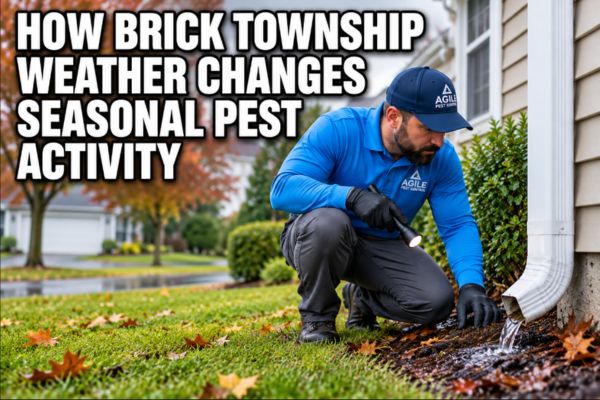
Pest activity in Brick Township changes with temperature, rain, humidity, and available shelter, but weather does not predict an infestation by itself. A warm spring can make swarmers and ants easier to notice, summer rain can create mosquito breeding sites, and cooler fall weather makes entry gaps more important. The most useful approach is to treat weather as a prompt to inspect your property, not as proof that a particular pest problem is present.
Key Takeaways
◉ Weather changes when pests become active or visible, but food, moisture, shelter, entry points, and existing pest populations still determine what happens at an individual home.
◉ Spring is a key time to watch for termite swarmers, renewed ant activity, and ticks in grassy, brushy, or wooded areas.
◉ Summer rain and warmth make standing-water checks especially important for mosquito prevention.
◉ Fall is an important time to inspect exterior gaps before rodents and overwintering insects use protected indoor spaces.
◉ Winter reduces much outdoor insect activity, but rodents and some overwintering insects can remain active or become visible inside.
Weather Changes Pest Behavior, Not Just the Calendar
Different pests respond to weather in different ways. Insects are strongly affected by surrounding temperatures, while rodents regulate their own body temperature but still change where they search for food and shelter as outdoor conditions shift.
That is why two nearby homes can have very different pest activity during the same week. One may have standing water, damaged screens, moisture near wood, or gaps around utilities while the other does not. Homeowners who need help identifying an active issue can use Agile Pest Control’s Brick pest control services as the next step without treating every seasonal sighting as an infestation.
Spring: Swarmers, Ants, and Ticks Become Easier to Notice
Spring warming can make several pest groups more visible. Rutgers NJAES notes that subterranean termite swarmers commonly leave mature colonies on warm, sunny days between April and June. Seeing winged insects does not automatically prove structural damage, and termites can be confused with flying ants, so identification matters. The Rutgers termite prevention and control guide also explains that moisture and wood-to-soil contact can create favorable conditions for subterranean termites. If you find discarded wings, mud tubes, or suspicious wood, avoid assuming the extent of the problem from one sign. Agile’s guide to why termites are hard to spot in Brick Township homes explains what homeowners can inspect and where professional identification may help.
Ticks also deserve attention as outdoor activity increases. Activity varies by tick species and life stage, so regular tick checks after time in brushy, grassy, or wooded areas are more useful than assuming every tick follows the same seasonal schedule.
Summer: Rain, Standing Water, and Outdoor Activity Matter More
Warm weather brings more outdoor activity for people and pests. Mosquito prevention should focus less on the calendar and more on water. Rain can leave water in gutters, plant saucers, buckets, toys, tarps, pet dishes, and other containers.
New Jersey health and environmental officials recommend regularly eliminating standing water where mosquitoes can breed, including water in flowerpots, buckets, birdbaths, pet dishes, and clogged gutters. The state’s NJDEP current mosquito-prevention guidance also recommends maintaining screened indoor spaces and taking appropriate bite-prevention precautions.
Ants may also become more noticeable when they find reliable food, water, or entry routes. Stinging insects can become easier to spot as colonies develop through the warmer months. Repeated flight into the same wall gap, eave, shrub, or ground opening can be more meaningful than seeing a few insects visiting flowers.
The useful summer question is not simply, “Which pest is supposed to peak now?” Instead, ask what changed around the property after heat or rain.
Fall: Cooling Weather Makes Entry Points More Important
As temperatures trend downward, prevention shifts toward exclusion. Rodents remain active year-round, but protected indoor spaces can provide food and shelter as outdoor conditions change. Brown marmorated stink bugs and other overwintering insects may also enter structures in fall and remain sheltered until conditions make them visible again. Brick-Township-Weather-Seasonal…
Before colder weather settles in, inspect door sweeps, garage-door edges, utility penetrations, vents, siding gaps, and other accessible openings.

Do not block drainage or ventilation features designed to function as part of the building. Agile’s guide to common pest entry points around Brick Township homes provides a more focused checklist.
If you see rodent droppings, gnawing, scratching sounds, or repeated sightings, the goal is to identify both the active pest and its access route rather than relying on traps alone.
Winter: Less Outdoor Activity Does Not Mean No Pest Activity
Cold weather reduces visible activity for many outdoor insects, but indoor pest problems can continue. Rodents that already gained access may remain active in attics, basements, garages, wall voids, and storage areas where food and shelter are available.
Overwintering insects such as stink bugs may stay hidden in protected spaces and appear near windows or light sources when conditions become warmer. Winter is therefore a useful time to monitor for fresh signs and make repairs that reduce access before spring activity increases.
Do not assume an old sign means the pest is currently active. Fresh droppings, new gnawing, recurring insects, or continuing noises provide more useful information than evidence that may have been present for months.
Use Weather as an Inspection Trigger
Instead of trying to predict pests from a forecast, connect common weather changes to a short property check:
- ◉ After heavy rain: Check gutters, containers, low spots, and drainage for standing water or persistent moisture.
- ◉ After a warm spring stretch: Look for winged insects, new ant trails, moisture around wood, and other changes that need identification.
- ◉ During hot, humid periods: Recheck screens, standing water, outdoor seating areas, and tick precautions after time in vegetation.
- ◉ Before colder nights: Inspect door sweeps, utility gaps, vents, garage edges, and other exterior openings.
- ◉ During winter thaws: Watch for fresh rodent signs or insects becoming active around windows and other warm, bright areas.
When Professional Identification Makes Sense
Professional help is most useful when the pest is uncertain, activity is hidden, or attempting to investigate the problem could create a safety issue. Winged insects that may be termites, repeated rodent signs without a clear entry point, suspected activity inside walls, or an active stinging-insect nest near a frequently used area are examples where correct identification changes the next step.
A useful inspection should answer three questions: what pest is active, what conditions are supporting it, and whether maintenance, exclusion, monitoring, or pest-specific treatment is appropriate.
Frequently Asked Questions
Does a mild winter guarantee more pests in spring?
No. Mild weather can change when some pests are active or noticeable, but spring activity also depends on moisture, shelter, food, existing populations, and conditions around the property.
Which season has the most pest activity in Brick Township?
There is no single season for every pest. Warm months make many insects more noticeable outdoors, while fall and winter can shift attention toward rodents and overwintering insects inside structures.
What should I check around my home after heavy rain?
Start with gutters, downspouts, containers, low areas, and foundation drainage. Then look for new ant trails, mosquito activity, moisture near wood, damaged screens, or openings pests may use.
Share