
How to Get Rid of Pack Rats

Written by Jack Hayes
Last updated on October 18, 2026

If you are searching for how to get rid of pack rats, start by confirming the rodent, removing food and nesting cover, trapping active animals where legal, and sealing entry points. For New Jersey homeowners, identification comes first. New Jersey Fish and Wildlife says the state’s only remaining Allegheny woodrat population lives on the Hudson River Palisades, and the species is endangered.
A rodent around a Monmouth County home should not automatically be treated as a native pack rat. In this guide, we’ll cover indoor removal, outdoor control, natural methods, problem areas, and bait choices.
Key Takeaways
◉ Identify the rodent before taking action. In New Jersey, proper identification matters since the Allegheny woodrat is endangered and protected.
◉ Use several control steps together. Remove food, clear nesting cover, trap where legal, then seal gaps after active rodents are gone.
◉ Make your yard less attractive to rodents. Secure bird seed and pet food, remove fallen fruit, reduce clutter, and close access around sheds and crawl spaces.
◉ Do not rely on peppermint oil or scent-based home remedies alone. Food removal, habitat cleanup, exclusion, and legal trapping provide a stronger long-term approach.
◉ Professional help may be useful when the rodent cannot be identified or activity continues. An inspection can locate entry points, nesting areas, and food sources and help determine the right next steps.
How to Get Rid of Pack Rats
Pack rats are woodrats in the genus Neotoma. Their name comes from their habit of collecting sticks, plant material, and small objects around protected nesting areas.
The best way to get rid of pack rats uses several control steps together:
◉ Confirm which rodent is present. Large ears, a hairy or bicolored tail, and collected nesting material can point toward a woodrat rather than a Norway rat.
◉ Remove accessible food such as bird seed, pet food, fallen fruit, trash, and poorly stored pantry foods.
◉ Clear clutter and protected nesting cover near the house.
◉ Use rat-sized traps along active routes when trapping is legal for that species.
◉ Seal gaps around vents, pipes, doors, foundations, roof edges, and crawl spaces after active rodents are out.
For Monmouth County homeowners, species identification matters. New Jersey law prohibits capturing, harassing, or killing protected endangered wildlife without approval. If you have a common household rat instead, Agile’s guide to how rats get inside your house can help you locate common access points.
How to Get Rid of Pack Rats in Walls
If activity is inside a wall, place rat-sized traps at accessible travel points near wall edges, attic routes, or crawl-space openings rather than opening the wall at random. Close exterior entry points after active animals are out. Ongoing scratching can point to a missed route. Agile’s guide to rats in attics, walls, and homes covers common indoor rodent routes.
How to Get Rid of Pack Rats Under the House
For a pack rat under a house, inspect crawl-space vents, plumbing openings, foundation gaps, stored items, and nesting cover. Remove accessible food, place traps near active routes where legal, then repair openings with chew-resistant materials. Do not disturb heavy droppings or a large nest dry. The CDC’s 2024 rodent-cleanup guidance recommends wet disinfection before cleanup.
How to Get Rid of Pack Rats Outside
To get rid of pack rats outside, make the yard harder to use for food, cover, and nesting. Pick up fallen fruit, secure pet food and bird seed, close trash lids, move clutter away from structures, and thin dense growth around sheds or foundations. Look for stick piles, droppings, gnawing, or collected objects near a protected den.
Where trapping is legal for the species, place rat-sized traps near active travel routes or nest areas. Keep traps away from children, pets, and other wildlife. Once activity stops, seal sheds, garages, crawl spaces, and other openings that could support another rodent.
How to Get Rid of Pack Rats Naturally
If you want to know how to get rid of pack rats naturally, focus on poison-free steps such as food removal, habitat cleanup, exclusion, and mechanical trapping where legal. These methods remove the conditions that let rodents remain on the property.
Home remedies such as peppermint oil or homemade scent sprays should not be the main control plan. Utah State University wildlife-control material lists no registered repellents for woodrats. A scent may change rodent movement for a short period, but it does not close an opening or remove nesting cover. Physical exclusion and habitat changes offer a stronger long-term approach.
What Do Pack Rats Not Like?
Pack rats are less likely to stay in open, disturbed areas that offer little protected cover, food, or nesting material. Some strong odors may make an area less appealing for a short time, but scent alone should not be the main control method. If you want to compare common odor-based deterrents, see our guide on what smells rats hate.
Make the space less useful to the rodent. Clear protected debris, store seed and pet food in sealed containers, pick up fallen fruit, trim dense growth near structures, and close access into sheds or homes. If the animal is a common rat rather than a woodrat, Agile’s guide to foods that attract rats and mice can help you spot food sources that are easy to overlook.
What Is the Best Bait for Pack Rats?
The best bait for pack rats is often food that is attractive and difficult to carry away without touching the trap trigger. Kansas State University lists nut meats, bacon rind, and dried fruit for rat-sized snap traps. It recommends securing bait to the trigger and pre-baiting unset traps for several days before setting them.
Place traps along walls, trails, or close to an active nesting area rather than in open floor space. Keep traps away from children and pets. EPA guidance says consumer rodenticide products must be used in appropriate bait stations and according to label directions. Never use poison on a protected native woodrat.
A Homeowner Keeps Hearing Scratching in the Garage
A homeowner who keeps hearing scratching noises in the garage at night. A few days later, they notice a torn bag of bird seed, shredded insulation, and small piles of sticks behind a storage shelf. They try peppermint oil, but the noises return.
When our team arrives, we inspect the garage and find signs of rodent activity near the storage area. We also notice a small opening along the garage wall that could allow rodents inside.

We suggested removing food sources, safely clearing nesting materials, and setting traps in areas where the rodent was active. After removing the rodent, we advised sealing the entry point to prevent future problems.
A Clear Rat Control Plan and Follow-Up
One homeowner dealing with an ongoing rat problem shared that they appreciated the fast response, follow-up, and clear plan for dealing with the issue. They felt reassured knowing what steps would be taken to control the rats and what to expect next.
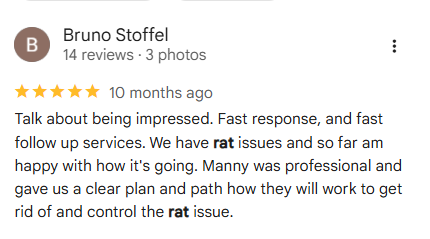
Rat problems can be stressful, especially when homeowners are unsure where the rodents are entering or how long removal may take. Clear communication and a practical control plan can make the process easier to follow from the first inspection through follow-up service.
Get Help With a Rodent Problem in Monmouth County
If you have scratching in walls, droppings under your house, or a rodent you cannot identify, an inspection can help separate a common rat problem from a wildlife issue. That distinction matters in New Jersey, where the Allegheny woodrat is protected.

Agile Pest Control can inspect rodent activity in Monmouth County, look for entry points, nesting areas, and food sources, then explain practical next steps for the pest found on the property. For a common household rat problem, professional help may make sense when activity continues after food removal, trapping, and exclusion attempts.
Frequently Asked Questions
Can pack rats come back after trapping?
Yes. Another rodent can use the same food, shelter, and opening after the first one is removed. Seal access points and remove attractants after control.
Should I seal a pack rat hole before trapping?
Not if an animal may still be inside. Confirm activity, remove the rodent legally, then seal the opening afterward with durable material that resists chewing.
Can pack rats live in a garage or shed?
Yes. Woodrats can use garages, sheds, barns, vehicles, crawl spaces, and attics when they find protected nesting space, stored food, or available nesting material nearby.
How should I clean pack rat droppings?
Wear gloves, spray droppings with disinfectant, let them soak, and wipe with paper towels. Never sweep or vacuum dry droppings.
Are pack rats the same as Norway rats?
No. Pack rats are native woodrats (Neotoma), while Norway rats are a different species with smaller ears and mostly hairless, scaly tails.
Share