
Common Pest Entry Points Around Older Red Bank Properties

Written by Jack Hayes
Last updated on September 20, 2026
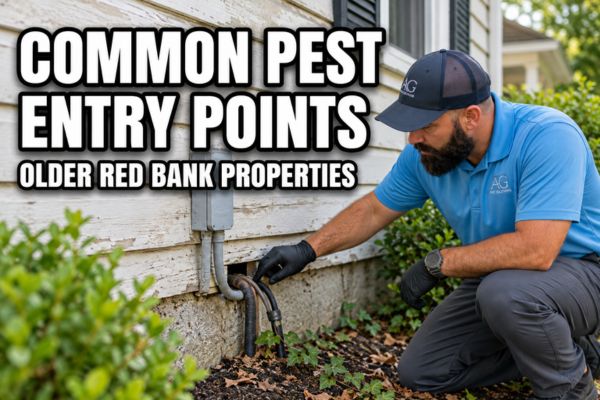
In an older Red Bank property, start a pest inspection where the building envelope has changed or worn over time: foundation and sill areas, door and window frames, utility penetrations, porch or addition seams, and roofline openings. Red Bank has documented historic residential resources, but age alone does not prove a pest problem. The condition of the structure matters more. The goal is to find openings that connect outdoors to basements, crawl spaces, wall voids, attics, garages, or living areas before repeated pest activity develops.
Key Takeaways
◉ Older properties deserve extra attention where repairs, additions, utilities, and different building materials meet.
◉ Small gaps matter. CDC guidance says mice can fit through a hole about 1/4 inch, roughly the width of a pencil.
◉ Utility penetrations, worn door seals, basement windows, soffits, and vent screens are easy to miss.
◉ Sealing should not block ventilation, drainage, exhaust, or utility equipment, and active wildlife should not be trapped inside.
◉ Moisture damage and wood-to-soil contact can point to a different problem than a simple surface gap.
Why Older Red Bank Properties Need a Different Inspection
Older properties may contain several generations of repairs, replacement windows, added utilities, porch work, or later additions.
Those changes create inspection points that are easy to overlook. A newer cable line may pass through older masonry. A porch may meet the original structure at a different foundation type. Replacement trim may leave a narrow seam beside older siding.
If recurring activity is difficult to trace, Agile Pest Control’s Red Bank pest control services are the appropriate local service next step. The service-area page covers inspections and treatment options for Red Bank homes and businesses.
Foundation, Sill, and Lower-Wall Gaps
Start where the house meets the ground. Look for openings in foundation walls, gaps near sill areas, separations where siding or trim meets masonry, and damaged crawl-space covers or screens.
Not every crack is a pest route. A surface crack that does not pass through the exterior shell is different from an open gap around a sill, pipe, or damaged vent. Larger structural cracks, visible movement, or water intrusion may need a building professional rather than a basic exclusion repair.
The CDC’s rodent-exclusion guidance says mice can fit through a hole about 1/4 inch, or 6 millimeters, in diameter. That means small openings around foundations and lower utility lines deserve a careful look.
Utility Lines and Previous Renovations
Plumbing, electrical service, cable, gas lines, dryer vents, and HVAC line sets all pass through the exterior shell. In an older property, some may have been added long after the original construction.
◉ Look around plumbing and gas penetrations in basements or crawl spaces.
◉ Check cable, electrical, and HVAC lines where old sealant has separated.
◉ Inspect dryer and exhaust vent covers for damage without blocking airflow.
◉ Look under sinks and behind accessible appliances for oversized openings into wall voids.
A clean room does not rule out an entry route. Pests can move through hidden cavities and appear away from the opening they used outside.

Doors, Windows, Basement Openings, and Garage Seals
Older doors and windows may still work well, but weatherstripping, sweeps, screens, perimeter sealant, and surrounding trim can wear independently of the frame.
Check for daylight around closed exterior doors, flattened weatherstripping, damaged screens, and gaps at garage-door corners. Basement windows deserve a close look because the frame, screen, well, and surrounding masonry can each create a separate weak point.
A visible gap is a maintenance clue, not proof that pests are using it.
Porches, Additions, and Material Transitions
Later construction does not always age at the same rate as the original house. Inspect seams where a porch, sunroom, mudroom, deck ledger, or rear addition meets the original wall.
Look for separated trim, failed sealant, gaps between different foundation materials, and openings around flashing or utility work. Also check where wood meets masonry, brick meets siding, or new trim meets older framing. These transition points can open slightly as materials move differently over time.
Rooflines, Soffits, Vents, and Chimneys
Loose soffits, damaged fascia, torn attic-vent screening, separated roof-edge materials, and unprotected chimney openings can provide access to attic spaces.
Inspect from the ground when possible. A zoomed phone photo or binoculars can help without climbing. Do not cover a functioning vent, exhaust opening, or drainage feature just because it looks open. Repair the damaged screen, cover, flashing, or surrounding material while preserving its intended function.
Moisture Can Change What an Entry Point Means
A gap may be only part of the problem when nearby wood stays damp or touches soil. Moisture can damage wood and sealants, while some wood-destroying pests use conditions that are not solved by closing one exterior crack.
Rutgers NJAES termite-prevention guidance recommends reducing moisture, promptly repairing leaks, and avoiding wood-to-soil contact where possible. If you find mud tubes, unexplained wood damage, or persistent moisture near a foundation or porch, identification matters more than simply sealing the nearest opening.
A Practical Exterior Inspection Route
Instead of patching random cracks, inspect the property in a consistent order.
◉ Walk the foundation and lower walls, checking sill areas, crawl-space openings, basement windows, and material transitions.
◉ Check exterior doors, garage doors, weatherstripping, sweeps, and screens.
◉ Follow visible utility lines to the point where each enters the structure.
◉ Inspect porch and addition seams, especially where different materials meet.
◉ Look upward for soffit, fascia, vent-screen, chimney, and roof-edge problems from a safe position.
◉ Recheck repaired areas if activity continues, because one closed gap does not rule out another route.
When Sealing Is Reasonable and When to Get Help
Replacing a worn door sweep, repairing a screen, renewing failed exterior sealant, or closing a small accessible gap can be reasonable maintenance when the repair fits the material and does not interfere with airflow, drainage, or utilities.
Professional inspection makes more sense when activity continues after obvious gaps are repaired, the pest cannot be identified confidently, roof or crawl-space access is unsafe, wildlife may be inside, or signs suggest an established rodent or wood-destroying insect problem.
If rodents are the main concern, Agile Pest Control’s article on hidden rat entry points and fixes goes deeper into the places rats can use to get inside and how exclusion fits into rodent control.
Frequently Asked Questions
Are older Red Bank homes automatically more likely to have pest problems?
No. Age alone does not determine pest activity. Older homes may simply have more repair history and more places to inspect. Current gaps, moisture, damaged screens, worn seals, and active pest signs matter more than the year the house was built.
Can sealing entry points solve an existing infestation?
Sealing can reduce new access, but it does not identify or remove pests already indoors. If fresh droppings, scratching, nesting material, repeated insects, or other signs continue after repairs, another route or an active infestation may still be present.
How often should I check an older home for pest entry points?
There is no single schedule for every property. Recheck after exterior repairs, utility work, storms, visible seal damage, new moisture problems, or recurring pest activity. A periodic ground-to-roofline inspection is more useful than waiting for a specific calendar date.
Share