
Why Asbury Park Basements and Crawl Spaces Attract Pests

Written by Jack Hayes
Last updated on September 8, 2026
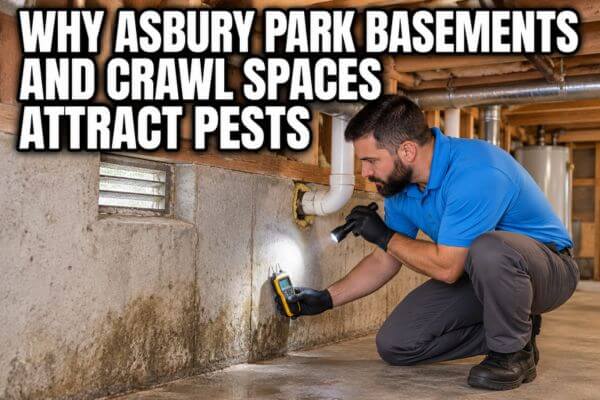
Basements and crawl spaces attract pests because they can provide moisture, shelter, nesting material, and hidden entry routes. A damp space is especially inviting, but moisture is rarely the whole problem. Gaps around pipes, damaged vent screens, cardboard storage, and undisturbed corners can also help pests enter and remain unnoticed. In Asbury Park, humid stretches and heavy coastal rain make it useful to check lower-level spaces after weather changes instead of waiting for activity to reach living areas.
Key Takeaways
◉ Persistent moisture, protected hiding places, and entry gaps matter more than darkness alone.
◉ Camel crickets, silverfish, cockroaches, and millipedes can point to damp conditions, but seeing one pest does not diagnose the moisture source.
◉ Termites consume cellulose; carpenter ants excavate softened wood for nesting. Neither should be identified from damaged wood alone.
◉ Rodent control works best when exclusion, sanitation, and removal of animals already inside are addressed together.
◉ Fix leaks and drainage first, then reduce humidity, remove harborage, seal openings, and monitor for new evidence.
Why Lower-Level Spaces Attract Pests
A basement or crawl space sits where the building meets soil, exterior air, plumbing, and drainage. That creates several possible moisture sources: groundwater seepage, plumbing leaks, condensation on cold pipes, roof runoff near the foundation, and water vapor rising from exposed soil. Pests that need humid conditions may remain where those sources persist.
Shelter matters too. Floor joists, insulation, stored boxes, utility chases, and quiet corners provide protected travel routes or nesting material. Small openings around service lines, vents, doors, and the foundation-sill area can connect those hiding places to the outdoors or the rest of the building.
These conditions can occur in new or old structures, so age alone does not explain activity. Building maintenance and past alterations often matter more. Agile Pest Control’s guide to older Asbury Park homes and rentals explains how moisture, shared walls, and repair gaps can interact. Its page on Asbury Park pest-control services covers commercial service options separately; this article remains focused on inspection and prevention.
What Common Pest Clues May Mean
Camel Crickets, Silverfish, Cockroaches, and Millipedes
Camel crickets often occupy cool, damp basements and crawl spaces. Silverfish also favor humid, protected areas and may feed on paper, glue, or other starchy materials. American cockroaches can use damp drains, utility spaces, and foundation areas, while millipedes may wander indoors after wet conditions outdoors.
Repeated sightings suggest looking for moisture, but they do not prove a hidden leak. Check whether activity clusters near a sump area, floor drain, bathroom line, exterior door, or damp storage wall. House centipedes and spiders may appear where other small insects provide food, so reducing the underlying insect activity can matter more than removing an occasional predator.
Termites and Carpenter Ants
Subterranean termites live in soil and forage for cellulose. Moist wood, wood touching soil, foundation cracks, and protected routes into structural material can increase concern. Carpenter ants do not eat wood; they remove material to form nesting galleries and often use wood that was previously softened by moisture.
Mud tubes, shed wings, hollow-sounding wood, or coarse debris near a wooden member deserve attention, but no single clue establishes the species or whether damage is active. Rutgers NJAES termite guidance recommends focusing inspections on high-moisture areas containing wood or other cellulose, including basements, crawl spaces, and foundations. Agile’s article on termite swarm season can help readers compare winged termites with flying ants.
Mice and Rats
Rodents use foundation openings, damaged vent screens, gaps around utilities, and poorly fitted doors. Once inside, they may nest in insulation, stored paper, or other protected material. Droppings, gnaw marks, rub marks, shredded insulation, or repeated noises are useful clues, although location and size still need interpretation.
Finding droppings does not show where the entry point is. Trace evidence along walls and around penetrations, then check the matching exterior area. Sealing one visible hole while other routes remain open can shift activity instead of resolving it.
Inspect the Conditions, Not Just the Pest
Use a flashlight and hygrometer to examine the space without disturbing questionable material. Look for patterns that connect pest evidence to water, shelter, or access:
◉ Condensation on pipes, ducts, masonry, or windows.
◉ Damp soil, staining, efflorescence, musty odors, or recurring puddles.
◉ Leaking plumbing, clogged gutters, short downspout discharge, or poor grading near the foundation.
◉ Torn vent screens, loose crawl-space doors, foundation cracks, or gaps around cables and pipes.
◉ Cardboard, firewood, fabric, insulation, or debris stored against walls or directly on the floor.
◉ Mud tubes, shed wings, gnaw marks, droppings, tracks, rub marks, or nesting material.
Photograph evidence before cleaning or repairing it. A photo can help compare later activity and gives a pest professional useful context. Do not handle unidentified insects or disturb damaged wood merely to confirm a guess

Fix the Conditions in a Practical Order
Treating visible pests without correcting the space can allow activity to return. Work through the contributing conditions in this order:
◉ Stop active leaks and direct roof runoff away from the foundation.
◉ Reduce persistent humidity with appropriate drainage, ventilation, a vapor barrier, or dehumidification based on the building’s needs.
◉ Remove damp cardboard, wood scraps, and clutter that provide food or nesting material.
◉ Repair screens and seal exterior gaps with durable materials suited to the opening; do not block required ventilation or drainage.
◉ Identify the pest before choosing traps, baits, pesticides, or structural treatment, and follow every product label.
Rodent waste requires extra care. Do not sweep or vacuum dry droppings. Follow current CDC rodent-cleanup guidance, including ventilation, gloves, and wet disinfection, or use a qualified cleanup professional when contamination is extensive.
When a Professional Assessment Makes Sense
Schedule an inspection when moisture keeps returning after basic repairs, termite or carpenter-ant activity is possible, rodent evidence continues after obvious gaps are addressed, or pests appear to be moving through inaccessible voids. Multi-unit buildings may also require coordinated access because plumbing lines, basements, and wall spaces can connect several units.
A useful assessment should identify the pest, locate likely access and moisture conditions, and separate pest-control work from repairs that belong to a plumber, drainage contractor, electrician, or building professional. That avoids relying on pesticide treatment for a problem driven by water or an unresolved opening.
Frequently Asked Questions
Will a dehumidifier get rid of basement pests?
Not by itself. Lower humidity can make the space less suitable for moisture-dependent pests, but leaks, entry gaps, stored materials, and existing nests may still require separate correction or treatment.
Should crawl-space vents always be sealed?
No. Ventilation and moisture-control needs depend on the crawl-space design, drainage, climate, and building systems. Sealing vents without a complete moisture plan can create new problems, so get building-specific advice first.
Are basement pests worse during one season?
Activity can change with rain, humidity, temperature, and pest biology, but indoor conditions may support some pests year-round. Inspect after heavy rain and during seasonal transitions rather than assuming winter eliminates the problem.
Share