
Why Pests Are Common in Older Asbury Park Homes and Rentals

Written by Jack Hayes
Last updated on September 7, 2026
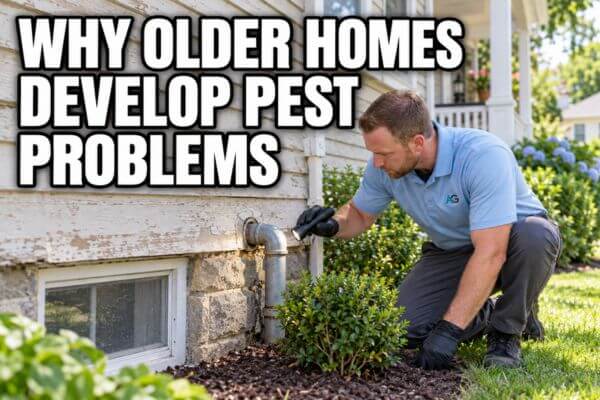
An older address does not automatically mean a pest problem. What matters is the condition of the building: openings that allow entry, leaks that provide water, and undisturbed spaces where pests can shelter. In an older Asbury Park home or rental, repairs and renovations may also leave gaps around foundations, doors, pipes, or rooflines. Finding those conditions is more useful than blaming the building’s age.
Key Takeaways
- ◉ Age is a clue, not a diagnosis. Maintenance, moisture, access, food, and shelter determine whether pests can settle in.
- ◉ Worn door sweeps, foundation cracks, utility openings, and roofline gaps are practical places to inspect.
- ◉ Leaks and damp wood deserve prompt attention because they can support termites, carpenter ants, and cockroaches.
- ◉ In a rental or multifamily property, recurring activity may require coordination beyond a single apartment.
- ◉ Droppings, mud tubes, shed wings, gnawing, or insect spotting should be identified before treatment or repair decisions are made.
Age Is a Clue, Not the Cause
Asbury Park has documented historic residential buildings, including the Stephen Crane House, built in 1878. That local history makes older-building maintenance relevant, but it does not show that every historic home or rental has pests. A well-maintained older property may offer fewer pest opportunities than a newer building with leaks, damaged screens, or poorly sealed utility lines.
Time can still change a structure. Materials shrink, swell, loosen, or deteriorate. Multiple rounds of plumbing, electrical, porch, or kitchen work may create penetrations that were never fully closed. The practical question is not, “How old is this building?” It is, “Where can a pest enter, drink, feed, or hide?” Residents and property owners who need local service information can review Agile’s Asbury Park pest-control options without confusing this maintenance guide with a service page.
Moisture and Hidden Voids Change the Risk
Pests need different resources, but water and shelter are common factors. A slow plumbing leak, damaged gutter, condensation, or damp crawl space can support activity without being visible from the room above. Stored boxes, wall voids, and unused corners can provide cover.
Moisture does not prove an infestation, and a musty smell does not identify a pest. Treat these as building-condition clues. Repair the water source, dry affected materials, and then inspect for pest-specific evidence. This approach addresses a condition pests may use while also protecting the building from further moisture damage.
Why Multi-Unit Rentals Need a Building-Wide View
Apartments and converted homes can have connected plumbing runs, utility chases, wall voids, basements, trash areas, and hallways. A resident may keep one unit clean and sealed yet continue to see activity if the source or travel route is elsewhere. Bed bugs can also be carried into any type or age of property on belongings, so their presence is not evidence that a building is old or unclean.
The EPA’s multifamily pest-management guidance emphasizes teamwork among residents, maintenance staff, housing managers, and pest professionals. Prompt reporting, accurate identification, monitoring, repairs, and access to affected areas are more effective than repeatedly treating one visible spot. Renters should use the property’s reporting process and document dates, locations, and signs without making assumptions about the source.
Match the Evidence to the Pest
Termites and Carpenter Ants
Subterranean termites live in soil and can reach wood through shelter tubes. Mud tubes, shed wings, or damaged wood deserve inspection, but one sign alone may not reveal whether activity is current. Rutgers recommends focusing termite inspections where moisture and cellulose materials occur, including basements, crawl spaces, door frames, and foundations. Its termite prevention guidance also advises correcting leaks and limiting wood-to-soil contact. Agile’s guide to termite swarm season explains why winged insects in spring should be identified rather than automatically labeled termites.
Carpenter ants excavate wood for nesting rather than eating it. Damp or previously damaged wood may be more suitable for galleries. Coarse debris near wood, repeated indoor ant activity, or sounds in a quiet wall can justify a closer look, but moisture damage, termites, and other insects can produce overlapping clues.
Rodents and Cockroaches
Rodent clues include droppings, gnaw marks, rub marks, nesting material, or noises. Avoid handling droppings until you have current cleanup guidance and appropriate protection. First locate likely entry routes and food sources; exclusion should be paired with addressing animals already inside.
Cockroaches may use cracks, appliance voids, cabinet gaps, and pipe openings. Repeated sightings in a multifamily property can warrant monitoring in adjoining areas rather than relying on indiscriminate spraying. Food storage, waste handling, leak repair, and targeted exclusion all contribute to long-term control.
Bed Bugs
Bed bugs are hitchhikers, not a consequence of old wood or poor housekeeping. Possible signs include live bugs, cast skins, eggs, or dark spotting near sleeping and resting areas. Because several marks and insects can be mistaken for bed bugs, capture a specimen or obtain a qualified identification before choosing a control plan.
What to Check Before Sealing or Treating
Use a flashlight and work from the outside inward. A simple condition-to-evidence record can help a homeowner, renter, manager, or inspector see patterns.
- ◉ Photograph the opening, stain, damaged material, or pest evidence before cleaning or repair.
- ◉ Record the room, date, and time of repeated sightings.
- ◉ Check nearby plumbing, drains, windows, doors, vents, and utility penetrations.
- ◉ Store food in closed containers and correct accessible trash or pet-food sources.
- ◉ Repair leaks and drainage defects instead of treating moisture as an insect problem.
- ◉ Ask for identification when signs overlap or activity continues after maintenance.
Professional inspection makes sense when the pest is uncertain, evidence appears in several areas, a wood-destroying insect may be involved, or a multifamily problem keeps returning. The goal is to identify the pest and contributing building conditions before selecting a response.

Frequently Asked Questions
Does an older home automatically have more pests?
No. Age may increase the chance of worn seals, gaps, or repeated alterations, but pest activity depends on usable access, water, food, and shelter. Regular repairs and monitoring can make an older building less inviting
Can a renter solve a pest problem inside one apartment?
Some isolated issues may improve with sanitation, storage, and minor maintenance. Repeated sightings near shared walls, pipes, or common areas should be reported because inspection and repairs may need to include other parts of the building.
Should I seal every gap as soon as I notice pest activity?
Identify the pest and determine whether an animal is already inside first. Immediate sealing can trap or redirect some pests. Correct active sources, then close confirmed entry points with materials appropriate for the opening.
Share