
Why Yellow Jackets Nest Near Freehold Homes in Late Summer

Written by Jack Hayes
Last updated on September 14, 2026
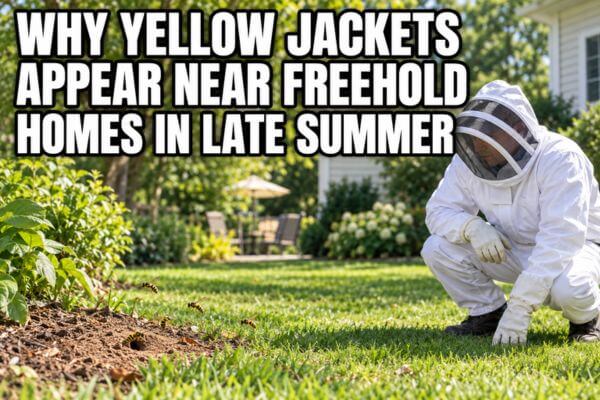
Yellow jackets often seem to appear suddenly around Freehold homes in late summer, but the colony usually started months earlier. By this point, more workers are leaving the nest to forage, and their interest shifts toward sugary foods and drinks. That combination makes activity easier to notice near patios, garbage cans, fruit trees, lawns, and exterior gaps. Understanding whether you are seeing passing foragers or traffic from a nearby nest helps you choose the safest next step.
Key Takeaways
◉ Late-summer yellow jacket activity usually comes from an established colony, not a newly started nest.
◉ A repeated flight path into one ground hole or building gap is a stronger nest clue than wasps visiting food.
◉ Open drinks, food spills, fallen fruit, pet food, and uncovered trash can draw foraging workers close to people.
◉ Do not seal an active wall opening or disturb a suspected ground nest.
◉ Breathing trouble, throat or tongue swelling, dizziness, or widespread hives after a sting requires immediate medical help.
Why Yellow Jackets Become More Noticeable in Late Summer
A yellow jacket colony generally begins in spring when an overwintered queen selects a protected site and raises the first workers. Those workers take over nest expansion, feeding the developing young, and gathering food. The colony becomes easier to detect as the season progresses because more workers are moving between the nest and surrounding food sources.
Food preference also changes. Earlier in the season, workers collect insects and other protein for developing larvae. Later, they spend more time seeking carbohydrates. Rutgers Cooperative Extension explains that yellow jackets forage for sugary foods during late summer, which helps explain their increased presence around soda, sweets, ripe fruit, and food waste.
This seasonal biology applies broadly across New Jersey. What varies by property is whether a protected cavity, ground opening, or food source brings the insects close to people.
Are Yellow Jackets Starting New Nests in Late Summer?
Usually, no. If many workers are entering and leaving one opening in August or September, the nest was likely established earlier and remained unnoticed while the colony was smaller. Late-summer traffic reveals the nest more clearly, but it does not tell you exactly how large it is or which yellow jacket species is present.
Most yellow jacket colonies in New Jersey are annual. New reproductive queens leave, mate, and overwinter in protected places before beginning separate colonies the next spring. The old nest is generally abandoned.
How to Tell Foraging Activity From a Nearby Nest
A few yellow jackets around a recycling bin or outdoor meal may have traveled from elsewhere. A nest is more likely when you can observe a consistent flight pattern from a safe distance.
◉ Workers repeatedly enter and leave the same hole in the lawn, garden edge, or soil near roots.
◉ Traffic follows one small gap near siding, soffits, fascia, vents, utility lines, a shed, or a deck.
◉ Yellow jackets appear inside repeatedly near the same wall, ceiling, window, or light fixture.
◉ Buzzing comes from a wall or ceiling void, especially when paired with exterior flight activity.
Do not move closer to confirm the opening. Mowing, trimming, digging, or walking directly over a ground nest can trigger defensive behavior. If the pattern points to a nest near the house, Agile Pest Control’s Freehold pest control page explains local inspection and stinging-insect service options.

Yellow Jackets Can Be Confused With Other Insects
Yellow jackets are smooth-bodied social wasps with yellow-and-dark markings. Honey bees are generally hairier, while paper wasps have longer legs and build exposed comb-like nests. Color alone cannot confirm identification.
Yellow jackets commonly use ground cavities and enclosed structural voids. An exposed, open-celled nest under an eave is more consistent with paper wasps. If identification affects management, have the insect and nest location assessed before treatment.
What Draws Foraging Yellow Jackets Close to a Home
Food does not make an established nest suddenly appear, but it can concentrate foraging workers near areas people use. Common attractants include:
◉ Open soda cans, juice cups, and other sweet drinks.
◉ Uncovered meals, condiments, and food spills on tables or decks.
◉ Garbage, recycling, and compost containers without tight lids.
◉ Ripe or damaged fruit left on trees or fallen on the ground.
◉ Pet food placed outdoors.
Covering food and cleaning spills can reduce encounters with foragers. It will not remove a nest that is already in the ground or a wall.
What to Do When You Suspect a Nest
Keep people and pets away from the area and pause lawn work nearby. Observe only from a distance, note the location, and avoid blocking the entrance. Sealing an active opening in a wall can cause wasps to search for another route, including one that leads indoors.
Do not pour gasoline, boiling water, or household chemical mixtures into a ground opening. These approaches create fire, burn, contamination, or sting risks and may not reach the colony. Do not apply a pesticide unless its label permits use against the identified pest in that location, and follow every label direction.
Professional assessment is especially appropriate when the nest is inside a structure, close to a doorway or play area, difficult to access, or producing repeated indoor activity. It is also the safer choice when the insect has not been identified or someone on the property has a history of serious sting reactions.
Sting Reactions That Need Urgent Attention
Yellow jackets can sting more than once. A typical local reaction can include pain, redness, and swelling around the sting. Reactions vary, so do not use the appearance of a sting alone to diagnose an allergy.
The American College of Allergy, Asthma and Immunology advises that breathing difficulty, tongue or throat swelling, dizziness, loss of consciousness, or symptoms away from the sting site can indicate a serious allergic reaction. Use prescribed epinephrine as directed and call 911 when anaphylaxis is suspected. Discuss prior reactions with a qualified medical professional.
Reducing Encounters Now and Nesting Opportunities Later
During late summer, keep outdoor food covered, use lidded cups, clean eating areas promptly, secure garbage and recycling, bring pet food indoors, and collect fallen fruit. These steps reduce food-based encounters but do not guarantee that yellow jackets will leave the property.
After insect activity has ended and the area has been checked, repair damaged vent screens, loose trim, siding gaps, and openings around utilities. Never seal a suspected active cavity. Do not assume every ground hole is vacant or occupied by yellow jackets.
Frequently Asked Questions
Do yellow jackets build new nests near homes in late summer?
Most visible late-summer activity comes from a colony that began in spring and grew through the warmer months. New reproductive queens generally overwinter and start separate colonies the following spring.
Will cold weather eliminate a yellow jacket nest in New Jersey?
Most colonies are annual and decline as cold weather arrives, while new queens overwinter elsewhere. An active nest near a doorway, play area, or indoor route may still require attention before then.
Can I seal the opening to a yellow jacket nest in a wall?
Do not seal an opening while the colony is active. Trapped yellow jackets may search for another exit and enter living spaces. Confirm that activity has ended or have the void assessed first.
Share