
Why Wall Township Crawl Spaces Often Attract Pests

Written by Jack Hayes
Last updated on September 17, 2026
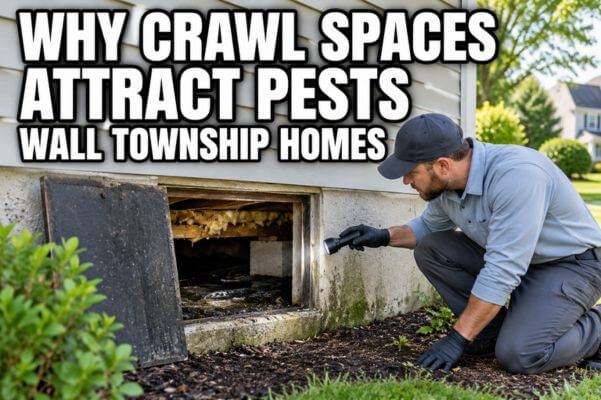
Crawl spaces can attract pests because they often combine moisture, shelter, darkness, and easy access through gaps around foundations or utilities. For Wall Township homeowners, the useful question is not whether the town has a unique crawl-space pest problem. It is whether the space under a particular home is damp, cluttered, damaged, or open enough for termites, rodents, ants, cockroaches, or other pests to use it. The best prevention starts by fixing those conditions, then addressing any active pest problem separately.
Key Takeaways
◉ Moisture, shelter, stored materials, and entry gaps are the main reasons crawl spaces become attractive to pests.
◉ New Jersey homeowners should pay particular attention to subterranean termite signs around damp wood, foundations, piers, and soil contact.
◉ Rodent droppings, gnawing, torn insulation, mud tubes, musty odors, and standing water are useful warning signs, but one sign alone may not identify the pest.
◉ Moisture control and exclusion can make a crawl space less suitable for pests, but they do not replace treatment when an active infestation is already present.
◉ Dry rodent droppings should not be swept or vacuumed. CDC guidance recommends wetting contaminated material with disinfectant before cleanup.
What Makes a Crawl Space Attractive to Pests?
A crawl space is protected from direct weather, receives little regular foot traffic, and may contain exposed soil, wood framing, insulation, cardboard, or other materials pests can use for shelter or nesting. Plumbing leaks, condensation, poor drainage, or uncovered soil can also raise moisture levels.
The important combination is moisture plus access. A damp crawl space with a tight, intact exterior may have fewer pest entry opportunities than a dry space with damaged vents and open utility gaps. Likewise, sealing gaps will not solve a termite problem if damp wood or soil-to-wood contact remains.
For homeowners who need help identifying active pest signs, Agile Pest Control’s Wall Township pest control services cover inspection and treatment options for rodents, termites, ants, and other household pests.
Which Pests May Use Crawl Spaces?
Subterranean Termites
Rutgers NJAES explains that naturally occurring termites in the northeastern United States are subterranean termites in the genus Reticulitermes. They nest in soil and may build mud tubes to reach wood while maintaining the moisture they need. Rutgers also recommends focusing inspections on high-moisture areas, including crawl spaces, basements, and foundations.
That makes damp framing, wood debris, and wood-to-soil contact important conditions to correct. Mud tubes or damaged wood can justify a closer inspection, but homeowners should not assume that every soft board or stain is termite damage. Moisture damage and other wood-destroying insects can look similar. See the Rutgers termite prevention and control fact sheet for more detail.
Rodents
Mice and rats may use crawl spaces for shelter, nesting material, and hidden travel routes. Common entry areas include damaged vent screens, gaps around pipes and utility lines, poorly sealed access doors, and openings near the foundation.
Look for droppings, gnaw marks, shredded insulation, nesting material, or repeated scratching sounds. If rodent signs continue beyond the crawl space, Agile Pest Control’s guide on how to get rid of rats and rodents explains common indoor hiding areas, entry routes, trapping considerations, and exclusion.
Carpenter Ants and Other Moisture-Associated Insects
Carpenter ants often establish nests in wood that is moist or partly decayed. Rutgers notes that leaks and other moisture problems should be corrected to reduce the chance of carpenter ants nesting in a home.
Cockroaches, camel crickets, silverfish, earwigs, and spiders may also appear in damp or undisturbed crawl spaces. Their presence does not prove a serious structural problem, but repeated activity can be a clue that moisture, clutter, or access points need attention.
Signs Worth Checking in a Crawl Space
A single clue may have several possible causes, so focus on patterns rather than trying to identify a pest from one mark or sound.
◉ Mud tubes on foundation walls, piers, or nearby wood
◉ Rodent droppings, gnaw marks, nesting material, or damaged insulation
◉ Visible insects, shed wings, webbing, or repeated activity in the same area
◉ Damp wood, condensation, plumbing leaks, or standing water
◉ Musty odors or visibly deteriorated materials
◉ Gaps around vents, pipes, cables, doors, or foundation joints
Soft flooring above a crawl space can have more than one cause, including moisture damage. If structural wood feels weak, sagging, or visibly damaged, have the source confirmed before assuming pests are responsible. If termite damage is confirmed, this guide on repairing termite damage explains why active termites should be addressed before repairs begin.

How to Make a Crawl Space Less Attractive to Pests
Moisture control, sanitation, and exclusion work together. EPA moisture guidance recommends keeping indoor relative humidity below 60 percent when possible, ideally between 30 and 50 percent. The exact moisture-control approach depends on the crawl-space design and the source of the water.
◉ Repair plumbing leaks and address water entering around the foundation.
◉ Keep gutters and downspouts working so water is directed away from the home.
◉ Use an appropriate ground vapor barrier where exposed soil is contributing moisture.
◉ Keep wood scraps, cardboard, and unnecessary stored materials out of the crawl space.
◉ Repair damaged vent screens, crawl-space doors, and gaps around utility penetrations with materials suited to the opening.
◉ Keep the space accessible enough to inspect for new moisture or pest signs.
Be careful about sealing or encapsulating a crawl space without understanding the existing conditions. Moisture management should fit the home’s design, and active pests should be identified and addressed rather than simply enclosed behind new materials.
Rodent Cleanup Requires Extra Care
If you find mouse or rat droppings, do not sweep or vacuum them dry. Current CDC rodent cleanup guidance recommends ventilating the area when practical, wearing gloves, thoroughly wetting urine and droppings with disinfectant, allowing the product to work as directed, and wiping the material up.
Heavy contamination, inaccessible areas, or contaminated insulation may require additional precautions. The main goal is to avoid stirring contaminated dust into the air.
When a Professional Inspection Makes Sense
A professional inspection is reasonable when you find mud tubes, repeated rodent signs, an unidentified insect problem, persistent moisture, damaged insulation, or wood that may be structurally compromised. It is also useful when the crawl space is difficult or unsafe to access.
An inspection should separate three questions: what pest is present, how it is getting in, and what property condition is helping it stay. That prevents a moisture problem from being treated only as an insect problem, or an entry-point problem from being treated only with traps.
Frequently Asked Questions
Can a vapor barrier get rid of pests already in a crawl space?
No. A vapor barrier can reduce ground moisture, which may make the space less favorable to some pests, but it does not remove an active termite, rodent, or insect infestation. Existing activity should be identified and addressed separately.
How often should homeowners check a crawl space for pest signs?
There is no single schedule that fits every home. Check when you notice odors, noises, moisture, damaged vents, or other changes, and include the crawl space in routine home and termite inspections if it can be accessed safely.
Can a dry crawl space still have pests?
Yes. Lower moisture removes one important attractant, but pests can still enter through gaps, vents, access doors, or utility openings. A dry crawl space still benefits from exclusion, clutter control, and periodic checks for new activity.
Share