
Why Tinton Falls Homes Get More Pests After Heavy Rain

Written by Jack Hayes
Last updated on September 18, 2026
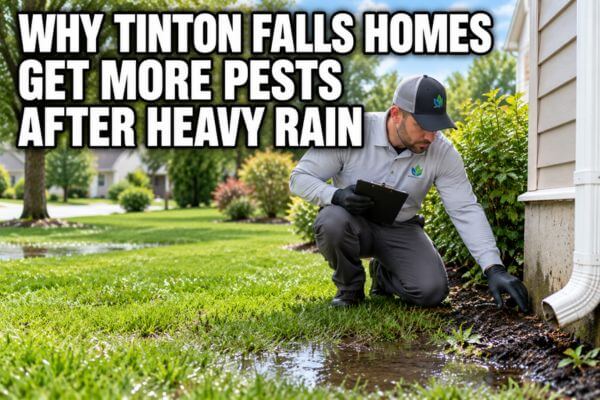
Heavy rain can make pest activity around a Tinton Falls home suddenly more noticeable. Saturated soil can disturb outdoor nesting and hiding areas, while standing water and lingering dampness create conditions some pests can use. Rain does not create an infestation overnight. It can displace pests that were already outside, reveal entry points, or make existing moisture problems easier to spot. After a storm, the useful question is whether the activity fades as conditions dry or keeps returning in the same places.
Key Takeaways
◉ Heavy rain can displace ants, roaches, and other outdoor pests from saturated soil, mulch, and debris.
◉ Mosquito problems are more closely tied to standing water left after rain than to the rainfall itself.
◉ Persistent moisture, leaks, clogged gutters, and wood-to-soil contact can create conditions that favor termites and carpenter ants.
◉ Repeated indoor sightings in the same area matter more than one insect appearing after a storm.
◉ A post-storm check should focus on drainage, standing water, damp structural areas, and pest entry points.
Why Heavy Rain Changes Pest Activity Around a Home
A storm can change several conditions at once. Soil becomes saturated, mulch stays wet, low spots collect water, and outdoor shelter may temporarily become unusable. Some insects move toward higher or more protected areas. Others simply become easier to notice because their normal travel routes have changed.
A house can offer dry shelter, stable temperatures, plumbing moisture, and small openings around doors, utility lines, vents, and foundations. That does not mean rain “causes” pests to enter a sealed home. It means an existing gap may become more important when outdoor conditions change.
If several pest types keep showing up after storms, the pattern can also help reveal a drainage or entry-point problem. Homeowners who need local service information can review Agile Pest Control’s Tinton Falls pest control services without turning a temporary sighting into an assumption that treatment is automatically needed.
Pests You May Notice After Heavy Rain
Ants
For ants that nest in soil or shallow outdoor sites, saturated ground can disrupt nesting and foraging routes. Ants that were already nearby may begin using different paths and can enter through small gaps around thresholds, windows, foundations, or utility penetrations.
Carpenter ants deserve a little more attention when damp wood is involved. Rutgers NJAES notes that carpenter ants can nest in wood that has become moist because of plumbing or other moisture problems. Rain itself does not prove a carpenter ant infestation, but storm-related leaks or persistently damp wood are worth checking.
Mosquitoes
Mosquitoes are different from pests that are simply displaced by wet ground. The bigger post-rain issue is water that remains in buckets, toys, tarps, plant saucers, clogged gutters, low spots, and other containers.
Monmouth County’s mosquito-control program emphasizes source control, including reducing or eliminating standing water where larvae develop. Its current guidance also encourages residents to dump water from containers around the home. See the county’s Mosquito Control information for local guidance.
A single storm does not guarantee a mosquito problem. The risk increases when water remains long enough for immature mosquitoes to develop.
Termites
Subterranean termites already live in soil and depend on moisture. Heavy rain does not mean a new colony suddenly formed beside the house, but persistent moisture near wood, foundation areas, or crawl spaces can create more favorable conditions.
Rutgers NJAES recommends reducing moisture, repairing leaks, maintaining gutters and downspouts, and avoiding wood-to-soil contact as part of termite prevention and control.
After wet weather, look for mud tubes, discarded wings, or swarming insects. Winged ants can resemble termite swarmers, so discarded wings or a flying insect alone should not be treated as a confirmed termite identification.
Cockroaches, Millipedes, and Centipedes
Roaches and other moisture-associated pests may become more visible around garages, basements, doorways, and foundation edges after heavy rain. Wet mulch, leaf litter, and saturated soil can change where they shelter.
The type of roach matters. A large outdoor roach appearing once after a storm is different from repeated small roaches in a kitchen or bathroom. Ongoing indoor activity should be evaluated as a possible established infestation rather than blamed on the weather.
When Post-Rain Pest Activity Points to a Bigger Problem
One or two insects after a storm can be temporary. The more useful signal is a pattern that continues after the yard and exterior have had time to dry.
Watch for:
◉ Ant trails returning to the same doorway, window, kitchen, or bathroom.
◉ Roaches appearing repeatedly indoors, especially near appliances, cabinets, or plumbing.
◉ Mud tubes on foundation walls or crawl-space surfaces.
◉ Discarded wings or repeated swarming insects near windows and doors.
◉ Standing water that returns after each rain because of drainage or gutter problems.
◉ Damp wood, leaks, or moisture that does not dry out.
These signs do not all confirm an infestation by themselves. They tell you where a closer inspection is more useful than simply treating the insect you can see.
What to Check Around Your Home After a Storm
A short inspection after heavy rain can help separate a temporary weather response from a condition that will keep attracting pests.
◉ Empty water from buckets, toys, tarps, plant saucers, and other containers.
◉ Check gutters and downspouts for clogs, overflow, or water being discharged beside the foundation.
◉ Look at door sweeps, screens, utility penetrations, and visible foundation gaps.
◉ Check basements and crawl spaces for leaks, condensation, or areas that remain damp.
◉ Keep firewood and untreated wood from direct soil contact near the house.
◉ Note where pests appear and whether the same location becomes active after each storm.
Avoid reacting to post-rain activity with repeated or improvised pesticide applications. Product requirements vary by pest, location, label, and property conditions. Moisture correction, sanitation, exclusion, and correct pest identification are often better first steps.

When to Call a Pest Professional
A professional inspection makes sense when activity keeps returning after conditions dry, when the pest cannot be identified confidently, or when signs suggest termites, carpenter ants, or an established cockroach problem.
The goal of an inspection should be to identify the pest, find the source or entry route, and determine whether moisture or drainage is contributing. That is more useful than assuming every post-storm sighting needs the same treatment.
Frequently Asked Questions
Why do bugs come inside after heavy rain?
Heavy rain can saturate outdoor nesting and hiding areas, causing some pests to move toward drier shelter. New pests entering still need an access point, while repeated activity can also come from an existing indoor population.
How long should I wait before worrying about post-rain pest activity?
There is no single timeline for every pest. Temporary activity may fall as soil and exterior areas dry. Repeated sightings in the same indoor location, especially alongside moisture, droppings, mud tubes, or swarmers, deserve a closer inspection.
Can heavy rain cause a termite infestation?
Rain does not create a termite colony overnight. However, persistent moisture, leaks, wet wood, and wood-to-soil contact can create favorable conditions for subterranean termites. Mud tubes, swarmers, or discarded wings should be identified rather than assumed to be termites.
Share