
Why Moisture Around Red Bank Homes Can Attract More Pests

Written by Jack Hayes
Last updated on September 22, 2026
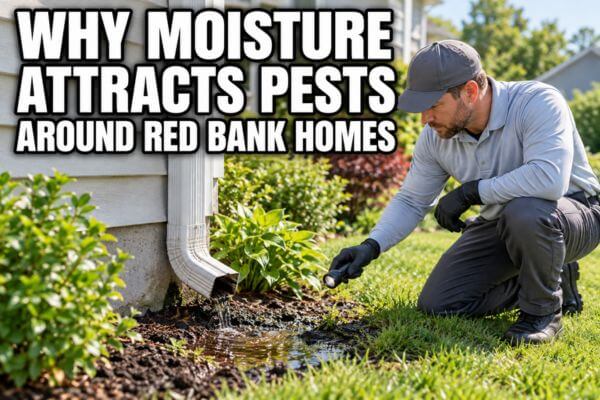
Moisture can make a home more attractive to pests because it supplies water, creates humid shelter, and can keep soil or wood damp for long periods. Around a house, the problem may start with something small: a dripping hose bib, a clogged gutter, condensation under a sink, or a low spot that holds rainwater. Red Bank homeowners do not need to assume every damp area will cause an infestation, but finding and correcting unnecessary moisture can remove conditions that mosquitoes, subterranean termites, carpenter ants, cockroaches, and silverfish can use.
Key Takeaways
◉ Standing water can support mosquito development, while leaks and high humidity can make indoor areas more suitable for moisture-seeking pests.
◉ Subterranean termites are associated with soil and moisture, but damp wood alone does not prove termites are present.
◉ Carpenter ants often nest in moisture-damaged or decaying wood, but they excavate wood rather than eat it.
◉ Gutters, plumbing leaks, crawl spaces, plant saucers, damp mulch, and poor drainage are practical places to check first.
◉ Moisture control works best as prevention and habitat reduction; an established pest problem may still require identification and targeted treatment.
Why Moisture Makes a Home More Pest-Friendly
Different pests use moisture in different ways. Some need direct access to water. Others benefit from the humid, protected conditions created by leaks, condensation, or damp soil. Moisture can also contribute to wood deterioration, mold growth, and decaying organic material, which can create additional shelter or food for certain insects.
That is why moisture management is part of pest prevention rather than a stand-alone treatment. Drying a damp basement will not remove every pest already living there, but fixing the leak or humidity problem can make the space less supportive of continued activity. If you are also seeing recurring pest signs, Agile Pest Control’s Red Bank service-area page explains local inspection and treatment options.
Pests That Commonly Benefit From Damp Conditions
Mosquitoes and Standing Water
Mosquitoes need water for their immature stages. Around a home, breeding sites can include clogged gutters, plant saucers, buckets, tarps, toys, birdbaths, or other containers that hold water after rain. The important point is not the size of the container, but whether water remains long enough for mosquito development.
Monmouth County Mosquito Control emphasizes source control by reducing or eliminating standing water where larvae develop. For Red Bank homeowners, a quick property check after rain is one of the most practical moisture-related pest prevention steps.
Subterranean Termites and Moisture Near Wood
Rutgers NJAES explains that naturally occurring termites in the northeastern United States are subterranean termites that nest in soil. Moist wood, wood-to-soil contact, leaking gutters, and water near a foundation can create conditions that make wood more accessible to them.
Moisture is a risk factor, not proof of infestation. Mud tubes, live termites, or other suspicious wood damage still need proper identification before treatment decisions are made. Correcting leaks and reducing wood-to-soil contact can lower conducive conditions, but it does not replace an inspection when termite signs are present.
Carpenter Ants and Water-Damaged Wood
Carpenter ants do not eat wood like termites. They excavate wood to create nesting galleries, and damp or decaying wood can be especially suitable for nesting. Areas around roof leaks, window frames, porches, wall voids, or plumbing can deserve a closer look when carpenter ants keep appearing.
Moisture damage and carpenter-ant damage can also overlap visually, so soft or damaged wood should not be treated as confirmation of an ant nest without additional evidence.
Cockroaches and Silverfish Indoors
Cockroaches need access to water and often stay close to kitchens, bathrooms, laundry areas, basements, or other locations where leaks and condensation are available. Silverfish also favor humid indoor spaces and may show up around basements, bathrooms, storage areas, and other damp locations.
If either pest keeps returning to the same area, check for a slow leak, condensation, damp cardboard, or persistent humidity before focusing only on the visible insects.
Where Moisture Problems Usually Start
A useful inspection starts with places where water can collect, leak, or remain hidden. Walk the property after rain, then check indoor plumbing and lower-level spaces.
◉ Clear clogged gutters and make sure downspouts move water away from the foundation rather than allowing it to pool beside the house.
◉ Check under sinks, around toilets, near water heaters, and behind water-using appliances for staining, dripping, or damp materials.
◉ Empty containers that collect rainwater and correct outdoor items that repeatedly hold water.
◉ Look for low areas, leaking outdoor faucets, irrigation problems, or drainage issues that keep soil wet beside the structure.
◉ Keep firewood and other cellulose materials from sitting directly against the house or in persistent contact with wet soil.
◉ If a basement or crawl space stays damp, address the water source first and ask a qualified building professional whether drainage, vapor control, dehumidification, or ventilation is appropriate.

A Red Bank Moisture Check Should Focus on the Property, Not the ZIP Code
Local pest articles can become misleading when they assume every home in a town has the same conditions. Moisture risk is property-specific. A Red Bank home with clean gutters, good drainage, and dry lower-level spaces may have very different conditions from a nearby property with a plumbing leak or standing water.
The most useful local connection is Monmouth County’s mosquito-control guidance, which focuses on removing standing water and controlling larvae at the source. That applies directly to Red Bank without claiming the town has unusually severe moisture or pest pressure.
How to Reduce Moisture Without Relying on Pesticides
Start with habitat changes. Fix active leaks, improve drainage, dry damp materials, and reduce standing water. Indoors, use bathroom and kitchen exhaust fans where appropriate, and consider a dehumidifier when a basement or other room remains humid after the actual moisture source has been addressed.
The U.S. EPA generally recommends keeping indoor relative humidity around 30% to 50% when practical. A small hygrometer can help you see whether a room stays unusually humid instead of relying on how the air feels.
Moisture reduction will not solve every established infestation. It is best viewed as one part of integrated pest management: remove water and shelter where possible, identify the pest correctly, and use targeted control only when needed.
When Moisture and Pest Signs Need Professional Attention
Consider a pest inspection when you find mud tubes, repeated carpenter-ant activity, persistent cockroaches, unexplained wood damage, or pest activity that continues after obvious moisture sources are corrected. A pest professional can evaluate the pest evidence and the conditions supporting it.
The moisture source itself may require a plumber, roofer, drainage contractor, waterproofing specialist, or other qualified building professional. Treating pests without correcting the water problem can leave the same favorable conditions in place.
Frequently Asked Questions
Does a dehumidifier really help prevent pests?
A dehumidifier can make a persistently humid room less favorable to moisture-seeking pests, but it should not replace fixing leaks, drainage problems, or standing water. An established infestation may also need separate identification and treatment.
What indoor humidity level should I aim for?
The EPA generally recommends keeping indoor relative humidity around 30% to 50% when practical. If a basement or other room stays above that range, look for leaks, condensation, drainage problems, or ventilation issues rather than relying only on a dehumidifier.
Does moisture around my home mean I have termites?
No. Moisture can create conditions that favor subterranean termites, but it does not confirm an infestation. Mud tubes, live termites, swarmers, or suspicious wood damage should be evaluated separately, especially when the signs are hidden or difficult to identify.
Share