
Where Spiders Commonly Hide Inside Older Red Bank Homes

Written by Jack Hayes
Last updated on September 23, 2026
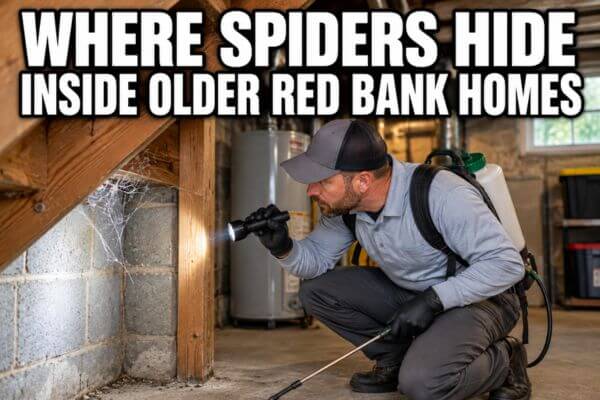
If you are seeing spiders in an older Red Bank home, start with quiet structural edges rather than the middle of a room. Check basement and crawl-space corners, attic storage, window and door frames, pipe and cable openings, closets, and spaces behind furniture. A house does not attract spiders simply because it is old. What matters is whether worn seals, stored items, moisture, repairs, or small openings create shelter and give spiders access to insects.
Key Takeaways
◉ Start with basements, crawl spaces, attics, storage areas, window and door frames, utility openings, closets, and spaces behind furniture.
◉ Web-building spiders often stay close to protected web sites, while hunting spiders may roam along floors and walls without leaving a web.
◉ One spider does not prove an infestation. Repeated fresh webs, egg sacs, or sightings in several areas are more useful signs of an ongoing pattern.
◉ Brown recluse spiders are not established in New Jersey. Penn State Extension lists New Jersey among states with isolated occurrences.
◉ Vacuuming webs, reducing clutter, repairing screens, sealing practical entry gaps, and reducing nearby insect activity can make indoor spaces less suitable for spiders.
Start With the Structural Edges of the Home
Older homes can accumulate changes over time. Windows get replaced, plumbing or cable lines are added, weatherstripping wears, and storage builds up around walls. Those conditions do not prove spider activity, but they create more edges and openings worth checking.
For Red Bank homeowners, a useful approach is to inspect from the lowest level upward. If recurring activity appears across the structure, Agile Pest Control’s Red Bank pest control services page explains local inspection and service options.
Basements and Crawl Spaces
Inspect foundation edges, sill areas, floor joists, corners, and the backs of stored items. These spaces often receive less routine cleaning and may contain plumbing, wiring, or other penetrations.
Look for fresh webs instead of assuming every old web is active. Also note small insects around windows, lights, drains, or damp areas. Spiders are predators, so nearby prey can help explain repeated activity.
Attics and Stored Belongings
Check where framing meets walls, around access hatches, near vents, and behind boxes or stored decorations. Stable anchor points and undisturbed areas can suit web-building spiders.
Move stored items carefully rather than reaching blindly behind them. Sealed plastic bins are easier to inspect around than worn cardboard, and keeping storage slightly away from walls makes future checks simpler.
Windows, Doors, and Utility Openings
Window frames, door thresholds, pipe openings, cable penetrations, and gaps around trim are useful inspection points. Webs near a window can also reflect insects attracted to light rather than proving the spider entered through that exact spot.
Check screens, door sweeps, weatherstripping, and visible gaps first. Exclusion can reduce possible entry routes and may also reduce insects spiders feed on.

Closets, Furniture, and Low-Traffic Corners
Closets, spaces under stairs, backs of shelves, and areas behind furniture can stay undisturbed for long periods. A hunting spider may rest in a narrow gap without leaving a web, while a web-building spider may remain close to one protected corner.
If fresh activity returns after cleaning, inspect the surrounding room for gaps, clutter, and insect prey.
Web-Building and Hunting Spiders Leave Different Clues
Not every indoor spider behaves the same way. Web-building spiders usually remain near a web placed where prey may pass. Hunting spiders, including wolf spiders, move to find prey and may cross a basement floor or wall without a nearby web.
That difference matters during an inspection. A web identifies a fixed site a spider has used. A roaming spider tells you less about where it entered or rests. University of Minnesota Extension’s spider guidance explains that web-building spiders use calm, undisturbed places and that hunting spiders may wander indoors, so prey activity and the type of clue both matter.
A New Jersey Identification Note About Brown Recluse Spiders
A plain brown spider should not automatically be called a brown recluse. Range is an important clue. Penn State Extension’s brown recluse guide says established populations occur in 16 states and lists New Jersey only among states with isolated reported occurrences.
If identification matters, photograph the spider from a safe distance or keep the specimen contained without direct contact for professional identification. Avoid diagnosing a bite or skin reaction from appearance alone.
Signs Spider Activity Is Becoming a Pattern
One spider can wander indoors without indicating a larger problem. Repeated signs are more useful:
◉ Fresh webs that return soon after cleaning.
◉ Multiple egg sacs in protected corners or storage areas.
◉ Spider sightings in several rooms or levels.
◉ Noticeable small-insect activity in the same areas.
These signs do not reveal the exact species or size of the problem. They show where closer inspection may be worthwhile.
How to Reduce Common Spider Hiding Spots
The most practical first steps focus on shelter, entry points, and prey rather than trying to spray every corner.
◉ Vacuum accessible webs and egg sacs, then clean the surrounding edge so new activity is easier to notice.
◉ Reduce clutter in basements, attics, closets, and garages. Use sealed bins where practical and keep storage accessible.
◉ Repair torn screens and worn door sweeps, and seal visible gaps around windows, pipes, cables, vents, and trim when appropriate for the building.
◉ Address persistent leaks or damp conditions. Moisture is not food for spiders, but it can support other pests and create sheltered conditions for some species.
◉ Review exterior lighting near doors and windows. Lights can attract flying insects, making those areas useful hunting or web-building locations.
◉ Keep firewood, debris, and rarely moved materials away from interior living spaces and organized around the exterior.
If a pesticide is considered, use only a product labeled for the pest and location and follow the label exactly. Do not mix products or improvise application methods.
When Professional Identification or Control Makes Sense
Professional help can make sense when fresh webs or egg sacs keep returning after cleanup, spiders appear throughout several rooms, activity is in a hard-to-reach area, or you cannot confidently identify a spider that concerns you.
An inspection should look beyond the visible spider. Entry gaps, stored materials, moisture, lighting, and insect prey can all affect where activity continues. Correcting those conditions is more useful than treating every sighting as the same problem.
Frequently Asked Questions
Does finding spiders indoors mean I have another pest problem?
Not always. Spiders eat insects and other arthropods, so repeated activity can be a reason to check for prey insects. One indoor spider does not prove that another pest infestation is present.
Should I remove spider egg sacs when I find them?
Yes, if they are accessible and you can do so without handling an unknown spider. Vacuuming the sac and nearby webbing is a practical cleanup step. Then monitor the area for new activity.
How often should I check an older home for spider activity?
There is no universal schedule. Check low-traffic areas during routine cleaning and after repairs that affect windows, doors, screens, roofing, plumbing, wiring, or exterior gaps. Recheck sooner if fresh webs or repeated sightings appear.
Share