
Where Cockroaches Hide Inside Freehold Kitchens and Baths

Written by Jack Hayes
Last updated on September 14, 2026
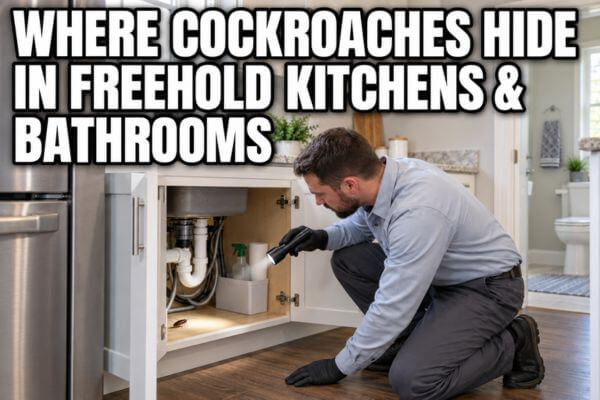
Cockroaches usually hide in tight, dark, undisturbed spaces near food, moisture, and warmth. In a Freehold home, the first places to inspect are behind the refrigerator and stove, beneath sinks, around dishwashers, inside cabinet gaps, and near bathroom plumbing. A roach that disappears under an appliance or vanity may be using a deeper crack or wall opening nearby. The goal is to find both the hiding place and the resource that makes it useful.
Key Takeaways
◉ Start with warm appliances, sink cabinets, plumbing gaps, and narrow cabinet seams.
◉ Look for droppings, shed skins, egg cases, and repeat activity rather than relying on one sighting.
◉ Kitchens usually provide food, water, and shelter in the same small area.
◉ Bathrooms can support activity when leaks, condensation, or plumbing openings are present.
◉ Cleaning and sealing help, but persistent activity may require identification and a targeted treatment plan.
Common Cockroach Hiding Spots in Freehold Kitchens
The most useful kitchen inspection follows the edges of the room instead of focusing on open floors. Cockroaches often rest in narrow spaces that keep much of their bodies in contact with a surface. Use a flashlight and check for signs along corners, hinges, seams, and appliance edges.
Under and Behind the Refrigerator and Stove
The refrigerator area can provide warmth, condensation, crumbs, and long periods without disturbance. Check the floor beneath it, the wall behind it, the drip-pan area if safely accessible, and gaps beside nearby cabinets. Around the stove, inspect grease-catching seams, the space between the appliance and counter, and the wall-floor junction.
Do not move a heavy appliance alone or reach near wiring, gas connections, or sharp metal. If the appliance cannot be inspected safely, leave it in place and check the accessible perimeter.
Around the Dishwasher, Sink, and Plumbing
A dishwasher sits inside a narrow cabinet opening where moisture or food residue may collect. The sink cabinet can also contain pipe openings, condensation, minor leaks, and stored bags that create cover. Look around supply lines, drainpipes, cabinet corners, and the back panel rather than assuming the insect came from the drain itself.
If activity keeps appearing in connected rooms, a professional inspection for a Freehold property can help trace movement through appliance gaps, plumbing penetrations, and other concealed areas without changing this article’s informational focus.
Inside Cabinets, Pantry Corners, and Backsplash Gaps
Inspect cabinet hinges, shelf supports, drawer tracks, toe-kick voids, and the seam where a cabinet meets the wall. In the pantry, check behind rarely moved packages and around shelf corners. Grease and crumbs can collect where a backsplash meets the counter, while a loose edge may provide access to a protected void.
Where Cockroaches Hide in Bathrooms
Bathrooms may have less food than kitchens, but they can provide reliable water and sheltered routes. A bathroom sighting does not confirm that the main hiding place is in that room. The insect may be moving through a shared wall, pipe chase, or gap around a fixture.

Beneath the Vanity and Around Pipe Openings
Remove stored items and inspect the rear corners of the vanity. Pay attention to gaps around supply and drain lines, damp shelf material, water stains, and dark spotting. A slow leak or recurring condensation should be repaired because drying the area removes a resource, even if it does not eliminate an established infestation by itself.
Behind the Toilet, Near the Tub, and Along Baseboards
Use a flashlight behind the toilet and along the floor-wall edge. Check loose trim, cracked caulk, utility openings, and gaps near the tub or shower. Avoid removing fixed plumbing covers or opening walls. These areas may be access routes, and disturbing them can scatter insects without showing the full extent of activity.
Signs That Point to a Nearby Hiding Place
One dark speck or shed insect part is not enough for certain identification. Look for a pattern in protected areas and compare several clues:
◉ Small dark droppings or smears concentrated near cabinet corners, hinges, or wall edges
◉ Shed skins, egg cases, or dead cockroaches in an undisturbed gap
◉ Repeated nighttime sightings near the same appliance, sink, or fixture
◉ Cockroaches caught on monitors placed along edges rather than in open floor space
◉ A persistent odor near a suspected harborage, especially when other signs are present
Sticky monitors can help show where activity is concentrated. Place them where children and pets cannot reach them, then note which locations catch insects. A flashlight inspection and monitor pattern are more useful than assuming every kitchen or bathroom gap contains cockroaches.
Which Cockroach May Be Hiding There?
The hiding location can provide a clue, but it cannot confirm the species. Rutgers NJAES describes seven cockroach species found as structural pests in New Jersey, including German, American, and Oriental cockroaches.
German cockroaches are closely associated with indoor spaces and are often found near kitchen and bathroom food and water sources. American cockroaches are larger and may occur around basements, heating ducts, sewage systems, and other moist areas. Oriental cockroaches also favor damp locations and may enter from around a building. Because the source and control approach can differ, save a clear photo or specimen when possible rather than identifying a roach from location alone.
How to Reduce Food, Water, and Shelter
Sanitation is part of cockroach management, but an infestation is not proof that a home is dirty. Roaches can be carried inside with belongings or move through structural openings. Focus on practical changes:
◉ Clean grease and crumbs from appliance edges, cabinet corners, and the floor beneath movable items.
◉ Store food and pet food in sealed containers and remove accessible food overnight.
◉ Repair leaks and dry recurring condensation beneath sinks and around fixtures.
◉ Reduce paper bags, cardboard, and clutter in warm or damp storage areas.
◉ Seal accessible cracks around cabinets, baseboards, and plumbing after active areas have been identified.
Avoid total-release foggers or improvised pesticide mixtures. If you use a pesticide, follow the complete product label, including approved locations and precautions. Spraying only the cockroaches you can see may miss the protected areas where activity continues.
When Professional Help Makes Sense
Consider professional help when monitors continue catching cockroaches, several life stages appear, activity spreads beyond one room, or the source cannot be reached safely. Multi-unit properties may also need coordinated inspection because cockroaches can move through shared utilities and wall openings. A proper assessment should identify the pest, map activity, address contributing conditions, and select treatment based on the property rather than a one-size-fits-all spray routine.
Frequently Asked Questions
Can cockroaches hide inside kitchen appliances?
Yes. They may shelter in protected gaps around warm appliances, especially where crumbs or moisture collect. Do not spray into electrical equipment. Unplug and inspect a small appliance only when the manufacturer’s instructions allow it.
Does seeing one cockroach mean there is an infestation?
Not always. The species, location, time of day, and presence of droppings, egg cases, or additional roaches matter. Sticky monitors along room edges can help determine whether the sighting was isolated or repeated.
Can cockroaches appear in a clean or newly built home?
Yes. Clean homes still have appliance gaps, plumbing penetrations, boxes, bags, and other possible entry routes. Good sanitation removes resources, but it cannot prevent every cockroach from being carried or moving indoors.
Share