
Tick Problems Around Wall NJ Wooded Yards and Trails

Written by David Mick
Last updated on July 24, 2026
On this page
Finding a tick after walking the dog, clearing leaves, or spending time near your Wall Township yard can make the whole outdoor space feel risky.
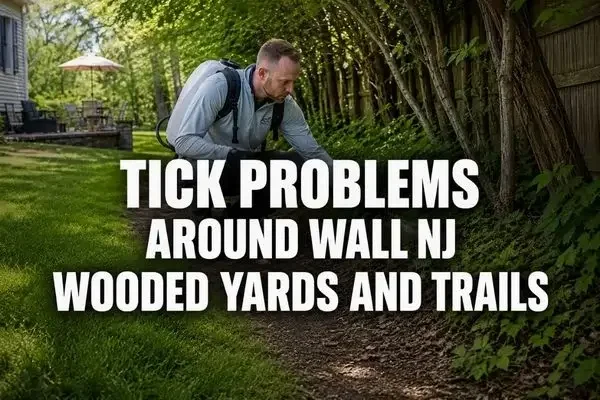
Ticks often gather near wooded borders, trail edges, brush, fallen leaves, and shaded vegetation. The open lawn may look fine, but the narrow strip where grass meets woods can create regular contact for people and pets.
Key Takeaways
◉ Tick activity around Wall Township homes is often highest near wooded borders, trail edges, leaf litter, and shaded vegetation.
◉ Pets and family members can pick up ticks during short walks near fences, brush, or backyard trails.
◉ Clearing leaves, trimming brush, and creating space between the lawn and woods can reduce contact with tick habitat.
◉ Checking clothing, children, and pets after outdoor time can help catch ticks sooner.
◉ Repeat tick encounters in the same yard area usually point to a specific exposure zone that needs closer attention.
Why Wooded Wall Township Properties Create More Tick Contact
Ticks prefer shaded, humid areas where they can stay protected and wait for a host to pass. Around Wall Township homes, that may include a fence line beside woods, a backyard trail, low branches, or leaves collecting under shrubs.
Deer, rodents, pets, and other animals often move through these same areas. That creates more chances for ticks to reach the parts of your yard your family uses.
Tick pressure can build around wooded Wall Township yards before homeowners notice a clear pattern. Checking shaded borders early can show where pets, children, or adults are most likely to come into contact with ticks.
What a Thorough Yard Evaluation Can Reveal

Finding one tick does not always show where it came from. A full yard evaluation looks at how your family and pets move through the property.
The inspection may reveal:
- ◉ A dog path beside heavy leaf litter
- ◉ A play area too close to brush
- ◉ A trail entrance covered by low vegetation
- ◉ Wildlife movement near a wood pile or stone wall
Those details help narrow down where tick exposure is happening.
The Wooded Edges and Trail Areas Where Ticks Wait
Ticks are more likely to stay along the side of a trail than in the middle of a clear path.
Pay close attention to:
- ◉ Leaf litter under trees
- ◉ Brush beside narrow trails
- ◉ Tall plants along fences
- ◉ Groundcover under shrubs
- ◉ Wood piles and stone walls
- ◉ Vegetation brushing against walking paths
These areas matter since people and pets can brush against them without noticing.
How People and Pets Pick Up Ticks Close to Home
A long hike is not required for tick exposure. A quick walk along the back fence, time spent gardening, or a few minutes clearing leaves can create contact.
Dogs often follow the same shaded route each day. Children may sit near low plants or fallen leaves. Yard work can place your clothing close to brush and groundcover.
Ticks may cling to shoes, clothing, or pet fur before attaching later. A quick check after outdoor time can help you spot them sooner.
What Wall Homeowners Can Change Around the Yard
Start by creating more separation between the spaces your family uses and the shaded areas ticks prefer.
Try these steps:
- ◉ Remove leaf buildup along lawn edges
- ◉ Cut brush back from walking paths
- ◉ Keep grass trimmed beside fences
- ◉ Move play equipment away from wooded borders
- ◉ Store wood piles farther from patios and pet areas
- ◉ Add gravel or wood chips between the lawn and brush
These changes reduce direct contact with vegetation where ticks may be waiting.
Why Tick and Mosquito Treatments Often Cover Similar Yard Zones
Ticks and mosquitoes behave differently, but some of their outdoor activity areas overlap.
A property inspection may focus on:
- ◉ Shaded vegetation
- ◉ Overhanging branches
- ◉ Leaf litter
- ◉ Exposed soil
- ◉ Damp borders near woods or trails
These spots can hold moisture and give pests protected places to rest. A targeted plan focuses on these active zones instead of treating every open part of the lawn.
A Wall Township Dog Path That Kept Producing Tick Encounters
I remember visiting a Wall Township home after the family found ticks on their dog several times in one week. The lawn was cut and looked clean, so they could not see where the problem was starting.
During the inspection, I watched the route the dog followed along the back fence. That path ran beside a wooded trail with leaf litter, low branches, and thick groundcover.
I checked:
- ◉ The dog’s regular route
- ◉ Leaves along the fence
- ◉ Brush near the trail entrance
- ◉ Low plants touching the path
- ◉ Wildlife tracks near the woods
- ◉ The distance from the trail to the patio
The open lawn was not the main concern. The dog was brushing against shaded vegetation along the wooded edge.

We treated the active tick zones, then recommended removing leaf buildup, trimming plants away from the path, and creating a cleaner break between the lawn and woods. The family began checking the dog after each trip outside, which helped them catch any new ticks sooner.
Safer Habits for Backyard Trails and Wooded Walks
Simple habits can reduce contact with ticks near trails and wooded borders.
- ◉ Walk near the center of clear paths
- ◉ Avoid brushing against tall plants
- ◉ Wear long pants in heavy vegetation
- ◉ Check shoes and clothing afterward
- ◉ Look over children and pets
- ◉ Shower after returning indoors
Pay close attention behind the knees, around the waist, under the arms, near the scalp, and around pet ears and paws.
When Repeat Tick Encounters Need a Professional Property Check
One tick can come from many places. Several ticks after using the same yard area point to a pattern.
A property check makes sense when:
- ◉ Pets keep bringing ticks indoors
- ◉ The yard borders woods or trails
- ◉ Play areas sit near brush
- ◉ Wildlife often crosses the property
- ◉ Tick sightings continue after cleanup
The inspection should identify where contact is happening, not just where the tick was found later.
Building a Clear Plan Around the Areas You Actually Use

A useful tick plan should match your daily routine. Pet routes, trail entrances, play areas, garden beds, and seating spaces may need different attention.
That keeps the focus on the places where your family faces the most exposure.
Getting Help With Tick Activity Around Your Wall Property
If ticks keep showing up after your family or pets use the yard, finding the contact zone is the next step.
Agile Pest Control can inspect wooded borders, trail entrances, pet paths, and family-use areas. From there, the team can build a targeted treatment plan and explain which yard changes may help reduce future tick encounters.
Share