
How to Stop Ants Around Wall NJ Homes in Late Summer

Written by Jack Hayes
Last updated on August 9, 2026
On this page
Ants around Wall homes can become more active in late summer when they find food, moisture, and safe hiding spots near kitchens, bathrooms, patios, mulch beds, damp wood, and wall gaps. Homeowners looking for an exterminator Wall NJ service may notice trails first, then see ants returning after cleaning.
This guide is for Wall homeowners who want to know why ants keep showing up, what attracts them, and what steps can help reduce activity before the problem spreads.
Key Takeaways
◉ Ants around Wall homes often get worse in late summer when they find food, moisture, and safe hiding spots.
◉ Kitchens, bathrooms, patios, mulch beds, damp wood, and wall gaps can all support repeat ant activity.
◉ Ant trails are a warning sign that ants have found a regular path to food, moisture, or shelter.
◉ Cleaning counters, sealing food, drying sinks, and removing trash residue can help reduce kitchen ant activity.
◉ Repeat ant problems need a closer look when ants return after cleaning, show up in more than one room, or keep trailing from outdoor areas.
Why Ants Keep Showing Up Around Wall Homes in Late Summer
Ants around Wall homes often become more noticeable in late summer when food, moisture, and shelter are easy to find. Kitchens, sinks, counters, bathrooms, patios, mulch beds, damp wood, and wall gaps can all give ants what they need.
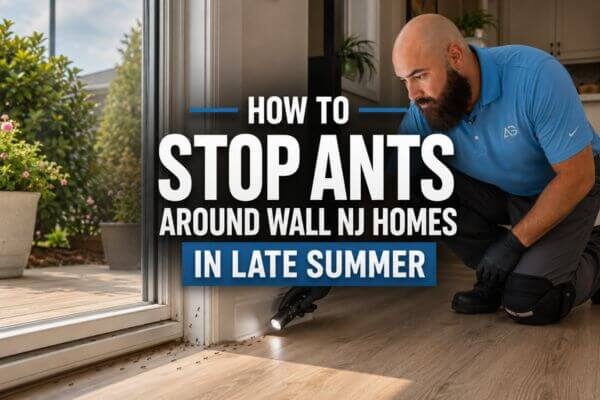
Agile notes that ants can enter kitchens, bathrooms, wall gaps, patios, damp wood, mulch beds, and commercial spaces when they find food or moisture. That local detail matters for homeowners who keep seeing ants in the same areas. If ants are showing up indoors, the source may still be active nearby. They may be trailing from a patio, damp wood, mulch bed, or small wall gap.
Why Sanitation Matters When Ants Reach the Kitchen
A clean kitchen does not guarantee ants will stay away, but it gives them fewer reasons to return. Ants often follow small food traces that homeowners may miss during normal cleanup.
Crumbs under small appliances, sticky counters, open snacks, pet bowls, trash areas, pantry shelves, and sink moisture can all attract ants. Once ants find a food source, they may keep sending more ants to the same spot. Homeowners can reduce kitchen ant activity by cleaning counters after meals, storing food in sealed bags or containers, drying sink areas, and removing open food from counters. These small steps make the kitchen less useful to ants.
Using Ant Trails to Locate the Source of the Problem
A few live ants can turn into a steady trail when the colony finds something useful. Ant trails are one of the clearest signs that ants are using a regular path to reach food or moisture.
The ants you see crawling across a counter, cabinet, bathroom floor, or patio door may be following a trail from another area. That trail could lead back to mulch beds, damp spots, patios, wall gaps, or exterior cracks. This matters for Wall homeowners. Killing the visible ants may give short relief, but the trail can return if the source stays active.
Practical Steps Homeowners Can Start Today
Wall homeowners can take a few simple steps to reduce kitchen ant activity before the trail grows. The goal is to remove food traces, open food, moisture, and trash residue that ants can follow.
◉ Wipe countertops after cooking or eating so ants have fewer food traces to follow.
◉ Store snacks, cereal, sugar, and pet food in sealed containers.
◉ Remove open food from counters, tables, and pantry shelves.
◉ Dry sink areas and wipe up spills so ants lose easy moisture sources.
◉ Take out trash often and rinse sticky containers before disposal.
These steps help make the kitchen less attractive, especially when ants are already searching nearby.
Why Patio and Mulch Bed Ant Activity Can Move Indoors
Outdoor ant activity near patios or mulch beds can become an indoor problem when ants find a path inside. Wall homes with mulch close to the foundation, damp wood, patio edges, or small exterior gaps may give ants a route toward kitchens and bathrooms.
This matters in late summer when ants are still searching for food and moisture. A trail may start near a patio, then move toward a door, wall gap, window frame, or foundation edge. If ants keep showing up inside, check the areas outside the closest entry point. The source may be near the patio, mulch bed, damp siding, or shaded foundation area.
What One Homeowner Shared About Ant Treatment
One customer shared that Agile Pest Control helped with an ant problem by explaining the issue, communicating clearly, and providing a helpful estimate. They also mentioned that the technicians were professional and that the service helped address the problem.

That kind of experience matters for Wall homeowners who want clear answers before ant activity spreads. When ants keep returning, it helps to know where the trail starts, what is attracting them, and what kind of treatment plan makes sense. A clear service visit can help turn a confusing ant problem into a practical plan.
How Agile Pest Control Builds an Ant Treatment Plan
A good ant inspection should find what the ants are using and where the trail begins. Agile Pest Control checks the active ant areas, follows trails, looks for nesting areas, and reviews food or moisture sources around the home. That can include kitchens, bathrooms, patios, mulch beds, wall gaps, damp wood, sinks, counters, and exterior edges. The goal is to identify the ant species, trace the path, and see what is keeping the activity going.
After the inspection, the homeowner gets a clear treatment plan and estimate. This helps Wall homeowners know what is happening and what steps can reduce repeat ant activity.
A Wall Kitchen Ant Problem That Started Near a Patio
A Wall homeowner notices ants near the patio after late-summer meals outside. A few days later, ants appear near the kitchen sink and counter. The homeowner wipes the area, yet the trail comes back the next morning.

Agile Pest Control checks the kitchen, patio, mulch bed, wall gap, and damp area near the back door. The inspection finds food residue indoors and an outdoor trail starting near the patio. The plan focuses on sanitation, trail treatment, entry-point checks, and the likely nesting area. This gives the homeowner a clear path instead of chasing ants across the counter each day.
Why Ants May Return After You Clean the Counter
Cleaning the counter helps, but repeat ant activity means the source may still be active. Wall homeowners may wipe surfaces daily and still see ants if the trail, nest, moisture source, or entry point remains in place.
Ants can keep using the same route from a patio, mulch bed, damp wall gap, or foundation edge. If they still find food or water nearby, the trail can return. This is why repeat ants need more than surface cleaning. The home should be checked for where ants are entering, nesting, and finding moisture.
A Practical Example of Rapid Ant Treatment
One customer shared that Agile Pest Control helped with a carpenter ant problem through quick diagnosis and a thorough service visit. That kind of detail matters for Wall homeowners who want clear answers when ants keep coming back.

Carpenter ants can be more concerning than smaller kitchen ants since they may be linked to wood, moisture, or hidden nesting areas. A fast look at the issue can help show whether the problem is simple or needs a deeper inspection. For repeat ant activity, a clear service visit can help identify the trail, source, and treatment steps.
Signs Ant Activity in Walls May Need Further Inspection
If ants keep showing up around your kitchen, bathroom, patio, or mulch beds, Agile Pest Control can inspect the trail, find the source, and build a plan around the areas ants are using.

Call for help when ants form steady trails, return after cleaning, appear near food or moisture, come from patio areas, or show up in more than one room. These signs can mean the colony has found a reliable path into the home. For Wall homeowners, a closer inspection can help find entry points, nesting areas, moisture sources, and food access before ant activity spreads.
Share