
Signs Termites May Be Hiding in Your Little Silver Home

Written by Jack Hayes
Last updated on August 27, 2026
On this page
Termites can remain out of sight while feeding inside wood, so homeowners may first notice indirect clues rather than insects themselves. Mud tubes, discarded wings, soft or damaged wood, and moisture-related changes around trim or foundations can all justify a closer look. None of these signs proves an active infestation by itself. The useful next step is to document what you see, avoid covering the evidence, and have a qualified inspection confirm the cause.
This guide is for Little Silver homeowners who want to recognize potential termite signs without guessing.
Key Takeaways
◉ One termite sign does not confirm an active infestation. Mud tubes, damaged wood, discarded wings, and surface changes should be considered together rather than treated as proof on their own.
◉ Mud tubes and discarded wings deserve a closer look. These clues can point to termite activity, but old tubes and winged ants can sometimes cause confusion.
◉ Hidden wood damage may be easy to miss. Termites can feed beneath an intact surface, making hollow, soft, or easily probed wood an important warning sign.
◉ Moisture and wood-to-soil contact can favor termite activity. Fixing leaks, drainage issues, and direct wood contact can make the structure less favorable to subterranean termites.
◉ Document suspicious evidence before disturbing it. Photos, samples, and notes about where and when signs appeared can make a professional inspection more useful.
Signs That May Point to a Termite Problem
Subterranean termites spend most of their time in soil, wood, or protected passageways. That is why the most useful clues are often found on foundations, near lower-level wood, around door and window frames, and in crawl spaces or basements. Look for a pattern of evidence rather than treating one cosmetic issue as proof.
Mud Tubes Along Foundations or Wood
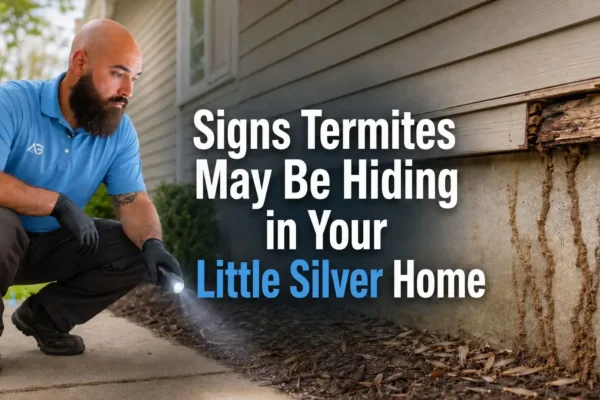
Mud tubes are narrow, soil-based passageways that subterranean termites may build over foundation surfaces, piers, or exposed wood. Rutgers notes that termites use them as protected travel routes between soil and wood. A tube can reflect current or past activity, so take a clear photo and note its location rather than assuming you can confirm the colony from the tube alone.
Discarded Wings or Swarming Insects
A pile of similarly sized wings near a window, door, light source, or sill can be a sign that termite swarmers were present. Rutgers explains that mature subterranean termite colonies produce winged adults during warm sunny periods in spring. Winged ants can look similar, so collect a sample or photograph before disposing of the insects if identification is uncertain.
Damaged, Hollow, or Easily Probed Wood
Termites may consume wood beneath a relatively intact surface. A hollow sound, soft spot, or wood that yields when gently probed can justify inspection, especially around window sills, lower door frames, crawl spaces, or exposed framing. Do not force or dismantle damaged structural material yourself, since the cause and extent need confirmation.
Moisture-Related Surface Changes
Bubbling paint, peeling finishes, or stained trim can occur where moisture is present. Those changes do not identify termites on their own, but they are worth investigating because moisture and wood contact can create favorable conditions for subterranean termites and can also cause non-termite damage.

What Can Be Misleading
A termite clue is not the same as a confirmed infestation. Old mud tubes can remain after previous activity, and Rutgers notes that homeowners may find it difficult to distinguish old damage from new damage without a thorough inspection. Likewise, flying ants are commonly confused with termite swarmers, while moisture problems can cause paint or wood symptoms that resemble termite damage.
For a quick visual comparison, termite swarmers have straight, beadlike antennae, a broad connection between body sections, and wings that are similar in size. Winged ants have elbowed antennae, a pinched waist, and forewings that are larger than hind wings. When in doubt, save a sample or take a close photo rather than relying on an online image match. If you already have older tubes or damaged wood and need help understanding whether the signs could still matter, read how to tell if termites are active or gone.
Why These Signs Matter in New Jersey
Rutgers Cooperative Extension describes subterranean termites as the naturally occurring termite group in the northeastern United States. They nest in soil and feed on cellulose materials such as wood and paper. Because they travel through hidden areas, a home can have termite activity before a homeowner sees an insect or obvious surface damage.
That makes a focused check more useful than a broad assumption about any particular Little Silver neighborhood or property type. Look at the conditions around your own structure, including exposed or untreated wood near soil, chronic moisture, leaking plumbing, clogged gutters, poor drainage, and stored wood or debris close to the house. These are practical points to address regardless of whether termites are confirmed. For a local next step when you need inspection or termite-service information, visit Agile Pest Control’s Little Silver pest control page.Reduce Conditions That Can Favor Termites
Prevention cannot guarantee that termites will never reach a property, but it can reduce moisture and wood-to-soil conditions that make a structure easier to use. Rutgers recommends focusing on these maintenance steps:
◉ Keep structural wood at least six inches above soil where possible, and avoid direct wood-to-soil contact.
◉ Store firewood, mulch, stumps, branches, and wood debris away from the foundation rather than immediately beside the house.
◉ Maintain gutters and downspouts, correct drainage issues, and repair plumbing or roof leaks promptly.
◉ Keep crawl spaces properly ventilated and do not allow mulch, soil, or dense planting to block vents.
◉ Inspect lower exterior walls, crawl spaces, basements, door frames, and window sills periodically for moisture, tubes, or wood damage.
Avoid applying pesticide products to a suspected termite area based only on a visible clue. Treatment choices and product labels depend on the confirmed pest, the construction of the property, and the location of activity.
A customer shared that they appreciated Agile’s professionalism, clear communication, and willingness to explain what they were seeing instead of leaving them guessing. That kind of careful communication can be especially valuable when termite signs are uncertain and a homeowner needs to understand whether the evidence points to current activity, old damage, or another cause.

When to Arrange a Professional Inspection
An inspection is a sensible next step when you find mud tubes, repeated discarded wings, live insects that may be swarmers, or damaged wood near moisture-prone areas. It is also appropriate when the evidence is inaccessible, such as behind a finished wall or under flooring.
A professional can identify the insect, assess whether signs appear active or old, and explain the appropriate next step before repairs conceal the evidence.
New Jersey requires pesticide applicator businesses that sell pest-control services to be licensed. Before choosing a company, homeowners can verify that the business is properly licensed through the New Jersey Department of Environmental Protection.
Keep photos, samples, and notes about when and where the signs appeared, since that information can support a more useful inspection.
Share