
Signs a Pest Problem in Middletown Is Getting Worse

Written by Jack Hayes
Last updated on September 14, 2026
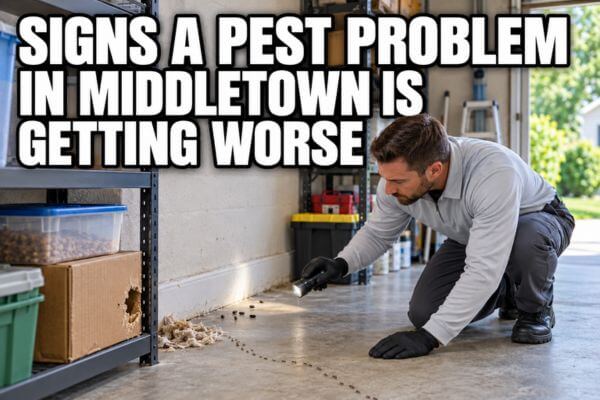
A pest problem may be getting worse when activity becomes more frequent, fresh evidence returns after cleanup, or signs spread to new parts of the home. One sighting, noise, or damaged item cannot show the size of a problem by itself. The pattern matters more. Middletown homeowners should compare what is happening now with what they saw a few days or weeks earlier, then act if the evidence is increasing or the pest cannot be identified safely.
Key Takeaways
- ◉ More frequent sightings or activity in additional rooms can indicate that a pest problem is expanding.
- ◉ Fresh droppings, gnaw marks, shed skins, nesting material, or damage are more useful than old evidence alone.
- ◉ Reappearing evidence after proper cleanup points to continuing activity, not a resolved problem.
- ◉ Mud tubes, swarmers, and damaged wood justify a termite inspection, but one clue does not reveal the full extent.
- ◉ A written record of dates, locations, and changes can help distinguish an isolated event from a worsening pattern.
Start With the Pattern, Not One Clue
Different pests leave different evidence, so there is no single test for every home. Instead, compare four things: frequency, freshness, spread, and recurrence. A few ants at one window after a door was left open mean something different from a trail returning daily in two rooms. One old gnaw mark differs from new damage appearing beside it.
Mark the date and location of each sign. Photos can help you compare droppings, damage, trails, or mud tubes without relying on memory. If activity keeps returning or you cannot tell what caused it, Agile Pest Control’s Middletown pest control page explains the local inspection and service options.
Sightings Are Becoming More Frequent or Widespread
An occasional pest may have entered through an open door or arrived on an item brought indoors. Concern increases when you see the same type of pest repeatedly, notice several at once, or begin finding them in rooms away from the original location.
Daytime activity can add context for pests that usually stay hidden, but it is not proof of a severe infestation by itself. Look for supporting evidence such as droppings, trails, nests, shed skins, or food damage. A real Agile Pest Control case involving one visible mouse and activity in hidden areas also shows why an inspection should consider attics, crawl spaces, and other areas that homeowners may rarely enter.
Fresh Droppings or Nesting Material Keeps Returning
Rodent droppings near food packages, inside drawers, under sinks, or along travel routes are reasons to investigate. Shredded paper, fabric, insulation, or dried plant material may also be nesting evidence. The strongest sign of ongoing activity is new material appearing after an area has been cleaned correctly.
Do not sweep or vacuum dry rodent urine, droppings, or nesting material. The CDC’s rodent cleanup instructions advise wearing rubber or plastic gloves, thoroughly wetting contaminated material with an appropriate disinfectant, allowing the label-directed contact time, and wiping it up. Heavy infestations and difficult-to-reach contaminated spaces may require additional precautions.
Dropping size or shape can sometimes narrow the possibilities, but do not use it as the only identification method. Insects, rodents, and other animals can leave evidence that looks similar, and treatment choices depend on correct identification.
New Damage Appears or Existing Damage Expands
New gnawing on food packages, wood, plastic, or wiring can indicate continuing rodent activity. Fresh holes, displaced insulation, and repeated damage beside a suspected travel route also deserve attention. If wiring may be damaged, avoid touching it and have the electrical concern assessed appropriately.
Wood damage needs careful interpretation because termites, carpenter ants, wood-boring insects, moisture, and ordinary deterioration can overlap. In New Jersey, Rutgers identifies the naturally occurring termites as subterranean termites. They travel through soil and may build mud tubes to reach wood.
The Rutgers NJAES termite guide notes that termite swarmers are often noticed on warm days from April through June. Mud tubes, shed wings, or hollow-sounding wood justify further investigation, but homeowners may have difficulty distinguishing old damage from current activity. This guide to checking whether termite signs appear active or old provides more detail, although a professional inspection may still be needed.

Noises, Odors, or Trails Are Spreading
Scratching or scurrying inside a wall may come from rodents or wildlife, but sound alone rarely identifies the animal or shows how many are present. Track when the sound occurs and whether it moves to a different wall, ceiling, or level of the home. Increasing frequency or a wider activity area is more meaningful than one isolated noise.
Persistent odors can also justify a closer look, especially when they become stronger or appear with droppings, nesting material, insects, or food damage. Avoid identifying a pest from smell alone. Plumbing leaks, moisture, spoiled material, and other building issues can produce similar odors.
For ants and crawling insects, watch whether a trail reforms after cleaning or appears at a second entry point. A returning trail suggests the visible insects are only part of the activity, while the source or access route remains.
Quick Fixes Provide Less or Shorter Relief
A trap, vacuum, or cleanup may remove visible evidence without addressing an entry point, nest, moisture source, or food supply. If the same sign returns repeatedly, moving the same trap or applying more of a product is not a reliable escalation plan.
Continue with low-risk prevention: store food securely, remove accessible water and food sources, reduce clutter, repair leaks, and seal suitable gaps when the pest and entry point are understood. Follow every pesticide label exactly. Do not mix products, increase the amount, or apply a product in an unlisted location.
Use a Quick Room-by-Room Check
Record what you find so you can compare conditions rather than guess:
- ◉ Note the date, time, room, and exact location of each sighting.
- ◉ Photograph new damage, droppings, mud tubes, shed skins, or nesting material before cleanup.
- ◉ Check nearby food, water, moisture, storage, and possible entry points.
- ◉ After safe cleanup, watch whether evidence returns or appears elsewhere.
- ◉ Keep children and pets away from contaminated areas, traps, baits, and pesticides.
Avoid opening walls, entering unsafe crawl spaces, handling wildlife, or disturbing an active stinging-insect nest during a home check.
When to Request a Professional Inspection
Consider an inspection when signs are recurring, fresh, or present in several areas; the pest is uncertain; damage is expanding; or the suspected source is inaccessible. Suspected termite activity, chewed wiring, extensive rodent contamination, and activity involving wildlife or stinging insects also call for extra caution.
An inspection should answer questions that surface treatments cannot: what pest is involved, where it is entering or nesting, how far the evidence extends, and which conditions are helping it persist. That keeps the response matched to the actual problem instead of the most visible symptom.
Frequently Asked Questions
Can a pest problem worsen even if sightings temporarily stop?
Yes. Some pests remain hidden, move to another area, or become less visible after a disturbance. Check for fresh evidence, recurring noises, new damage, or activity elsewhere before assuming the problem has ended.
Does seeing a pest during the day prove there is a large infestation?
No. Daytime activity can be useful context, especially for normally hidden pests, but it does not establish population size by itself. Repeated sightings plus fresh droppings, nesting evidence, trails, or damage provide a stronger case.
Should I leave rodent droppings in place until an inspection?
Photograph their location first, then follow current CDC cleanup guidance rather than leaving contamination or sweeping it dry. If droppings return after proper cleanup, record where and when they reappear and arrange further evaluation.
Share