
Seasonal Pest Problems Holmdel Homeowners Commonly Notice

Written by Jack Hayes
Last updated on September 16, 2026
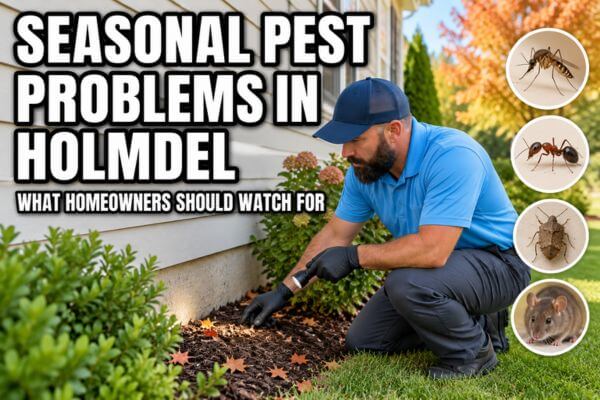
Pest activity around a Holmdel home changes through the year, but the calendar is only a guide. Spring often makes termite swarmers and winged ants easier to notice. Summer increases mosquito, tick, and stinging-insect concerns outdoors. Fall is a key time for stink bugs and rodents to look for shelter, while winter activity often shifts indoors. Weather, moisture, food, and the condition of a property can move those patterns earlier or later.
Key Takeaways
◉ Spring is a good time to watch for termite swarmers, winged ants, moisture-damaged wood, and renewed tick activity.
◉ Summer prevention should focus on standing water, tick checks, yard-edge maintenance, screens, and active stinging-insect flight paths.
◉ Fall is the best time to repair exterior gaps before stink bugs and rodents settle into protected areas.
◉ Winter does not eliminate pest problems; rodents and insects that already entered a structure can remain active or reappear indoors.
◉ Seasonal timing is a clue, not a confirmed identification. Repeated activity, structural signs, or an uncertain pest may justify a closer inspection.
How to Use a Seasonal Pest Calendar in Holmdel
Holmdel has parks, trails, wooded areas, and preserved open space, but that does not mean every property has the same pest pressure. A home beside dense vegetation may need different prevention than a more open lot. Match the season with what is actually present on your property.
Homeowners dealing with repeated indoor activity can review pest-control options for Holmdel homes without turning this seasonal guide into a service page.
| Season | Pests to watch for | Useful places to check |
| Spring | Termite swarmers, winged ants, ticks | Windowsills, foundation edges, damp wood, leaf litters |
| Summer | Mosquitoes, ticks, ants, yellow jackets and wasps | Gutters, containers, patios, shrubs, yard edges |
| Fall | Stink bugs, mice, rats, late-season stinging insects | Screens, siding gaps, utility openings, garages |
| Winter | Rodents and overwintering insects | Kitchens, basements, attics, wall voids |
Spring: Swarmers, Ants, and Early Tick Precautions
Termite and Carpenter Ant Activity
Spring is when New Jersey homeowners commonly notice termite swarmers, while ant activity also becomes easier to spot as outdoor conditions warm. Rutgers NJAES notes that subterranean termite swarmers typically emerge in spring and that carpenter ants often establish nests in moist or partially decayed wood.
Discarded wings near a window or door deserve attention, but wings alone do not show whether the insect is a termite or ant or how much activity is present. Termite swarmers generally have straight, beadlike antennae and similar-sized wings; ant swarmers have elbowed antennae, a narrow waist, and larger front wings. If the specimen is damaged, identification is more useful than guessing. Agile Pest Control’s termite swarm season guide covers this in more detail.

Ticks Can Be Active Before Summer
New Jersey tick activity is not limited to one short summer window. Yard work, leaf litter, brush, wooded edges, and outdoor recreation can create opportunities for contact whenever ticks are active. After outdoor time, check people and pets for ticks and keep frequently used yard areas trimmed and clear of excess leaf litter.
Summer: Mosquitoes, Ticks, and Stinging Insects
Mosquito prevention starts with water. After rain, check gutters, planters, buckets, toys, tarps, birdbaths, and other containers that can hold water. Monmouth County also offers residents mosquito inspections focused on standing water where larvae may develop.
Local surveillance can change during the season. On September 14, 2026, Monmouth County reported West Nile virus activity in parts of Holmdel, Hazlet, and Keansburg and scheduled targeted adult-mosquito control for September 15. That finding applies to the specified treatment areas, not every Holmdel yard. Monmouth County’s September 14 notice provides the treatment-area details.
For ticks and mosquitoes, the New Jersey Department of Health recommends EPA-registered repellent, tick checks, maintained screens, and reducing standing water. Its Fight the Bite, NJ! resources also link to current surveillance information.
Stinging-insect colonies can become easier to notice as summer progresses. Repeated flight into the same ground opening, wall gap, soffit, or shrub may indicate a nearby nest. Avoid blocking or disturbing an active entrance simply to test what is inside.
Fall: Stink Bugs and Rodents Look for Shelter
Brown marmorated stink bugs often gather on building exteriors in early fall before moving into protected spaces. They can enter around windows, doors, siding, vents, and utility penetrations. Once indoors, they are mainly a nuisance: they do not reproduce inside structures or damage the building, but they can release a strong odor when crushed.
Early exclusion is more useful than chasing individual bugs later. Repair damaged screens, replace worn weatherstripping, and seal accessible exterior gaps before large numbers move into wall voids or attics.
Rodent signs may also become more noticeable as colder weather approaches. Check garage-door edges, foundation openings, pipe and cable penetrations, and storage areas. Fresh droppings, gnaw marks, disturbed food, nesting material, or repeated scratching sounds are stronger clues than one isolated noise.
Winter: Activity Moves Indoors
Cold weather can reduce outdoor insect activity without eliminating pest problems. Stink bugs and other overwintering insects may stay hidden in wall voids or attics and then appear near windows or lights during warm indoor periods. Their appearance does not necessarily mean they are reproducing inside.
Mice and rats can remain active through winter where food and shelter are available. Store food and pet food in closed containers, clean spills and crumbs, reduce clutter, and investigate fresh signs rather than relying on a single trap or surface spray.
Bed bugs and cockroaches are less tied to outdoor seasons because heated buildings can support indoor activity year-round. Evaluate them by signs and identification rather than the month on the calendar.
A Year-Round Prevention Checklist
◉ Clear gutters and empty containers that collect rainwater.
◉ Repair screens, door sweeps, vent covers, and damaged weatherstripping.
◉ Seal accessible gaps around pipes, cables, siding, and foundation penetrations.
◉ Keep food, pet food, and garbage in closed containers and clean spills promptly.
◉ Reduce excess leaf litter, brush, and clutter near frequently used outdoor areas.
◉ Recheck the exterior before fall instead of waiting for pests to appear indoors.
When an Inspection Makes Sense
Professional identification or inspection is reasonable when activity keeps returning, the species is uncertain, signs suggest termites or rodents inside the structure, a stinging-insect nest is difficult to reach, or DIY prevention has not changed the pattern. A seasonal calendar can tell you what to watch for, but it cannot confirm what is hidden behind a wall or whether an old sign is still active.
Frequently Asked Questions
What months are ticks active in New Jersey?
Tick activity varies by species and life stage, so there is no single start and end date. New Jersey surveillance guidance shows important tick stages can be active from early spring through fall, with some activity possible outside that window during suitable weather.
Do stink bugs reproduce inside a house during winter?
Brown marmorated stink bugs generally enter buildings to overwinter. They may become visible on warm indoor days, but they do not normally reproduce or feed indoors. Their main indoor impact is nuisance activity and odor when disturbed or crushed.
Should I seal rodent entry points if mice are already inside?
Exclusion is important, but sealing every opening before dealing with rodents already inside can trap them in the structure. Confirm active routes, address food and shelter conditions, and pair exclusion with an appropriate removal plan.
Share