
How Manalapan Weather Changes Seasonal Pest Activity

Written by Jack Hayes
Last updated on September 28, 2026
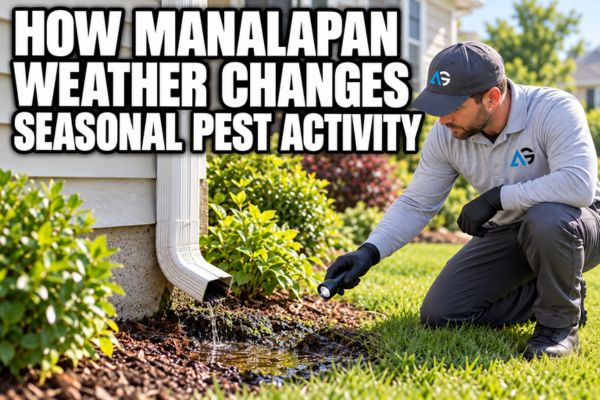
Weather can change when pests become active around a Manalapan home, but it does not guarantee an infestation. Temperature, rain, humidity, freezes, and sudden warm spells affect insects and ticks, while rodents respond to changing shelter and food conditions. The most useful approach is to treat weather as a cue to inspect your property: look for moisture, standing water, yard-edge habitat, gaps, and pest-specific signs before deciding what action is needed.
Key Takeaways
◉ Warm spring weather can bring termite swarmers and renewed tick activity into view, making identification and inspection more important.
◉ Summer rain can refill small water-holding containers, so mosquito prevention should focus on standing water and drainage rather than the calendar alone.
◉ Cooler fall weather makes exclusion more important because mice and overwintering insects can use gaps around doors, vents, siding, and utility lines.
◉ Winter slows many outdoor insects, but rodents and pests already sheltering inside can remain active, and mild thaws can increase some outdoor activity.
◉ Weather is a trigger to inspect conditions around a home, not proof that a particular pest is present.
Why Weather Changes What You Notice
Insects and ticks depend heavily on surrounding conditions, so temperature and moisture affect their movement, development, and host-seeking activity. Rodents regulate their own body temperature, but cold and changing food or shelter conditions can still influence where they go.
That is why two homes on the same Manalapan street can have different pest problems during the same week. One property may hold rainwater in containers, another may have leaf litter near a wooded edge, and another may have gaps around a garage or utility line. Homeowners who need help with an active problem can review Agile Pest Control’s Manalapan pest control services.
Spring: Watch for Swarmers, Ticks, and Moisture
Spring warm-ups make several pest signs easier to notice. Rutgers NJAES reports that subterranean termite swarmers commonly leave mature colonies on warm, sunny days between April and June. If winged insects or discarded wings appear indoors, save a specimen or clear photo when possible because termite swarmers can be confused with winged ants. Agile’s guide to termite swarm season explains why identification matters.
Spring is also important for tick awareness. In New Jersey, different tick species and life stages have different activity periods, so there is no single “tick season” that begins on one date. After time near brush, leaf litter, tall vegetation, or wooded edges, check yourself and pets for ticks.
After a stretch of warmer days or repeated rain, inspect foundation areas for moisture problems, watch for swarmers around windows and doors, and clear unnecessary leaf or brush buildup from frequently used yard edges.
Summer: Rain and Standing Water Matter for Mosquitoes
Warm weather supports mosquito activity, but water around a property often determines where mosquitoes can develop. The Monmouth County Office of Mosquito Control uses an integrated pest management approach and inspects water-holding habitats such as stormwater areas, woodland pools, poorly graded areas, and unmaintained pools.
Around a home, the useful question after rain is not “Will mosquitoes be bad?” but “Where did water collect?” Check gutters, downspout extensions, buckets, toys, plant saucers, tarps, pool covers, birdbaths, and low spots that stay wet. Empty, drain, cover, or maintain water-holding items where practical.
For a deeper mosquito-specific checklist, Agile’s Manalapan mosquito guide covers yard sources and prevention in more detail.
Ticks can also remain active through summer. Keep grass and brush managed where people and pets regularly pass, and do not assume a hot or dry week has eliminated tick exposure in shaded or vegetated areas.
Fall: Shift Your Attention to Entry Points
Fall weather changes the inspection priority from outdoor breeding conditions to building access. Brown marmorated stink bugs and other overwintering insects can move toward protected structures as temperatures cool. Mice remain active year-round and may use homes, garages, sheds, and other structures for shelter.
Before colder nights become consistent, check door sweeps, screens, vents, utility penetrations, garage-door edges, siding transitions, and foundation gaps. Do not seal an opening blindly if there are signs an animal is already inside; first identify what is using the space and choose an exclusion approach that will not trap or redirect the problem.

If you notice repeated stink bugs indoors, droppings, gnawing, or scratching sounds, treat those as pest evidence rather than simply blaming the weather. Weather may explain the timing, but the next step should depend on the pest and the entry route.
Winter: Activity Can Continue Indoors
Winter reduces visible outdoor activity for many insects, but it does not make every pest disappear. Rodents inside remain active. Overwintering insects may stay hidden in wall voids, attics, or other protected spaces and occasionally become noticeable on warmer indoor or sunny days.
Mild outdoor spells can also change what you see. Adult blacklegged ticks can remain active during winter when temperatures rise above freezing. If you spend time outdoors during a thaw, check clothing, pets, and exposed skin afterward.
Inside, focus on evidence such as fresh droppings, new gnaw marks, scratching sounds, or repeated insect sightings. If rodent droppings are present, follow current public-health cleanup guidance rather than sweeping or vacuuming dry material.
Use Weather as a Home-Inspection Trigger
A weather-based pest plan is most useful when it connects a condition to a specific check.
- ◉ After heavy rain: empty standing water, inspect drainage, and look for persistent moisture near the foundation.
- ◉ After several warm spring days: watch for winged insects, check windowsills for discarded wings, and restart tick checks after yard work.
- ◉ Before sustained cold weather: inspect doors, vents, utility gaps, screens, and garage edges for possible entry points.
- ◉ During a winter thaw: check for renewed outdoor tick activity and indoor overwintering insects without assuming the warm spell created an infestation.
This avoids two common mistakes: waiting for a calendar date before doing anything, or assuming one weather event automatically caused a pest problem.
When a Professional Inspection Makes Sense
Weather can explain why a pest becomes noticeable, but it cannot confirm the pest, the source, or whether treatment is necessary. Consider an inspection when you find termite swarmers or mud tubes, repeated rodent signs, persistent mosquito activity after obvious water sources are addressed, or insects repeatedly entering despite basic exclusion.
A useful inspection should identify the pest, check the conditions helping it persist, and match the response to the property and evidence. That keeps seasonal awareness practical without turning every warm day, storm, or cold snap into a reason for treatment.
Frequently Asked Questions
Do mosquitoes disappear after the first cold night in New Jersey?
No. Mosquito activity usually declines as temperatures stay colder, but New Jersey guidance notes that activity can continue through warm weather until a hard frost reduces it in late fall. Keep checking water-holding containers while mild conditions continue.
Can a warm winter day bring ticks back out?
Yes. Adult blacklegged ticks can be active during mild winter conditions above freezing. A warm spell does not mean tick numbers suddenly increased, but it can make host-seeking activity possible, so tick checks still make sense after time outdoors.
Is fall the best time to seal pest entry points?
Fall is an important time to inspect and repair gaps before colder weather, but exclusion can help in any season. If you already hear or see animal activity indoors, identify the pest before closing openings so you do not trap it inside.
Share