
How Wall Township Weather Changes Seasonal Pest Activity

Written by Jack Hayes
Last updated on September 17, 2026
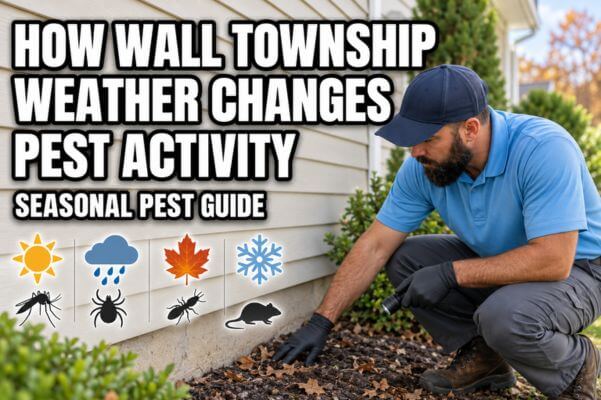
Wall Township pest activity does not follow a perfect calendar. Temperature, rainfall, moisture, and shelter conditions can change when insects become active, when mosquitoes find breeding water, and when some pests move toward protected spaces. Wall’s coastal setting also makes seasonal temperature changes somewhat more gradual than in inland parts of New Jersey. The practical takeaway is simple: use the season as a guide, but watch the actual weather and conditions around your home before deciding what needs attention.
Key Takeaways
◉ Weather can shift pest timing, but it does not predict an infestation by itself. Property conditions still matter.
◉ Warm spring conditions can bring termite swarmers and renewed ant activity, making identification more useful than guessing from the calendar.
◉ Summer rain and standing water can support mosquito development, while blacklegged tick nymph activity in New Jersey typically peaks from May through July.
◉ Fall is a useful time to focus on exclusion as stink bugs look for overwintering sites and rodents can take advantage of structural openings.
◉ Winter does not eliminate pest activity. Rodents can remain active indoors, and adult blacklegged ticks can be active outside during above-freezing periods.
Why Wall Township Weather Matters More Than a Fixed Date
Wall Township’s Environmental Resource Inventory places the township in New Jersey’s Coastal Zone. The Atlantic Ocean helps make seasonal temperature changes along the coast more gradual and less prone to extremes than farther inland. That does not create a unique pest calendar for Wall, but it helps explain why a warm spell, cool spring, wet week, or delayed frost may shift what homeowners notice.
Weather is only one part of the picture. Drainage, standing water, damp wood, vegetation, food sources, and entry gaps can determine whether a pest simply becomes active outdoors or turns into a problem around the home.
If recurring activity moves beyond seasonal prevention and needs identification or inspection, Agile Pest Control’s Wall Township pest control page explains the local service options without changing this guide’s informational focus.
Spring: Watch for Termite Swarmers and Ant Activity
Spring warming brings some of the clearest seasonal signals. Rutgers NJAES reports that subterranean termite swarmers in the Northeast commonly leave mature colonies on warm, sunny days from April through June. A swarm does not tell you how much damage exists, but repeated winged insects indoors, discarded wings, mud tubes, or suspicious wood deserve a closer look.
Termite swarmers can be confused with winged ants. Termites have straighter antennae, a thicker-looking waist, and front and rear wings that are similar in size. Ant swarmers have elbowed antennae, a narrow waist, and smaller hind wings. If the insects are damaged or hard to see, identification may require an expert.
Agile’s termite swarm season guide goes deeper into what spring swarmers can mean.
Carpenter ants can also become more noticeable as the weather warms. They do not eat wood like termites; they excavate galleries for nesting and often use damp or damaged wood. Fixing leaks and persistent moisture is useful regardless of which pest is present.
Late Spring and Summer: Ticks and Mosquitoes Need Different Prevention
Ticks and mosquitoes are often grouped together, but weather affects them differently.
Rutgers’ current blacklegged tick data shows that nymphs are active from April through November, with peak abundance from May through July. Adults are active from October through April and can still be found during winter when temperatures rise above freezing. That is why tick precautions should follow outdoor conditions rather than stop on a fixed date.
For mosquitoes, standing water is the more useful homeowner cue. New Jersey mosquito officials note that mosquitoes stay active through warm weather until hard frost reduces activity. After rain, check containers, plant saucers, toys, clogged gutters, pool covers, and other places that can hold water. Water that needs to remain should be managed according to current public-health guidance.
For a deeper look at patio-specific conditions, see Agile’s guide to mosquitoes around Wall Township patios in summer.
Late Summer and Fall: Stinging Insects, Stink Bugs, and Entry Points
Late summer can make yellowjackets and other social stinging insects more noticeable. Rutgers guidance notes that yellowjackets can be especially active in late summer and fall. Repeated traffic into the same ground opening, wall gap, soffit, shed, or shrub is a stronger nest clue than a few insects visiting flowers or food. Avoid disturbing an active nest when its location creates a sting risk.
Brown marmorated stink bugs begin moving toward protected overwintering sites in New Jersey in early to mid-September and may continue until the first frost. Screens, weatherstripping, siding gaps, vents, and openings around window air conditioners are worth checking before that movement is underway.
Rodents remain active year-round. Cooler weather makes fall a practical time to inspect door sweeps, garage edges, utility penetrations, vents, and foundation openings before colder conditions increase the value of indoor food and shelter.

Winter: Pest Activity Changes Rather Than Disappears
Cold weather reduces the visible activity of many outdoor insects, but it does not reset a home to zero pest pressure. Rodents can remain active in heated structures, while stink bugs and other overwintering insects may stay hidden in protected spaces and appear on warmer indoor days.
Blacklegged ticks are another reason not to treat winter as a guaranteed pest-free period. Adult ticks can be active when outdoor temperatures are above freezing, so a mild winter day can still justify tick checks after time in brushy, wooded, or leaf-littered areas.
A mild winter also does not guarantee a worse spring. Pest activity depends on species, life stage, moisture, shelter, food, and conditions at the individual property.
A Weather-Based Pest Prevention Checklist
◉ After heavy rain, check gutters, containers, drainage areas, and other places where water remains.
◉ During spring warm-ups, identify winged insects rather than assuming every swarmer is a termite or ant.
◉ Through warm months, keep frequently used yard areas maintained and check people and pets for ticks after suitable outdoor exposure.
◉ Before fall cooling, inspect screens, door sweeps, vents, utility openings, and other accessible exterior gaps.
◉ Year-round, correct persistent leaks, reduce food and clutter that support pests, and investigate fresh evidence instead of relying only on the season.
Frequently Asked Questions
Does a warm winter mean Wall Township will have more pests in spring?
Not necessarily. Mild weather can allow some pests to remain active longer, but spring activity also depends on rainfall, moisture, food, shelter, species, and property conditions. Winter weather alone cannot reliably predict the next season’s pest pressure.
Which pests should I watch for after heavy rain?
Start with conditions rather than a fixed pest list. Check for standing water that can support mosquitoes, damp wood or drainage problems, and new indoor activity. Rain can change moisture and shelter conditions, but it does not confirm a specific infestation.
When should seasonal pest activity get a professional inspection?
Consider an inspection when the pest cannot be identified confidently, winged insects keep appearing indoors, you find mud tubes or suspicious wood damage, rodent signs recur, or a stinging-insect nest is in a location that makes close inspection unsafe.
Share