
How to Kill Tick Eggs? Safe Ways to Remove Tick Eggs

Written by Jack Hayes
Last updated on August 10, 2026
On this page
If you’re searching for how to destroy tick eggs, chances are you found a tiny cluster around your home, yard, pet bedding, or another hidden spot and want to stop it before the eggs hatch.
That concern makes sense. Tick eggs can be easy to overlook, and one cluster may contain a large number of eggs. Leaving them alone can lead to more ticks nearby.
In this guide, we’ll explain what tick eggs look like, when they hatch, where they hide, and the safest ways to remove and kill them.
Key Takeaways
◉ Tick eggs are tiny and easy to miss. They often appear in tight brown or reddish clusters in leaf litter, cracks, pet areas, and other sheltered spots.
◉ Tick eggs may hatch within about 2 to 8 weeks. Warm, humid conditions can speed up development, so early removal can help reduce new larvae.
◉ A “tick nest” usually means an egg cluster. Ticks do not build true nests, but females may lay large groups of eggs in protected areas.
◉ Remove the full egg cluster carefully. Wear gloves, seal the eggs in a plastic bag, clean the surrounding area, and use high heat for washable fabrics when suitable.
◉ Repeated egg clusters can point to a larger tick problem. Check pet resting areas, yard borders, leaf litter, shaded edges, and indoor hiding spots for more activity.
What Do Tick Eggs Look Like?
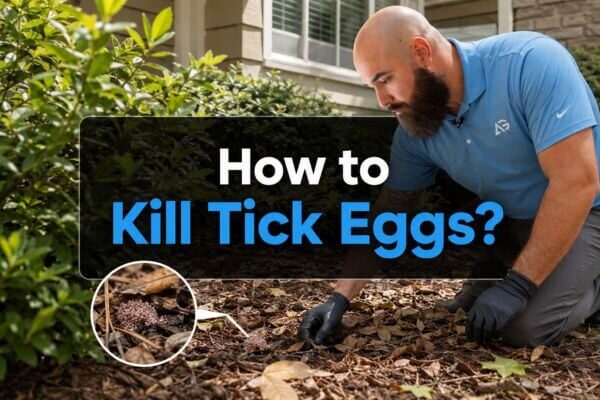
Tick eggs usually appear as tiny, round or oval clusters packed closely together. They can look like a small pile of beads, fish eggs, or caviar, which makes them easy to miss in grass, leaf litter, cracks, pet areas, and other sheltered spots.
What color are tick eggs? Their color can range from light brown and reddish-brown to darker brown, depending on the tick species and how close the eggs are to hatching.
How big are tick eggs? Individual eggs are extremely small, often around 0.5 millimeters wide. A full cluster is much easier to spot than a single egg.

If you find a suspicious cluster, avoid crushing it with bare hands. Remove the material carefully and clean the surrounding area.
How Long Do Tick Eggs Take to Hatch?
Tick eggs usually take several weeks to hatch, though the exact timing depends on the tick species, temperature, moisture, and surrounding conditions. In many cases, eggs may hatch within roughly 2 to 8 weeks after they are laid.
When do tick eggs hatch? Warm, humid conditions can support faster development. Cooler or drier conditions may slow the process. Once the eggs hatch, tiny six-legged larvae begin searching for a host.
This matters if you find an egg cluster around your home or yard. Waiting too long gives the eggs time to develop into larvae. Removing the cluster early can help reduce the number of young ticks spreading into nearby grass, pet areas, or indoor spaces.
What Is a Tick Nest?
A tick nest is not a true nest like one built by birds or rodents. People usually use the term to describe a cluster of tick eggs laid together in one protected spot.
After feeding, a female tick may crawl into leaf litter, dense grass, cracks, pet bedding, or another sheltered area and lay a large group of eggs. The eggs can appear as a small brown or reddish mass packed tightly together.
Finding what looks like a tick nest means you may be looking at an egg cluster rather than adult ticks living together. Removing that cluster early can help stop hundreds or thousands of larvae from hatching and spreading around the area.
When One Tick Egg Cluster Points to a Bigger Problem
A homeowner notices a small brown cluster near the corner of their cat’s outdoor resting area. At first, they do not know what it is. They sweep it away, clean the spot, and assume that is the end of it.
A few days later, they find another similar cluster nearby. Then they start noticing ticks on the cat after it comes in from the yard.
That’s when they call us. When we inspect a situation like this, we do not stop at the spot where the eggs were found. We check the surrounding grass, leaf litter, shaded edges, pet resting areas, and places where wildlife may be moving through the yard, such as raccoons or rodents.

In this case, the problem was not limited to one cluster. There were protected, damp areas along the yard edge where ticks could stay hidden, and the cat regularly passed through the same area.
The egg cluster was only the clue that made the bigger problem noticeable.
That careful approach also comes through in customer feedback. One customer said they appreciated Agile’s professionalism, friendly communication, commitment, and willingness to listen. Those qualities matter when finding the real source of a pest problem takes more than checking the first visible spot.

Once the clusters are safely removed and the areas supporting tick activity are identified, the focus can shift to treating those spots and reducing the conditions that let ticks keep returning. That is why finding tick eggs should not always end with throwing the cluster away. If new eggs or adult ticks keep showing up, it is worth checking where the ticks are coming from and what around the property is helping them stay there.
How to Kill Tick Eggs
If you need to know how to kill tick eggs, start by removing the entire cluster rather than trying to crush or spray it in place. Tick eggs can be packed tightly together, and missing part of the cluster may leave viable eggs behind.
For a small cluster, use gloves and pick it up with tape, a paper towel, or a disposable scraper. Place everything in a sealed plastic bag and put it in an outdoor trash container. Vacuum the surrounding area carefully, then empty the vacuum contents into a sealed bag. For washable fabrics, pet bedding, or clothing, use a hot dryer cycle after washing. Heat can kill ticks that may be hiding in the material.
If egg clusters keep appearing outdoors, check:
◉ Leaf litter and dense ground cover
◉ Areas where pets rest
◉ Wood piles and shaded edges
◉ Cracks near patios or foundations
◉ Places where rodents or wildlife travel
You may find adult ticks in the same areas where egg clusters appear. If that happens, knowing how to kill a tick safely can help you deal with the immediate problem without handling the tick carelessly.
Knowing how to destroy tick eggs matters since removing them before hatching can reduce the number of larvae entering your yard or home. For larger infestations, a pest professional can inspect the property and treat areas where ticks are breeding or hiding.
How to Destroy a Tick Nest
If you find what looks like a tick nest, treat it as an egg cluster and remove it before the eggs hatch. Wear disposable gloves and avoid touching the eggs directly.
Pick up the full cluster with tape, paper towels, or a disposable tool. Seal the material inside a plastic bag and place it in an outdoor trash bin. Vacuum or clean the spot afterward so loose eggs are not left behind.
Outdoors, remove nearby leaf litter, tall grass, brush, and debris where ticks can stay protected. Check the same location again over the next few days. If you keep finding egg clusters, adult ticks may still be present nearby. Inspect pet resting areas, yard borders, and wildlife activity zones for signs of a larger tick problem.
How to Handle Tick Eggs in the House
Finding tick eggs in the house can point to an adult female tick entering indoors on a pet, clothing, or another item and laying eggs in a hidden area.
Start by vacuuming carpets, baseboards, furniture edges, cracks, and pet resting spots. Dispose of the vacuum contents in a sealed bag outside. Wash pet bedding, blankets, and washable fabrics, then dry them on a high-heat setting if the material allows it.
Pay close attention to:
◉ Baseboards and floor cracks
◉ Under furniture
◉ Pet beds and crates
◉ Entryways
◉ Closets and storage areas
A few eggs in one location may be manageable with careful cleaning. Repeated clusters, crawling larvae, or multiple adult ticks can signal a tick infestation that needs a wider inspection and treatment plan.
Found a Cluster of Tick Eggs? Act Before It Gets Worse
Finding one cluster of tick eggs does not always mean the problem is over. If they keep appearing, the source may be hiding nearby in areas like leaf litter, shaded yard edges, pet resting spots, or places where wildlife passes through.
Removing the eggs is a good first step, but repeated clusters or adult ticks can be a sign that more ticks are active around your property. Agile Pest Control can help identify the areas attracting ticks and check for activity in spots where they are likely to hide.

If you keep finding tick eggs or adult ticks around your home or yard, contact Agile Pest Control to schedule a tick inspection and discuss the next steps.
Share