
How to Get Rid of Mouse Urine Smell (What Actually Works)

Written by Jack Hayes
- Last updated on
On this page
If your home smells like ammonia and nothing seems to fix it, you’re probably dealing with mouse urine, not a mystery odor. This smell sticks because urine soaks deep into surfaces and keeps releasing odor over time. Air fresheners don’t help. Basic cleaners barely touch it. And the longer it sits, the worse it gets.
In this guide, we’ll break down why mouse urine smell is so hard to remove and walk through what actually works, step by step, so you can clear the odor and keep it from coming back.
Key Takeaways
◉ Mouse urine smell soaks deep and comes back with moisture
◉ Sprays and cleaners hide odor, but they don’t remove it
◉ The smell usually comes from hidden areas, not surfaces
◉ Enzyme cleaners work only if they reach the source
◉ Odors return if rodents and entry points aren’t fixed
Why Mouse Urine Smell Is So Strong and Hard to Remove
Mouse urine smells so bad because it doesn’t stay on the surface. It soaks in. As urine dries, it releases ammonia gases, which is why the odor gets sharper over time instead of fading away.
Here’s what makes it especially hard to remove:
◉ Urine crystallizes as it dries
◉ Those crystals reactivate with moisture and humidity
◉ Standard cleaners don’t break down the odor-causing proteins
Why this matters: even if the smell seems gone for a day, it often comes back during humid weather or after cleaning nearby areas. That’s why people think they’ve fixed it, until the odor returns.
What helps: removing odor means breaking down the source, not masking it. That’s where the right cleaning approach matters.
Where Mouse Urine Smell Usually Lingers
Mouse urine odor hides in places most homeowners don’t think to check. Mice and rats follow the same paths over and over, which concentrates the smell.
Common problem areas include:
◉ Baseboards and wall corners
◉ Behind appliances like refrigerators and stoves
◉ Crawl spaces and basements
◉ Attics and insulation
◉ Carpets, rugs, and padding
Why this matters: if you only clean what you can see, the smell keeps coming back from hidden areas.
Action step: If you can smell urine but don’t see stains, follow the strongest odor. That usually leads to nesting or travel paths.
Why the Smell Seems to Come Back No Matter What You Do
We see this situation a lot.
A homeowner notices a strong urine smell in one corner of the basement. They scrub the floor. They mop it twice. The smell fades, and for a day or two, it feels like the problem is finally gone.
Then it rains.
By the next morning, the smell is back. Stronger. Sharper. Almost worse than before.
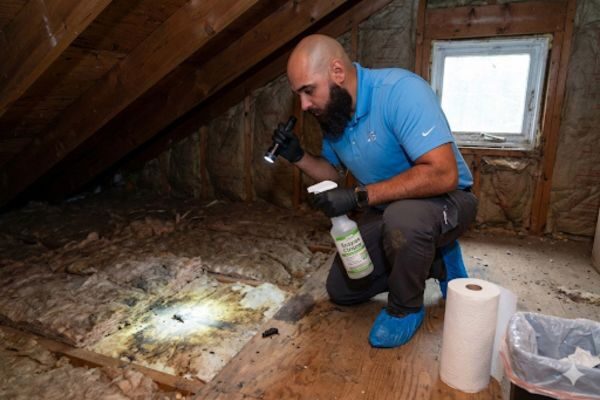
When we inspected a home like this, the floor itself wasn’t the main issue. The urine had soaked past the surface and into the material underneath. In this case, it was the subfloor and insulation just below the concrete edge. Nothing you could see from above.
The cleaning didn’t remove the urine. It only quieted it for a while.
When moisture in the air went up, the dried urine reacted again and started releasing that ammonia smell. That’s why the odor seemed to come and go without any clear reason.
This is how rodent urine odor usually behaves. It fades after cleaning, then comes back after rain, humidity, or even mopping nearby areas. The source is still there, hidden under or behind something you haven’t reached yet.
Once you understand that, the problem makes more sense. If the smell keeps returning, it’s almost never because you didn’t clean enough. It’s because the urine soaked deeper than the surface you’re treating.
How to Get Rid of Mouse Urine Smell Step by Step
The key here is doing things in the right order. If you skip steps or rush it, the smell almost always comes back.
The Supplies You Need
Before you start cleaning, make sure everything is ready so you don’t spread contamination or stop halfway through. Keep these supplies nearby:
- ◉ Rubber or disposable gloves
- ◉ An N95 or similar mask
- ◉ Paper towels or disposable rags
- ◉ Sealed trash bags
- ◉ A surface-safe cleaner
- ◉ An enzyme cleaner
- ◉ A fan for airflow
Why this matters: Mouse urine odor usually takes more than one step to remove. Having the right supplies ready helps you clean, treat, and dry the area properly without making the problem worse.
Ventilation
Ventilation should happen before and during cleanup, not just after. Open windows and doors first so fresh air can move through the space. If possible, use a fan to push stale air out and keep airflow moving across the affected area. This helps reduce the strong ammonia-like smell and makes the space easier to work in.
Why this matters: Mouse urine odor feels much stronger in closed spaces like attics or basements, so improving airflow helps control the smell while you clean the source.
Cleaning Hard Surfaces
Hard surfaces like concrete, wood, tile, and baseboards absorb urine more than people realize.
What to do:
◉ Ventilate the area first (open windows, use a fan)
◉ Wipe up any visible residue
◉ Clean with a neutral cleaner (not bleach or ammonia)
◉ Dry the area completely before moving to odor treatment
Why this matters: cleaning removes surface grime so odor treatments can actually reach what’s causing the smell.
Quick tip: Never mix cleaners. Bleach + ammonia can create dangerous fumes.
Treating Carpets, Fabrics, and Insulation
This is where most DIY attempts fail. Soft materials act like sponges.
What works:
◉ Blot, don’t scrub (scrubbing spreads urine deeper)
◉ Saturate the area with an odor treatment, not just the surface
◉ Let it sit long enough to penetrate padding or fibers
◉ Fully dry the area
Why this matters: urine often sinks past the carpet into the pad or insulation. If that layer isn’t treated, the smell will return.
Reality check: insulation soaked with urine often needs removal. Cleaning alone isn’t enough.
Using Enzyme Cleaners Correctly
Enzyme cleaners work, but only when used properly.
How to use them right:
◉ Apply enough to reach the urine source
◉ Let it sit for the full recommended time
◉ Keep the area slightly damp while enzymes work
◉ Don’t rush drying or cover the area too soon
Why this matters: enzymes break down odor-causing proteins. If they dry too fast, they stop working.
Common mistake: spraying lightly like an air freshener. That doesn’t do anything.
Why DIY Methods Often Fail to Remove Rodent Urine Odor
Most DIY fixes focus on hiding the smell, not removing it.
We see these mistakes all the time:
◉ Using bleach or vinegar (they don’t break down urine proteins)
◉ Masking odor with candles or sprays
◉ Cleaning only visible areas
◉ Skipping insulation, subfloors, or wall voids
Why this matters: rodent urine odor comes from what you can’t see. If the source stays, the smell stays.
Real example: A homeowner cleans the floor repeatedly but ignores the insulation below. The smell fades, then comes roaring back during humid weather.
Bottom line: if the odor keeps returning, it’s not stubborn, it’s untreated.
They called about a wall-side issue, and the inspection quickly grew into a full home
An Asbury Park homeowner said the AgilePest tech took time to inspect the whole property, answered questions patiently, and handled follow-ups too.
That’s important with mouse odor, because the smell doesn’t stop for good unless the source and the entry points get handled.

Health Risks of Lingering Mouse Urine Smell
That ammonia smell isn’t just unpleasant. It’s a sign urine is still present somewhere. Lingering mouse urine can affect the air you breathe, especially in enclosed spaces like basements, attics, and crawl spaces.
Common health concerns include:
◉ Headaches or nausea from ammonia fumes
◉ Eye, nose, and throat irritation
◉ Worsened asthma or allergy symptoms
◉ Increased risk of bacteria and pathogens left behind by rodents
Why this matters: the smell usually means urine is still present somewhere. As it breaks down, it releases gases and particles into the air you’re breathing every day.
Action step: If the smell lingers more than a few days after cleaning or keeps coming back, limit time in the area and improve ventilation until the source is fully addressed.
When It’s Best to Call a Professional for Odor Removal
Sometimes the odor problem goes deeper than DIY methods can reach. When mouse urine has soaked into hidden materials, surface cleaning and enzyme treatments aren’t enough to fully remove the smell.
AgilePests Odor Removal is usually the better choice when:
◉ The smell returns after multiple cleanings
◉ Urine has soaked into insulation, subfloors, or wall cavities
◉ The affected area is large or hard to access
◉ You’re not sure where the odor is coming from
Why this matters: odor control only works when every contaminated area is treated or removed. Missing even one spot can undo everything.

At AgilePests, odor issues often go hand-in-hand with rodent activity. We focus on:
◉ Confirming rodents are fully removed
◉ Identifying hidden urine sources
◉ Recommending the right cleanup or removal steps
◉ Helping prevent the problem from coming back
The goal is removing every contaminated area and stopping rodents from coming back, so the odor doesn’t return.
One homeowner kept having rodent problems until Manny fixed it
According to the homeowner, Agilepest provided a quick, friendly visit and explained everything clearly right away. A solid long-term plan was what finally prevented the problem from coming back.

Common Questions About Rodent Urine Smell Removal
How long does rat or rodent urine smell last in a house?
Rodent urine odor can last for weeks or even months if the contaminated material is not properly cleaned or removed. The urine dries and forms crystals that release ammonia smell over time. Humidity or moisture can reactivate the odor even after it seems gone.
Can rodent urine smell spread through air vents?
Yes, the smell can travel through air vents or HVAC systems if rodents urinate near ductwork or inside wall cavities. When the system runs, the odor can circulate through multiple rooms, making it seem like the smell is coming from everywhere.
Does rodent urine smell go away on its own?
Rodent urine smell rarely disappears on its own. Even if the odor fades temporarily, dried urine crystals remain in materials like wood, insulation, or carpet padding. When humidity rises, the smell often returns because the source was never fully removed.
How can you confirm a smell is from rodent urine?
Rodent urine usually produces a strong ammonia-like smell, especially in enclosed spaces such as basements, attics, or behind appliances. The odor often appears near droppings, nesting areas, or along walls where rodents regularly travel.
What helps absorb mouse or rat urine smell indoors?
Baking soda, activated charcoal, and odor absorbers can reduce lingering smells in the air. However, these only control the odor temporarily. The contaminated surface must still be properly cleaned or treated to remove the urine source completely.
Share
0/5
(0 Reviews)