
How Moisture Problems Attract Pests in Little Silver

Written by Jack Hayes
Last updated on August 27, 2026
On this page
Moisture can make parts of a home more favorable to pests by providing water, humidity, or damp materials they can use for shelter and nesting. Leaky pipes, damp basements, clogged gutters, and humid crawl spaces can create conditions that support termites, cockroaches, carpenter ants, mosquitoes, and other pests.
Fixing the moisture source will not necessarily eliminate an established infestation, but it can remove one of the conditions helping pests remain around the property. For Little Silver homeowners dealing with recurring pest activity, checking for hidden moisture is a practical place to start.
Key Takeaways
◉ Small moisture problems can support pest activity. A slow plumbing leak, condensation, poor drainage, or persistent humidity may provide enough water for certain pests to remain nearby.
◉ Different pests use moisture differently. Cockroaches seek dependable water, carpenter ants often nest in moisture-damaged wood, termites favor suitable moist conditions, and mosquitoes need standing water for their immature stages.
◉ Recurring pests can be a clue to a hidden moisture source. Activity around sinks, crawl spaces, windows, basements, gutters, or plumbing areas deserves a closer look.
◉ Moisture control and pest control often work together. Repairing leaks, improving drainage, reducing humidity, and removing standing water can make affected areas less favorable to pests.
◉ Persistent activity may require a broader inspection. If pests continue after obvious moisture problems are corrected, hidden leaks, entry points, nesting areas, or an established infestation may still need attention.
Why Moisture Is a Major Pest Attractant
Many insects are sensitive to dry conditions and seek environments where enough moisture is available for survival. That is why persistent dampness can be an important clue when certain pests repeatedly appear in the same part of a home. Moisture can also affect building materials. Wood exposed to ongoing leaks or humidity may soften or begin to decay, creating more favorable conditions for pests that use damaged or damp wood for nesting.
The important point is that moisture-related pest activity is not automatically a cleanliness issue. Sometimes the more useful question is whether a plumbing, drainage, ventilation, or humidity problem is creating conditions that pests can use.
Common Moisture Problems That Invite Pests
Certain conditions around a home can create ongoing pest pressure even when there is no obvious pool of standing water.
Leaky Pipes and Plumbing
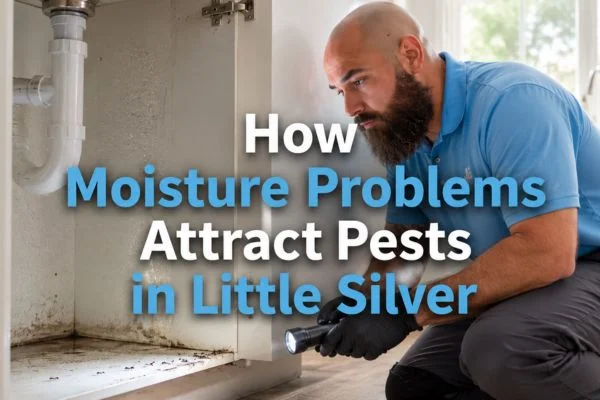
Slow leaks under sinks, around water heaters, behind appliances, or inside walls can remain unnoticed for long periods. Even a small, dependable water source may support ants, cockroaches, and other pests. If activity repeatedly appears around a kitchen or bathroom, inspect pipe connections, cabinet floors, appliance lines, and surrounding walls for dampness or staining.
Clogged Gutters and Poor Drainage
Gutters and downspouts are designed to move rainwater away from the structure. When they clog, overflow, or discharge water directly beside the foundation, the surrounding soil can remain wetter than intended. That persistent moisture can contribute to conditions favorable to subterranean termites and other moisture-associated pests. Check that gutters are clear, downspouts discharge away from the house, and the ground does not routinely direct water back toward the foundation.
Damp Basements and Crawl Spaces
Crawl spaces and basements can hold humidity when airflow, drainage, or moisture control is inadequate. Damp floor joists, sill plates, stored cardboard, exposed soil, or chronically humid conditions can create sheltered areas for insects. Moisture-damaged wood is particularly important to inspect when carpenter ants or termite signs are present.
Condensation and High Indoor Humidity
Not every moisture problem comes from a plumbing leak. Condensation on pipes, windows, air-conditioning equipment, or other cool surfaces can create smaller but persistent sources of water. Bathrooms without adequate ventilation can also hold humidity after showers. If condensation appears regularly, improving ventilation and identifying why the area remains damp may help reduce conditions that support pests.
Which Pests Are Most Drawn to Excess Moisture
Different pests respond to moisture in different ways, so where they appear can provide clues about what to inspect.
Termites
Subterranean termites live in soil and depend on suitable moisture conditions as they travel between their colony and cellulose materials such as wood. Consistently damp soil near a foundation, plumbing leaks, drainage problems, or wood-to-soil contact can create conditions worth correcting. Moisture alone does not prove termites are present, but suspicious mud tubes, discarded wings, or damaged wood deserve a closer inspection.
Cockroaches
Cockroaches need access to water, which is one reason they are often found around sink plumbing, kitchens, bathrooms, water heaters, and utility areas. A small recurring leak or condensation source may allow an area to remain suitable even when food and surfaces are kept clean. Correcting the water source should be part of the response when cockroach activity is found.
Carpenter Ants
Carpenter ants excavate wood to create nesting galleries rather than eating the wood itself. Moisture-damaged or decaying wood can provide favorable nesting conditions, particularly around roof leaks, window frames, plumbing areas, decks, and other damp structural wood. If you notice large ants along with moisture-damaged wood or sawdust-like debris, learn more about carpenter ant control in Monmouth County and the signs that may warrant a closer inspection.
Mosquitoes
Mosquito larvae develop in water. Clogged gutters, poorly drained containers, tarps, plant saucers, yard items, and other places that hold water after rain can become potential breeding sites. The practical response is to empty standing water where possible, correct drainage problems, and inspect containers or areas that repeatedly collect rainwater.
Other Moisture-Associated Pests
Silverfish, sowbugs, and pillbugs are often associated with damp environments such as basements, bathrooms, crawl spaces, mulch beds, and shaded areas near foundations. Finding these pests indoors can be a useful reason to check humidity, leaks, drainage, and possible entry points rather than treating the insect sighting in isolation.
Health and Home Concerns Linked to Moisture and Pests
Moisture-related pest problems can affect more than the appearance of a home. Cockroach allergens, for example, can worsen asthma symptoms in sensitive individuals, while persistent dampness can also contribute to mold and dust-mite concerns. Wood-destroying pests introduce a different concern. Carpenter ants and termites can use structural areas that are already affected by moisture, making it important to identify both the pest activity and the underlying moisture problem. If moisture and pest signs are occurring together, address each issue rather than assuming that treating one automatically resolves the other.
Signs Your Home May Have a Moisture Pest Problem
A few common clues can suggest that a moisture source deserves closer attention:
◉ Musty odors in basements, crawl spaces, cabinets, or under sinks
◉ Water stains, warped wood, peeling paint, or recurring condensation
◉ Sawdust-like debris near window frames, trim, or baseboards
◉ Small flying insects around drains, damp soil, or standing water
◉ Soft or spongy wood around door frames, decks, sill plates, or other structural areas
None of these signs identifies a pest by itself. Instead, use them as reasons to inspect for leaks, humidity, drainage problems, damaged wood, and pest evidence before the condition develops further.
Reducing Moisture Around Your Little Silver Home
The most useful moisture-control steps focus on correcting the source rather than repeatedly drying the same area. Consider these practical measures:
◉ Repair leaking faucets, supply lines, appliance connections, and water-heater connections promptly.
◉ Clean gutters regularly and make sure downspouts move water away from the foundation.
◉ Address persistently humid crawl spaces with appropriate ventilation or moisture-control measures suited to the structure.
◉ Check grading around the house so surface water drains away rather than collecting against the foundation.
◉ Use a dehumidifier where indoor humidity remains consistently high and the equipment is appropriate for the space.
◉ Remove standing water from containers and correct outdoor areas that repeatedly hold water after rain.
These steps can reduce conditions that attract or support pests, but they do not automatically eliminate an established colony or infestation.
For broader help with recurring pests around the property, the Little Silver pest control page explains the local pest-control options available to homeowners.
When Moisture Problems and Pest Activity Need a Closer Look
Some moisture sources are easy to spot. Others may be hidden inside walls, beneath flooring, behind appliances, or within crawl spaces. If pest activity continues after reasonable cleaning and moisture repairs, or if you notice signs involving termites, carpenter ants, damaged wood, or pests repeatedly returning to the same damp area, the problem may need a more detailed inspection. For this moisture-focused article, the customer feedback centered on scheduling, communication, technician quality, and service is the stronger fit. Moisture-related pest activity can involve more than one area of a property, so dependable communication during inspection and treatment is especially relevant.

One customer described the scheduling, communication, technician, and service as “top notch” after becoming a new client. That feedback supports the value of having a clear, well-coordinated process when the visible pest may only be one part of a larger moisture or access issue. A careful assessment can help separate the moisture s

The Bottom Line
Moisture does not automatically mean a home has a pest infestation, but persistent leaks, humidity, drainage issues, damp wood, and standing water can make certain areas more favorable to pests. Start by finding and correcting the moisture source, then look for the pest signs associated with that area. When activity continues after the obvious conditions have been corrected, a closer inspection can help identify hidden moisture, entry points, or an established infestation that still needs attention.
Share