
Do mosquito Foggers Work? Explained by Pest Expert

Written by David Mick
Last updated on September 17, 2026
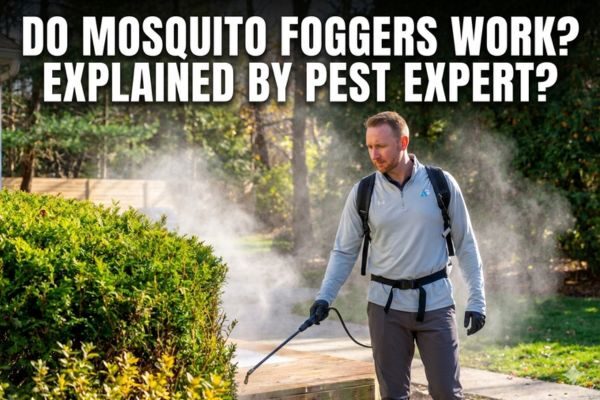
You’ve tried a mosquito fogger, or you’re considering using one, and the main question is simple: do mosquito foggers actually work?
Yes, but mainly as a short-term way to reduce adult mosquitoes. Fogging can quickly lower the number of mosquitoes that contact the airborne insecticide, but it does not eliminate eggs or larvae and cannot stop mosquitoes from moving back into the area.
This guide explains how mosquito foggers work, how long the effect lasts, why mosquitoes often return, and when another control method makes more sense.
Key Takeaways
- ◉ Mosquito foggers can quickly reduce adult mosquitoes, but the effect is usually temporary.
- ◉ Fogging does not eliminate eggs or larvae developing in standing water.
- ◉ The useful effect can vary with the product, application method, weather, vegetation, and mosquitoes moving in from untreated areas.
- ◉ Space fogging and residual barrier spraying are different treatments. Fogging emphasizes rapid airborne contact, while a residual treatment is intended to remain on treated resting surfaces.
- ◉ Long-term mosquito control usually requires source reduction, larval control, and adult control used together when appropriate.
- ◉ Always use mosquito-control products according to their labels, including application, reentry, pollinator, and water-related precautions.
Do Mosquito Foggers Actually Work?
Yes. Mosquito foggers can quickly reduce adult mosquitoes that contact the insecticide droplets, but they are not a complete mosquito-control solution.
CDC classifies foggers as one form of adulticide. Ultra-low-volume applications turn insecticide into very small droplets that remain airborne and kill flying adult mosquitoes on contact.
What a fogger can do:
Fogging can | Fogging cannot reliably do |
Quickly reduce exposed adult mosquitoes | Eliminate mosquito eggs |
Kill adult mosquitoes contacted by the treatment | Control larvae developing in standing water |
Provide temporary relief around outdoor spaces | Prevent mosquitoes from entering from nearby untreated areas |
Be one part of a broader mosquito-control plan | Replace source reduction or larval control |
This is why a yard may feel noticeably better immediately after fogging and then have mosquito activity return later.
How Do Mosquito Foggers Work?
Mosquito foggers break an insecticide into small droplets and disperse those droplets through an outdoor area.
Thermal foggers use heat to create a visible fog, while cold or ULV foggers create fine droplets without using heat. The equipment differs, but both are designed to increase contact between the insecticide and adult mosquitoes.
For ULV mosquito control, EPA explains that the fine aerosol droplets remain airborne and kill flying mosquitoes on contact.
Coverage still matters. Mosquitoes resting deep inside vegetation, underneath structures, or elsewhere beyond the treatment’s reach may avoid contact.
How Long Does Mosquito Fogging Last?
Mosquito fogging is generally a short-term treatment, and there is no universal number of hours or days that applies to every product and application.
Iowa State University Extension describes homeowner fogs and sprays as temporary and notes that backyard treatment may not last more than a day or two because mosquitoes can migrate back into the area. Illinois public-health guidance similarly says fogging may reduce the local mosquito population for a few days without preventing mosquitoes from returning.
Several factors affect what you experience after treatment:
◉ The pesticide and application method
◉ Whether the treatment is a true space fog or a residual application
◉ Wind and drift during application
◉ Rain and other weather conditions
◉ Dense vegetation and sheltered mosquito resting areas
◉ Nearby breeding sites
◉ Mosquitoes moving in from surrounding untreated properties
This is also why a claim such as “mosquito fogging lasts exactly 72 hours” is too broad. The useful control period depends on what was applied and how it was used.
Fogging Is Not the Same as a Residual Barrier Treatment
This distinction is important.
Space fogging uses airborne droplets for rapid adult mosquito knockdown. Residual spraying applies adulticide to vegetation or other resting areas and allows the treatment to remain on those surfaces after it dries.
CDC recognizes both ULV spraying and residual adulticide applications as different ways of controlling adult mosquitoes.
If a company or product claims longer residual protection, check whether the treatment is actually a barrier or residual application rather than fogging alone.
Why Do Mosquitoes Come Back After Fogging?
Mosquitoes returning does not necessarily mean the fogger failed. It often means the treatment affected the adults it reached but did not remove the conditions producing the next group of mosquitoes.
Three things commonly contribute:
1. Eggs and larvae remain in water.
Adulticides target adult mosquitoes. Larvicides are a separate control method used against larvae and pupae in standing water.
2. Mosquitoes can move back into the treated area.
Fogging does not create a permanent barrier around a property. Mosquitoes from adjacent untreated areas may replace adults that were killed.
3. Some adults may avoid contact.
Mosquitoes often rest in shaded, humid locations such as dense vegetation, underneath leaves, under decks, and around structures. If insecticide droplets do not reach them, they may remain after the application.
This is why repeated fogging without addressing standing water can create a cycle of short-term relief followed by renewed mosquito activity.
Are Mosquito Foggers Harmful to Humans, Pets or Pollinators?
Mosquito foggers can be useful, but they should be used carefully. The product inside the fogger is designed to kill insects, so exposure matters.
What to know:
◉ People and pets should stay out of the treated area until the label says it is safe to return
◉ Avoid direct contact with drifting fog or wet surfaces right after treatment
◉ Fish tanks, pet bowls, and toys should be covered or moved first
◉ Bees, butterflies, and other pollinators can also be affected if sprayed directly or treated while active
Why this matters: Many homeowners focus only on mosquitoes and forget that foggers do not target insects selectively.
What helps reduce risk:
◉ Apply at dusk when mosquitoes are active and many pollinators are less active
◉ Follow label directions exactly
◉ Keep children and pets away during treatment
◉ Avoid spraying flowering plants when possible
Simple takeaway: Foggers can be helpful, but careless use can affect people, pets, and beneficial insects too.
What Mosquito Foggers Actually Kill and What They Miss
What foggers actually Kill:
◉ Quickly reduce flying mosquitoes
◉ Provide short-term relief for events
◉ Help lower adult mosquito numbers temporarily
Where foggers they Miss:
◉ Don’t affect eggs or larvae
◉ Miss mosquitoes hiding in dense areas
◉ Don’t stop new mosquitoes from entering your yard
Fogging can be part of a plan, but on its own, it’s rarely enough for lasting control.
What We Often See After Homeowners Use a Mosquito Fogger
This scenario is very common.
A homeowner fogs the yard in the evening and notices fewer mosquitoes almost immediately. The next night feels better too, so they assume the problem is handled. But by the third or fourth day, the bites start coming back, especially near shrubs and shaded areas.
When we see cases like this, the fogger usually did exactly what it was supposed to do-it knocked down the mosquitoes that were flying at the time. What it didn’t touch were the ones resting in vegetation or developing in nearby standing water.

So the relief fades, and it feels like the fogger “stopped working,” even though the real issue was never addressed.
Fogging vs Other Mosquito Control Options (Which Works Best Long Term?)
Mosquito fogging can help quickly, but it usually targets only the mosquitoes flying or resting in the area right now. Other methods focus on the source of the problem.
Here’s how they compare:
- ◉ Fogging: Fast knockdown, short-term relief
- ◉ Mosquito dunks: Target larvae in standing water before they become biting adults
- ◉ Barrier sprays: Leave a light residual on shrubs, fences, and shaded areas where mosquitoes rest
- ◉ Source reduction: Removes standing water where mosquitoes breed
For a full step-by-step guide to longer-lasting mosquito prevention, see Agile Pest Control Backyard Mosquito Guide.
Where Mosquito Dunks Work Best
Mosquito dunks are useful in places where water sits for days and cannot be dumped easily.
Best spots include:
◉ Birdbaths
◉ Rain barrels
◉ Decorative water features
◉ Drainage areas
◉ Plant trays or containers holding water
Why This Matters: Mosquitoes reproduce fast. If you only kill adults, new mosquitoes can hatch a few days later and the problem starts again.
That’s why many homeowners fog the yard, feel relief for a day or two, then notice mosquitoes return.
Use multiple layers of control:
◉ Dump or drain standing water
◉ Use dunks where water remains
◉ Trim thick vegetation
◉ Use fogging only when quick adult reduction is needed
Simple takeaway: Fogging is best for fast relief. Mosquito dunks and source control usually work better long term.
When Fogging Makes Sense (And When It Doesn’t)
Fogging makes sense when:
- ◉ You need temporary relief for an outdoor event
- ◉ Mosquito activity is light to moderate
- ◉ It’s used alongside other treatments
Fogging doesn’t make sense when:
- ◉ Mosquitoes return within a day or two
- ◉ There’s standing water nearby
- ◉ You’re looking for season-long control
Using fogging in the wrong situation leads to frustration and wasted money.
What Is the Best Time to Fog for Mosquitoes?
Follow the product label first.
Public mosquito-control programs often time fogging around periods when the target adult mosquitoes are active. Illinois public-health guidance notes that dusk is commonly used because airborne fog is intended to contact active, flying mosquitoes.
Timing should also account for weather, drift, pollinator activity, and the mosquito species being targeted. Avoid treating flowering plants when pollinators are actively visiting them, and follow all label restrictions.
How Often Should You Fog for Mosquitoes?
There is no universal reapplication schedule that applies to every mosquito fogger.
Use only the interval stated on the pesticide label. CDC specifically advises against applying more product than directed or reapplying more often than the label allows.
If mosquito activity returns quickly after repeated fogging, increasing application frequency may not solve the underlying problem. Check for breeding water, sheltered resting sites, and mosquitoes entering from surrounding areas instead.
Is a Mosquito Fogger the Same as a Bug Bomb?
Not necessarily.
The term mosquito fogger commonly refers to an outdoor application that disperses insecticide through a yard or other outdoor area. A total-release fogger, often called a bug bomb, is an indoor pesticide device that releases its contents into an enclosed room or structure.
Those products have different labels, application methods, and safety requirements. EPA specifically requires people and pets to leave spaces treated with indoor total-release foggers for the period stated on the label.
Never use an indoor or outdoor fogging product in a setting that is not listed on its label.
What Local Homeowners Say About Long-Term Mosquito Control
Many Manalapan homeowners try foggers first because they want fast relief. But lasting results often come from consistent treatments and targeted mosquito control from AgilePests, rather than one-time fixes.
Here’s what one local homeowner shared after switching to a more structured approach.

Tired of Temporary Fixes? Get Professional Mosquito Control That Actually Lasts
If you’ve tried foggers, sprays, and DIY tricks and mosquitoes keep coming back, that’s a sign the problem runs deeper than adult insects in the air. AgilePests often find the real issue is hidden breeding sites, dense foliage, or untreated resting areas that quick fixes never reach.
Professional mosquito control focuses on breaking the cycle, not just knocking numbers down for a day. That means identifying where mosquitoes are breeding, treating those areas directly, and using residual methods that keep working between visits.

The payoff isn’t just fewer mosquitoes today-it’s fewer next week and next month, so your yard stays usable instead of becoming a constant experiment in trial and error.
Frequently Asked Questions
Can rain reduce the effectiveness of mosquito fogging?
Yes. Rain soon after treatment can reduce effectiveness, especially when a residual product is used. Always follow the product label for weather restrictions and reapplication guidance.
Does mosquito fogging kill ticks or other insects?
It can affect some non-target insects that contact the insecticide, but mosquito fogging is designed for mosquito control. Never assume it will control ticks or other pests.
Should you remove standing water before or after fogging?
Remove standing water before fogging whenever possible. This reduces breeding habitat immediately and helps prevent new mosquitoes from developing after the temporary adult-mosquito reduction wears off.
Share
0/5
(0 Reviews)