
Are Raccoons Dangerous? Can Raccoons Harm Humans?

Written by Jack Hayes
Last updated on June 20, 2026
On this page
Raccoons can be dangerous if they feel trapped, sick, or protective of their young. Most avoid people, but close contact can lead to bites, scratches, disease exposure, and property damage.
The bigger concern around homes is what happens after raccoons get comfortable. Open trash, pet food, roof gaps, and quiet attic spaces can turn a passing visit into a repeat problem. They can tear into soffits, damage insulation, leave droppings, and create health risks for people and pets.
In this guide, we’ll break down whether raccoons are dangerous to humans, pets, and your home, using clear explanations and real-life examples so you know exactly what you’re dealing with.
Key Takeaways
◉ Raccoons can carry rabies and parasites, which makes close contact risky.
◉ Most raccoons avoid people, but they may attack if cornered or protecting their babies.
◉ Raccoon droppings can spread roundworm and other health risks.
◉ Feeding raccoons makes them lose fear of humans and return repeatedly.
◉ Daytime activity alone is not always a problem, but confused or aggressive behavior is a warning sign.
Why Are Raccoons Dangerous?
Raccoons can be dangerous for two main reasons: disease and behavior.
They are known carriers of rabies, raccoon roundworm, and parasites like fleas and ticks. Direct contact is not common, but risk increases if a raccoon feels cornered or threatened.
They are strong, intelligent animals with sharp teeth and claws. If trapped in an attic or confronted by a pet, they may defend themselves.
Why this matters: most raccoon problems start small, then turn serious when they move closer to living spaces.
How Dangerous Are Raccoons in Residential Areas?
In neighborhoods, raccoons get comfortable fast.
Open trash cans, pet food left outside, and accessible attics attract them. Once they settle in, the risk grows. They can damage roofing, tear insulation, and contaminate spaces with droppings.
The danger increases if they lose fear of people. A raccoon that feels safe around homes is more likely to return and more likely to act defensively if surprised.
Seeing one occasionally is common. Seeing one regularly on your property is a warning sign.
What Do Raccoons Like to Eat Around Homes?
Raccoons eat almost anything, which is why residential areas attract them so easily.
Around homes, they are often drawn to:
◉ Open trash cans
◉ Pet food left outside
◉ Bird seed under feeders
◉ Fallen fruit
◉ Garden vegetables
◉ Compost scraps
◉ Grills with food residue
◉ Fish ponds or water features
Why this matters: Once raccoons find an easy food source, they remember it and keep coming back. That can turn one nighttime visit into a regular activity around your yard, deck, roof, or attic.
Action step: Secure trash lids, bring pet food inside at night, clean grill areas, and remove fallen fruit quickly.
Simple takeaway: Raccoons stay where food is easy. Remove the food source, and the property becomes less useful to them.
What Starts as Small Noises Can Turn Into an Attic Raccoon Problem
At first, it’s just noise.
Late at night, there’s a dull thump above the ceiling. Then slow dragging sounds. The homeowner assumes it’s the house settling or maybe branches brushing the roof.
A few nights pass. The sounds return, heavier this time. Then scratching. Then clear movement across the attic floor.
Now it doesn’t feel minor anymore.
When situations like this are inspected, the pattern is usually clear. A raccoon has found a weak roof edge, a loose vent cover, or a soft section of soffit. Once inside, it doesn’t just visit. It settles. Insulation gets pushed aside. Droppings begin to collect. The animal feels safe above the living space.
From the ground, everything looks normal. No major damage stands out.
But overhead, activity is building.
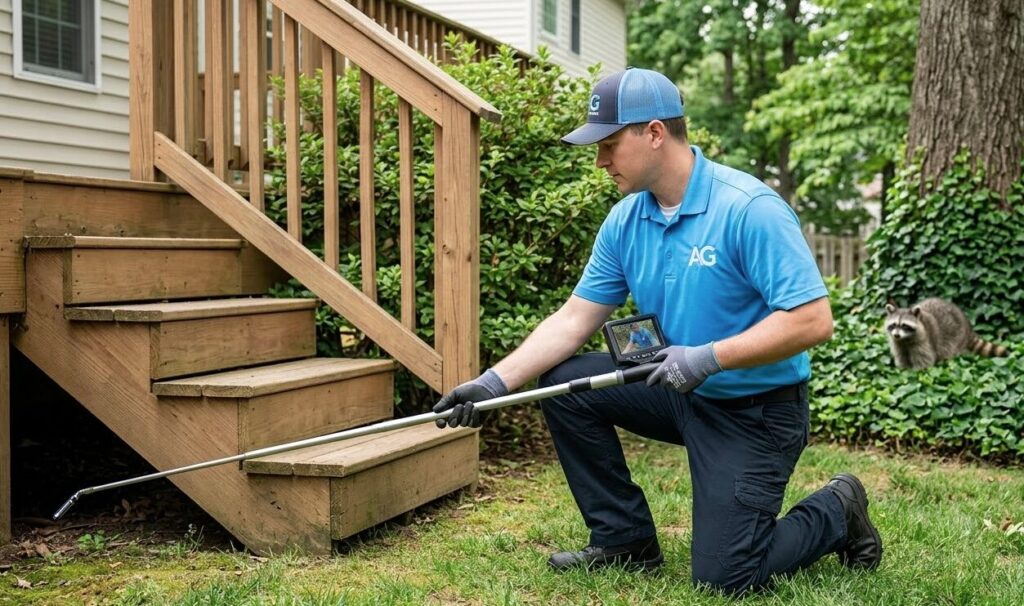
During inspection, we check the attic and exterior roofline for entry gaps, nesting areas, and contamination. Once activity is confirmed, safe removal methods are used to get the raccoon out without causing harm or pushing it deeper into the structure. After removal, all access points are sealed and reinforced so the problem doesn’t repeat.
What Local Homeowners Experienced When Raccoons Got Too Close
One homeowner who is from Eatontown started noticing signs of raccoon activity around the house and wasn’t sure how serious it was. The concern grew quickly, especially with the risk of damage and safety issues.

After contacting AgilePests, the team responded quickly, performed a detailed inspection, explained the best treatment plan clearly, and handled the issue without unnecessary charges. The problem was addressed before it could turn into major attic damage or health risk.
Are Raccoons Dangerous to Cats, Dogs, or Other Pets?
Yes, raccoons can be dangerous to pets.
Dogs that chase raccoons risk bites and scratches. Cats may corner a raccoon and trigger defensive behavior. Even a short fight can lead to injuries or exposure to disease.
Why this matters: many pet owners assume raccoons will run away. That is often true, but not always. If a raccoon is protecting young or trapped in a tight space, it may fight back.
Keeping pets indoors at night reduces the risk.
Are Wild Raccoons More Dangerous Than Baby Raccoons?
The short answer is yes, wild adult raccoons pose more risk than babies.
Adult raccoons are stronger, territorial, and more likely to defend themselves if cornered. Baby raccoons may look harmless, but they are rarely alone. The real danger often comes from the mother nearby.
Size is not the only factor. Behavior and location matter more.
Are Baby Raccoons Dangerous?
Baby raccoons are usually not aggressive on their own. They are small and more likely to hide than attack.
The risk comes from getting too close. If you approach a baby raccoon, the mother may see that as a threat. That can lead to defensive behavior.
If you find a baby raccoon on your property, keep your distance and avoid handling it.
Are Wild Raccoons Dangerous?
Wild raccoons can be dangerous if they feel threatened, trapped, or sick.
They may bite or scratch in self-defense. Wild raccoons are more likely to carry rabies or parasites than pets. Unusual behavior such as stumbling, daytime wandering, or lack of fear can signal illness.
If a wild raccoon shows signs of aggression or confusion, do not approach.
Is Raccoon Poop Dangerous?
Yes, raccoon poop can be dangerous.
Raccoon droppings can carry parasites and harmful organisms. The biggest concern is raccoon roundworm, which can infect humans if microscopic eggs are accidentally inhaled or swallowed.
The danger is not casual sight. It is exposure during cleanup or contact with contaminated soil or surfaces.
Why Is Raccoon Poop Dangerous?
Raccoon feces may contain roundworm eggs that survive in soil for years.
These eggs are not visible to the eye. If they become airborne during sweeping or digging, they can be inhaled. In rare cases, infection can affect organs, including the eyes or brain.
That is why direct contact or improper cleanup is risky. Protective measures and safe removal methods matter.
How Raccoons Damage Attics, Roofs, and Property
Raccoons can cause real damage once they start using your home for shelter.
They often enter through weak points around soffits, roof vents, fascia boards, chimneys, and loose shingles.
Common damage includes:
◉ Torn shingles or roof edges
◉ Bent or broken vent covers
◉ Damaged soffits and fascia
◉ Flattened or torn attic insulation
◉ Droppings and urine in attic spaces
◉ Chewed wiring or ductwork
◉ Strong odors from nesting areas
Why this matters: A raccoon in the attic is not just a noise problem. The longer it stays, the more cleanup and repair may be needed.
What we see often: Homeowners hear thumping at night for a few days, then later find insulation moved, droppings in the attic, or a clear entry hole near the roofline.
Simple takeaway: Roof and attic activity should be checked early before damage spreads.
Are Raccoons Good for Anything?
Raccoons are not purely destructive animals. In the wild, they serve a role in the ecosystem.
They are opportunistic feeders and help control certain insect and rodent populations. They also clean up carrion and organic waste.
The issue begins when they move from wooded areas into residential spaces.
What Are Raccoons Good For in Nature?
In natural environments, raccoons help balance food chains.
They eat insects, small animals, fruits, and leftover organic matter. This limits pest populations and helps recycle nutrients back into the soil.
Outdoors, they play a role. Inside homes or attics, they create problems.
When Does a Raccoon Become a Real Safety Threat?
A raccoon becomes a serious safety concern when its behavior changes or it moves too close to living areas.
Warning signs include:
- ◉ Aggression or lack of fear around people
- ◉ Daytime wandering with confusion
- ◉ Repeated attempts to enter your attic or home
- ◉ Visible illness, injury, or unusual movement
A raccoon protecting babies inside an attic may act defensively. An animal showing neurological symptoms can pose a higher health risk.
If you notice any of these signs, do not approach or try to handle the situation yourself. Keep pets and family members away from the area.

If the activity continues or feels unsafe, a professional inspection can confirm what is happening and help you take the right next step. AgilePests can assess the situation, identify entry points, and recommend safe removal and prevention so the problem does not return.
How Attic Wildlife Noise Was Handled the Right Way
Another homeowner was dealing with wildlife noise in the attic and felt unsure about what was happening above the ceiling. The situation was stressful and needed clear answers. AgilePests provided a free attic inspection, carefully investigated the source of the noise, and offered practical removal options to stop the problem safely.

With a proper plan in place, the homeowner finally had peace of mind knowing the attic was under control.
FAQs About Raccoon Danger and Safety
Do raccoons carry rabies?
Yes, raccoons are one of the primary wildlife carriers of rabies in many areas. Not every raccoon has rabies, but any raccoon acting confused, aggressive, or unusually calm should be avoided.
Can raccoons attack unprovoked?
Healthy raccoons usually avoid people. Attacks without reason are rare, but a raccoon may become aggressive if it feels cornered, is protecting young, or is sick.
What diseases can raccoons transmit to humans?
Raccoons can transmit rabies, raccoon roundworm, and parasites like fleas and ticks. Most transmission risks happen through bites, scratches, or contact with contaminated droppings.
Is it dangerous to feed raccoons in your yard?
Yes, feeding raccoons encourages them to return and lose fear of humans. This increases the risk of property damage, disease exposure, and aggressive encounters over time.
Are raccoons active during the day a bad sign?
Raccoons are mainly nocturnal, but daytime activity alone does not always mean illness. Erratic movement, disorientation, or aggression during the day is more concerning and should not be ignored.
Do raccoons attack humans at night?
Raccoons usually avoid humans at night, but they can attack if surprised, trapped, sick, or protecting babies. If you see one near trash cans, decks, or sheds, give it space and do not try to scare it by getting close.
What should you do if a raccoon stares at you?
Stay calm, keep your distance, and slowly back away. Do not run toward it, feed it, or try to touch it. A raccoon staring may be watching for danger or deciding where to move next.
Is it dangerous to touch a raccoon?
Yes, touching a raccoon is risky. Raccoons can carry rabies, parasites, fleas, ticks, and bacteria, and even a small scratch can create a health concern.
Can a raccoon kill a human?
It is extremely rare for a raccoon to kill a human. The more realistic risks are bites, scratches, infection, rabies exposure, and injury from trying to handle or corner one.
Are raccoons dangerous as pets?
Yes, raccoons are dangerous as pets because they are still wild animals. They can become aggressive, damage property, carry disease risks, and are not suited for normal home life.
Share
0/5
(0 Reviews)