
Do mosquito Foggers Work? Explained by Pest Expert

Written by David Mick
Last updated on June 20, 2026
On this page
You’ve tried a mosquito fogger, and now the big question hits: did it actually work, or are the mosquitoes still there?
That uncertainty is frustrating, especially when you’re still getting bitten days later. If fogging worked, you should see real relief. If it didn’t, the problem isn’t solved-it’s just been pushed around. The issue is that foggers don’t always work the way people expect.
In this guide, we’ll break down what mosquito foggers really do, how long results last in real conditions, and how to tell when fogging makes sense versus when it’s time for a different approach.
Key Takeaways
- ◉ Mosquito foggers work for short-term relief, not long-term mosquito control. They mainly affect adult mosquitoes flying during application.
- ◉ Foggers miss eggs, larvae, and hidden mosquitoes, so the problem can return if breeding sites and resting areas are not treated.
- ◉ Fogging results fade quickly outdoors because wind, sunlight, rain, thick vegetation, and new mosquitoes reduce the effect.
- ◉ Fogging often lasts a few hours to one or two days in real outdoor conditions, depending on weather and yard conditions.
- ◉ Foggers work best for temporary situations, like outdoor events or short-term relief before spending time outside.
- ◉ Fogging is not enough when standing water is nearby, because new mosquitoes can keep hatching after adults are knocked down.
- ◉ Mosquito dunks and larvicides work better long term, because they target mosquito larvae before they become biting adults.
- ◉ The strongest routine is layered control, combining water removal, breeding-site treatment, vegetation trimming, and fogging only when needed.
- ◉ Foggers can affect people, pets, and pollinators if used carelessly, so timing, label directions, and safe reentry matter.
- ◉ The main rule is simple: fogging knocks mosquitoes down, but source control keeps them from coming back.
Do Mosquito Foggers Actually Work?
Yes, but only in a limited way. Mosquito foggers can reduce the number of adult mosquitoes you see, but they don’t solve the root of the problem. Most fogging treatments only affect mosquitoes that are flying at the exact moment the fog is in the air. Anything resting, hiding in foliage, or still developing is usually untouched.
This matters because fogging often feels effective right away, then disappoints a day or two later when mosquitoes return.
How Do Mosquito Foggers Work?
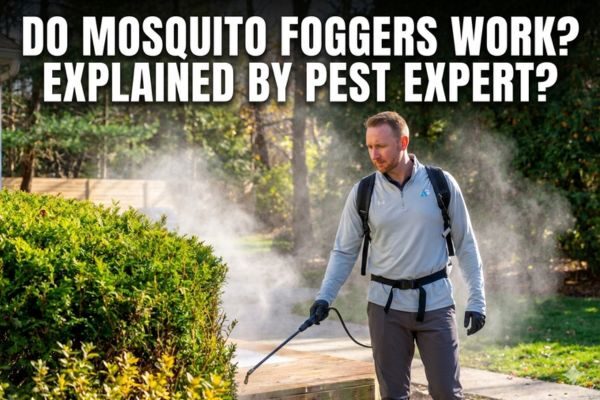
Foggers release a fine mist of insecticide into the air. That mist stays airborne briefly and kills or repels mosquitoes it directly contacts.
Think of it like spraying perfume in a room-it spreads, but only reaches what’s exposed. Mosquitoes hiding under leaves, in shrubs, or near standing water are mostly unaffected. Once the fog settles, its impact drops fast.
Are Mosquito Foggers Harmful to Humans, Pets or Pollinators?
Mosquito foggers can be useful, but they should be used carefully. The product inside the fogger is designed to kill insects, so exposure matters.
What to know:
- ◉ People and pets should stay out of the treated area until the label says it is safe to return
- ◉ Avoid direct contact with drifting fog or wet surfaces right after treatment
- ◉ Fish tanks, pet bowls, and toys should be covered or moved first
- ◉Bees, butterflies, and other pollinators can also be affected if sprayed directly or treated while active
Why this matters: Many homeowners focus only on mosquitoes and forget that foggers do not target insects selectively.
What helps reduce risk:
- ◉ Apply at dusk when mosquitoes are active and many pollinators are less active
- ◉ Follow label directions exactly
- ◉ Keep children and pets away during treatment
- ◉ Avoid spraying flowering plants when possible
Simple takeaway: Foggers can be helpful, but careless use can affect people, pets, and beneficial insects too.
How Long Does Mosquito Fogging Last?
Mosquito fogging can help fast, but it usually does not last long on its own. In real outdoor conditions, results often last from a few hours to one or two days. You may notice fewer mosquitoes right after treatment, especially the same evening.
That quick drop is the knockdown effect. It targets active adult mosquitoes in the area.
Some products may also leave a light residual effect on surfaces like shrubs, fences, or shaded spots. That can help for a short time, but it depends heavily on conditions.
What shortens results fast:
- ◉ Rain washing surfaces
- ◉ Strong sunlight breaking down product residue
- ◉ Wind reducing coverage
- ◉ Thick vegetation where mosquitoes hide
- ◉ Standing water nearby creating new hatchings
Why this matters: Many homeowners fog once and expect week-long protection. Then mosquitoes return quickly and the treatment feels useless.
What works better long term:
- ◉ Dump standing water
- ◉ Clean gutters
- ◉ Trim dense bushes
- ◉ Use larva control where water collects
- ◉ Fog only when quick adult reduction is needed
Simple takeaway: Fogging is best for short-term relief. Lasting mosquito control comes from removing breeding areas, not relying on spray alone.
What Mosquito Foggers Actually Kill and What They Miss
What foggers actually Kill:
- ◉ Quickly reduce flying mosquitoes
- ◉ Provide short-term relief for events
- ◉ Help lower adult mosquito numbers temporarily
Where foggers they Miss:
- ◉ Don’t affect eggs or larvae
- ◉ Miss mosquitoes hiding in dense areas
- ◉ Don’t stop new mosquitoes from entering your yard
Fogging can be part of a plan, but on its own, it’s rarely enough for lasting control.
What We Often See After Homeowners Use a Mosquito Fogger
This scenario is very common.
A homeowner fogs the yard in the evening and notices fewer mosquitoes almost immediately. The next night feels better too, so they assume the problem is handled. But by the third or fourth day, the bites start coming back, especially near shrubs and shaded areas.
When we see cases like this, the fogger usually did exactly what it was supposed to do-it knocked down the mosquitoes that were flying at the time. What it didn’t touch were the ones resting in vegetation or developing in nearby standing water.

So the relief fades, and it feels like the fogger “stopped working,” even though the real issue was never addressed.
Fogging vs Other Mosquito Control Options (Which Works Best Long Term?)
Mosquito fogging can help quickly, but it usually targets only the mosquitoes flying or resting in the area right now. Other methods focus on the source of the problem.
Here’s how they compare:
- ◉ Fogging: Fast knockdown, short-term relief
- ◉ Mosquito dunks: Target larvae in standing water before they become biting adults
- ◉ Barrier sprays: Leave a light residual on shrubs, fences, and shaded areas where mosquitoes rest
- ◉ Source reduction: Removes standing water where mosquitoes breed
For a full step-by-step guide to longer-lasting mosquito prevention, see Agile Pest Control Backyard Mosquito Guide.
Where Mosquito Dunks Work Best
Mosquito dunks are useful in places where water sits for days and cannot be dumped easily.
Best spots include:
- ◉ Birdbaths
- ◉ Rain barrels
- ◉ Decorative water features
- ◉ Drainage areas
- ◉ Plant trays or containers holding water
Why This Matters: Mosquitoes reproduce fast. If you only kill adults, new mosquitoes can hatch a few days later and the problem starts again.
That’s why many homeowners fog the yard, feel relief for a day or two, then notice mosquitoes return.
Use multiple layers of control:
- Dump or drain standing water
- Use dunks where water remains
- Trim thick vegetation
- Use fogging only when quick adult reduction is needed
Simple takeaway: Fogging is best for fast relief. Mosquito dunks and source control usually work better long term.
When Fogging Makes Sense (And When It Doesn’t)
Fogging makes sense when:
- ◉ You need temporary relief for an outdoor event
- ◉ Mosquito activity is light to moderate
- ◉ It’s used alongside other treatments
Fogging doesn’t make sense when:
- ◉ Mosquitoes return within a day or two
- ◉ There’s standing water nearby
- ◉ You’re looking for season-long control
Using fogging in the wrong situation leads to frustration and wasted money.
What Works Better Than Fogging for Long-Term Mosquito Control
Long-term control comes from layering solutions, not relying on one tool.
What works best:
- ◉ Eliminating standing water weekly
- ◉ Treating breeding sites with larvicides
- ◉ Applying residual barrier treatments
- ◉ Monitoring and adjusting over time
This approach reduces current mosquitoes and prevents new ones from replacing them. That’s the difference between temporary relief and a yard you can actually enjoy.
What Local Homeowners Say About Long-Term Mosquito Control
Many Manalapan homeowners try foggers first because they want fast relief. But lasting results often come from consistent treatments and targeted mosquito control from AgilePests, rather than one-time fixes.
Here’s what one local homeowner shared after switching to a more structured approach.

Tired of Temporary Fixes? Get Professional Mosquito Control That Actually Lasts
If you’ve tried foggers, sprays, and DIY tricks and mosquitoes keep coming back, that’s a sign the problem runs deeper than adult insects in the air. AgilePests often find the real issue is hidden breeding sites, dense foliage, or untreated resting areas that quick fixes never reach.
Professional mosquito control focuses on breaking the cycle, not just knocking numbers down for a day. That means identifying where mosquitoes are breeding, treating those areas directly, and using residual methods that keep working between visits.

The payoff isn’t just fewer mosquitoes today-it’s fewer next week and next month, so your yard stays usable instead of becoming a constant experiment in trial and error.
Mosquito Control FAQs
Do mosquito foggers work for mosquitoes long term?
No. Mosquito foggers are designed for short-term knockdown of adult mosquitoes. They don’t stop breeding, don’t affect eggs or larvae, and don’t prevent new mosquitoes from entering your yard. Without follow-up treatments, mosquitoes usually return quickly.
Does fogging work for mosquitoes in large yards?
Fogging is less effective in large yards. The mist only reaches exposed areas and struggles to penetrate dense landscaping, shaded corners, or wide open spaces. Larger properties usually need multiple control methods to see consistent results.
How long does a mosquito fogger last after one treatment?
In most cases, results last anywhere from a few hours to one or two days. Weather, wind, rain, and nearby breeding sites all shorten how long fogging remains effective.
Does mosquito fogging work better than sprays?
Fogging works faster, but sprays last longer. Fogging targets mosquitoes in the air, while barrier sprays leave a residual on plants and surfaces where mosquitoes rest. For ongoing control, sprays are generally more reliable.
How long does fogging for mosquitoes last in real conditions?
In real outdoor conditions, fogging rarely provides relief beyond a couple of days. Sunlight breaks down the product, wind disperses it, and new mosquitoes move in, making fogging a temporary fix rather than a lasting solution.
Share
0/5
(0 Reviews)